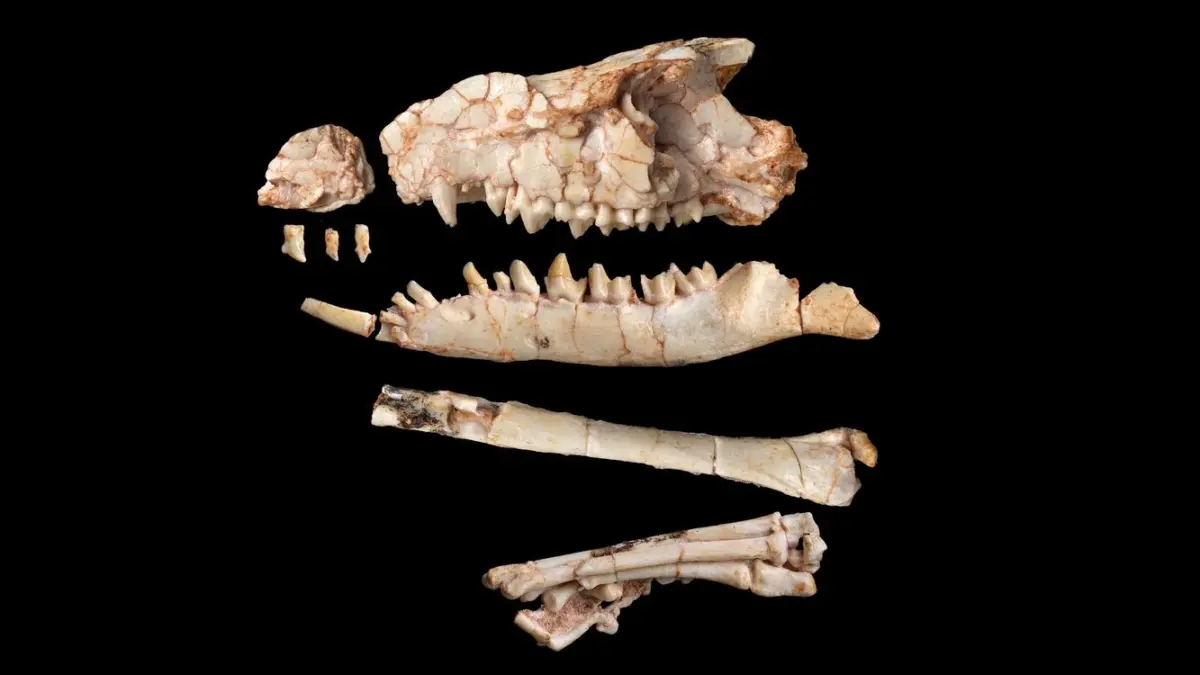
The new species, officially named Tamirkhan balcarceli, is detailed in a study published today in the prestigious journal Nature. The research reveals that a group of extinct mammals known as zhelestids were not close relatives of modern placental mammals, as many leading researchers had assumed for decades. Instead, these creatures belonged to an entirely different branch of early mammals, upending a longstanding interpretation that had relied primarily on fragmentary jaw fragments and isolated teeth.
A collaborative international team of scientists from the American Museum of Natural History, Stony Brook University, the University of Arizona, and Arcadia University contributed to the groundbreaking work, which highlights the enduring scientific importance of rigorous, boots-on-the-ground paleontological fieldwork.
For nearly 40 years, zhelestids were known almost exclusively from isolated teeth and scattered, fragmentary fossils recovered from various deposits. Because their distinctive teeth featured low, rounded cusps that were far more specialized for grinding plant material than the sharp, insect-eating teeth common among many Cretaceous mammals, early paleontologists hypothesized that zhelestids represented an unknown, highly specialized group of early hoofed mammals. While imaginative, that early hypothesis would ultimately prove to be remarkably far from the mark.
Over the decades, evolutionary biologists and paleontologists debated the true nature of these animals. Researchers frequently questioned whether these specimens represented early examples of Cretaceous placental mammals—the expansive biological group that today includes humans, whales, elephants, and most other living mammals—or if they constituted a wholly separate lineage that had independently evolved similar anatomical adaptations. The lingering possibility that true placental mammals had already diversified during the Cretaceous period was heavily supported by molecular clock studies, which calculate evolutionary timelines using genetic mutation rates and suggest that placentals originated long before the cataclysmic asteroid impact that ended the age of the dinosaurs.
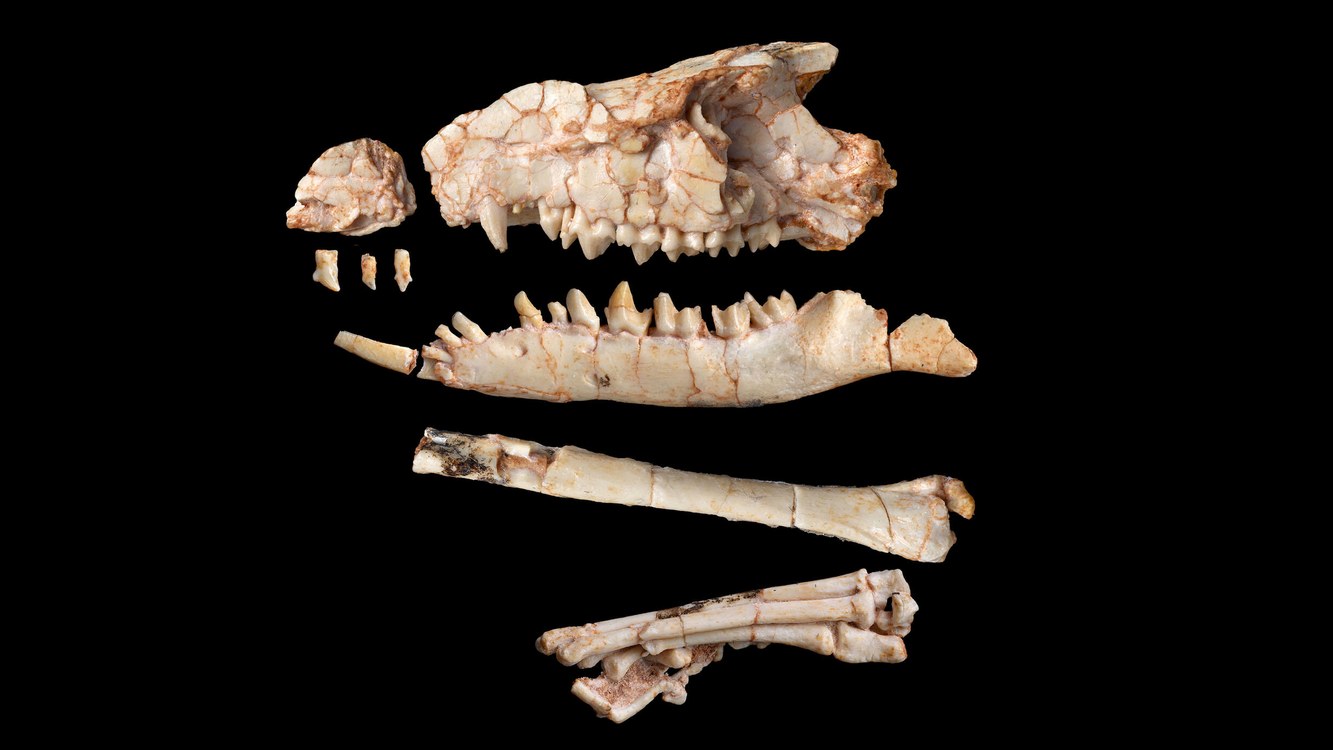
Solving this enduring prehistoric riddle required more than theoretical modeling; it demanded physical evidence buried deep within the Earth. That critical piece of the puzzle was brought to light by Andres Giallombardo, the lead author of the new study, who discovered the extraordinary specimen in 2004 while working as a graduate student on a scientific expedition sponsored by the American Museum of Natural History in the eastern Gobi Desert.
Reflecting on the monumental find, Giallombardo emphasized the irreplaceable value of traditional exploration in modern scientific inquiry. This discovery illustrates why fieldwork remains indispensable to understanding the broader history of life on Earth, he noted, describing the moment as the thrill of a career to unearth a new species so completely preserved that it could finally resolve a longstanding scientific debate. He added that the Gobi Desert, long celebrated globally for its rich fossil beds, continues to actively change and refine our understanding of science.
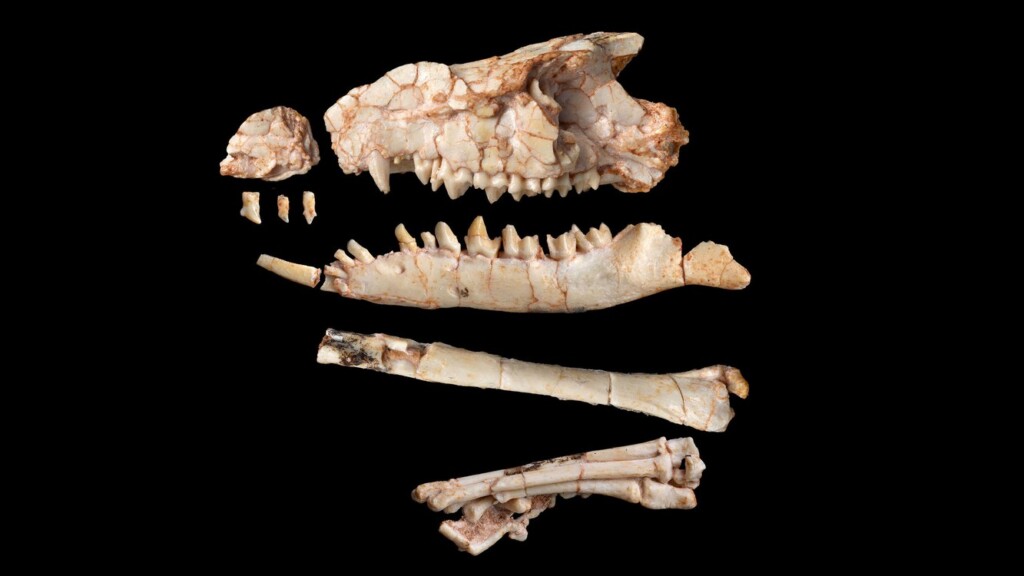
The newly described species, Tamirkhan balcarceli, represents by far the most complete zhelestid skeleton ever discovered, effectively filling in the blanks regarding what these mysterious animals actually looked like in life. Although Tamirkhan possesses the low, rounded, grinding teeth characteristic of zhelestids, the rest of its anatomy tells a radically different story. The fossil reveals long, ever-growing incisors alongside a distinct suite of skull features that are hallmarks of an entirely different group of small, shrew-like insectivore mammals known as zalambdalestoids.
Shawn Zack, a paleontologist at the University of Arizona and co-author of the study, pointed to the animal’s lower anatomy as the definitive smoking gun. Tamirkhan’s hind legs are long and slender with distinctive ankles, traits that are unmistakably zalambdalestoid, Zack explained.
By analyzing the complete skeletal architecture rather than just the dental remains, the research team concluded that zhelestids were never placental mammals, nor were they particularly placental-like. Instead, they represent a specialized subset within the broader zalambdalestoid lineage. This profound realization demonstrates that mammal species living during the Cretaceous period were not nearly as anatomically diverse in terms of major lineages as scientists had anticipated based solely on dental records. The presence of distinctive rounded teeth—which are commonly associated with plant-eating mammals across multiple epochs—is now recognized as a classic case of convergent evolution. In this evolutionary scenario, entirely unrelated animal lineages evolve strikingly similar physical traits because they happen to adapt to similar ecological lifestyles and dietary niches.
The discovery also serves as a cautionary tale for historical taxonomy. More than 200 years ago, legendary French naturalist Georges Cuvier famously argued that a single tooth could allow scientists to accurately predict the entire anatomy of an extinct animal. While teeth undeniably remain among the most durable and informative fossils available in the geological record, this latest research demonstrates that dental morphology alone cannot always reveal how the rest of an animal looked or where it belonged on the evolutionary tree. Maureen O’Leary, a paleontologist at Stony Brook University and a research associate at the American Museum of Natural History, noted that while Cuvier’s principle has guided generations of researchers, the Tamirkhan discovery proves the limits of tooth-centric paleontology.
Measuring roughly six to seven inches in length from the tip of its snout to the base of its tail, Tamirkhan featured elongated hind limbs that gave the creature an almost rabbit-like silhouette. Because of these distinct proportions, paleontologists have sometimes informally referred to zhelestids as Cretaceous rabbits, despite the fact that they bear only a distant, superficial relationship to modern rabbits and their kin.
The complex evolutionary conclusions presented in the study were made possible through the utilization of MorphoBank, a comprehensive online mammalian phylogenetic research platform. First launched in 2013, the database has expanded continuously over more than a decade to incorporate an ever-growing repository of key fossil species data. By standardizing anatomical traits across hundreds of specimens, platforms like MorphoBank provide the most robust and comprehensive analytical framework yet assembled for untangling the intricate relationships of early mammals.