
However, for older adults and homeowners examining their long-term housing needs, the growing movement toward downsizing into compact spaces or tiny homes introduces a complicated dilemma. While the prospect of shedding decades of accumulated belongings, escaping endless maintenance chores, and reducing monthly utility bills is deeply appealing, it often collides directly with the emotional weight of family traditions. For countless individuals, the thought of relinquishing their long-held role as the central family host is enough to put downsizing plans on indefinite hold.
The concern is not trivial. A home that has served for years as the primary anchor for family gatherings holds profound sentimental value. Letting go of that physical footprint can feel paradoxically like letting go of the traditions themselves. People may feel thoroughly ready for fewer rooms to clean and far less house to maintain, but they strongly resist the idea that moving into a smaller residence must mean shrinking their family circle or hosting fewer gatherings.
This tension between the desire for simplified living and the preservation of cherished communal rituals is an increasingly prominent topic in modern lifestyle planning. Housing experts and community designers note that addressing this concern early in the relocation process is essential. Whether a homeowner is eyeing a custom tiny house on a rural plot, a manufactured home in a land-lease community, or a smaller urban apartment, evaluating how holiday gatherings will function in the future should be a primary consideration before packing a single box.
Get Creative with the Table
One of the most immediate hurdles in a downsized living space is spatial capacity, particularly around the dining area. Traditional oversized dining suites designed to seat ten or twelve people simply do not fit into compact architectural layouts. Yet, lifestyle planners emphasize that the everyday dining table does not need to dictate the guest list for a major holiday celebration.
Homeowners transitioning to smaller spaces frequently turn to versatile furniture solutions. Drop-leaf tables and extendable designs can remain compact for daily use while expanding to accommodate company when needed. Folding tables, particularly those that can be borrowed, rented, or tucked away in a small closet during the off-season, offer another practical avenue.
Beyond standard furniture configurations, modern hosts are rethinking the traditional single-table arrangement altogether. Splitting guests across two smaller tables can often fit a compact floor plan far more comfortably than attempting to force one massive table into a modest room. For example, some family members might be seated comfortably at a kitchen dining nook while others gather at a temporary table positioned nearby in the living area. To maintain a sense of unity and shared celebration, hosts often use matching tablecloths, consistent dinnerware, and simple decorative elements to tie the disparate seating zones together visually.
Let Your Rooms Do a Different Job for the Day
In a tiny home or compact residence, structural boundaries blur out of necessity. On a holiday afternoon, functional rooms are routinely called upon to assume entirely different roles.
Living rooms, dens, and open-plan central areas can easily be repurposed as temporary dining halls. By temporarily shifting a coffee table, repositioning accent chairs, or clearing a pathway, hosts can open up adequate square footage to set up temporary dining surfaces. Furthermore, table space can be fiercely contested territory during a heavy holiday meal, prompting creative hosts to move food presentation entirely out of the primary dining zone. Kitchen counters, kitchen islands, or sideboards can serve as self-serve buffets for the main courses and side dishes, leaving valuable tabletop real estate open exclusively for plates, glasses, and conversation.
When formal tables are entirely out of the question, alternative surface strategies come into play. Sturdy storage bins draped with tasteful linens, or even well-placed television trays, can provide functional eating surfaces for guests without disrupting the festive atmosphere.
Take the Celebration Outside When You Can
Geographic location often provides a distinct advantage for those living in compact spaces. For homeowners residing in regions with mild winter weather, expanding the functional footprint of a tiny home into the outdoors is a natural solution.
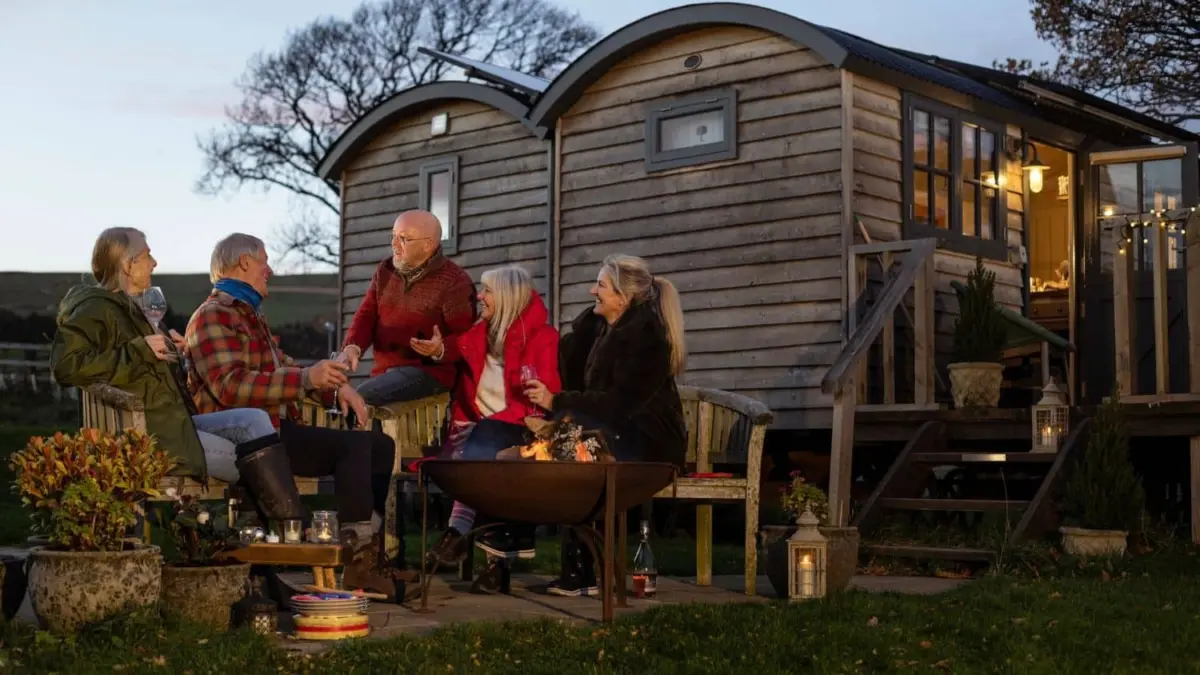
Patio spaces, wooden decks, screened porches, and even small backyards can transform a cramped interior into an expansive hosting venue. An outdoor table can accommodate part of the holiday meal, or the exterior space can be utilized during the initial arrival phase, allowing guests to gather for appetizers and conversation outdoors before moving inside for the main course. Even in cooler climates, creating a comfortable outdoor sitting area with adequate lighting and weather-resistant seating can help disperse a large group and prevent indoor congestion.
Nevertheless, relying on outdoor space requires careful contingency planning. Weather patterns during the late autumn and winter months are notoriously unpredictable. Before sending out invitations, savvy hosts establish a clear backup strategy. Deciding in advance whether the gathering will be scaled down, moved indoors with a modified seating arrangement, or shifted to an alternative location prevents last-minute panic if the forecast turns unfavorable.
Look Beyond Your Own Front Door
For individuals exploring the rapidly growing sector of tiny home communities and manufactured housing developments, the property boundaries of an individual home do not necessarily define the limits of a gathering space. Many modern tiny home communities are intentionally designed with shared infrastructure to support the social needs of residents who value minimalism without social isolation.
Prospective buyers are increasingly inquiring about community amenities, such as shared clubhouses, multi-purpose community rooms, and shared kitchen facilities that residents can reserve for private family gatherings. These communal spaces often feature large dining tables, commercial-grade kitchens, and ample seating capacity that far exceeds what any single tiny home could accommodate.
Access to these shared resources can make the prospect of hosting a large family holiday entirely viable, even for someone residing in a home designed for one or two occupants. However, industry advisors caution that prospective residents should ask specific questions regarding reservation policies, availability during peak holiday seasons, and any associated fees before counting on these shared spaces as a permanent component of their holiday hosting plans. Including community infrastructure in the initial home search ensures that social priorities remain aligned with housing choices.
Plan Around the Gathering You Love
Ultimately, the decision to downsize does not require abandoning the joy of bringing family together, but it does invite a deliberate re-examination of how those traditions are executed. Before settling on a specific square footage or a particular housing style, experts recommend analyzing the actual anatomy of past holiday gatherings.
Examining questions about traditional attendance numbers, arrival patterns, and meal styles can clarify what truly matters. For instance, if family members typically arrive in staggered waves throughout the afternoon rather than sitting down simultaneously for a formal meal, the spatial demands on a home are vastly different than those of a rigid, simultaneous sit-down dinner. Similarly, transitioning from cooking an entire multi-course feast single-handedly to embracing a collaborative potluck model can dramatically reduce the need for expansive kitchen infrastructure.
Downsizing frequently serves as a natural catalyst for reflection, allowing individuals to separate burdensome obligations from the rituals that genuinely foster connection and joy. Redefining holiday traditions to fit a current life stage ensures that the celebration remains authentic and manageable. While a holiday gathering in a tiny home or compact residence will inevitably look different from celebrations held in a sprawling legacy home, the core spirit of hospitality remains unchanged. With flexibility and thoughtful planning, homeowners can successfully navigate the transition to compact living while remaining the people who bring everyone together.