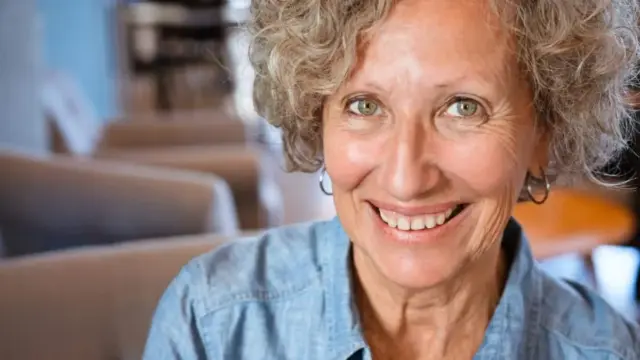

For years, the public has been told that these specific pockets of the globe hold the ultimate biological and lifestyle clues to a long, healthy life. It is entirely understandable why so many people want to believe in this narrative. Beneath our cultural fascination lies a deeply human question: What if there is a way to grow older without simply growing frailer? What if the trajectory of aging is not entirely a matter of steep decline, but something that can be shaped by our daily habits, our environments, and our relationships?
That is a fundamental question worth asking. Yet, the broader narrative surrounding the Blue Zones has grown increasingly complicated in recent times—and that critical reassessment might actually be a positive development for both public health education and scientific integrity.
When a Beautiful Story Meets Science
The modern concept of the Blue Zones began when researchers and demographers identified specific geographic communities characterized by unusually high concentrations of individuals living robustly into their 90s and beyond. Over time, these observations coalesced into a widely popularized vision of healthy aging built upon pillars like natural daily movement, traditional whole-food diets, strong social connections, a distinct sense of purpose, and continued active participation in everyday community life.
Perhaps this picture remains so broadly appealing because it makes human longevity feel less like a genetic lottery and more like something within our sphere of influence. Rather than resigning ourselves to the randomness of biology, we are offered a blueprint.
A colleague of mine once flew all the way to Okinawa, hoping to uncover firsthand the hidden mechanics of the local Blue Zone phenomenon and to experience ikigai—the traditional Japanese concept denoting a profound sense of purpose that is so frequently associated with the region’s longevity statistics. While the exact findings of that specific journey remained personal, the trip itself illustrated a broader cultural truth: these ideas exert a powerful magnetic pull on the human imagination. Many individuals, including writers and researchers, have caught themselves contemplating a pilgrimage to a Blue Zone, even if practical constraints keep those plans permanently deferred.
However, as the concept gained commercial and cultural traction, parts of the scientific community began to apply tighter scrutiny. Some researchers have openly questioned the reliability of the extreme ages reported in certain historical longevity populations. Critics have pointed to potential errors in historical record-keeping, birth registrations, and demographic documentation from decades past, suggesting that some claims of extreme centenarianism might be skewed by data anomalies.
That skepticism certainly deserves rigorous scrutiny. Extraordinary claims regarding human biology and lifespan require robust verification. At the same time, however, questioning historical evidence is not the same as definitively proving it false.
What the Research Can Tell Us
The ongoing academic debate surrounding these populations saw a significant development in December 2025, when researchers Steven Austad and Giovanni Pes published a detailed response in the academic journal The Gerontologist. In their publication, they strongly defended the age data underlying the specific Blue Zones they had studied, outlining the rigorous methodologies they used to verify ages against historical documentary sources, church records, and demographic cross-checking methods.
Their published conclusion was straightforward: the reported extreme ages observed in these communities were adequately supported by the available historical and demographic evidence.
That defense matters significantly within the field of gerontology. Yet, it still does not settle every broader question regarding the lifestyle claims associated with these regions. Even if these populations genuinely contained unusually large concentrations of very old individuals, a separate scientific question remains: Why, precisely, did they live so long?
It is naturally tempting to work backward from a community of healthy centenarians and draw direct causal lines. Observers note that they eat specific foods, walk long distances daily, maintain dense family connections, and spend hours gardening. From these observations, a simplistic cultural syllogism is often constructed: therefore, if we adopt these exact same habits, we too will live to be 100.
But that is not how empirical science operates. Human longevity is a complex multifactorial outcome influenced by a web of variables, including genetics, childhood nutritional conditions, access to healthcare, environmental exposures, and broader historical circumstances. Shared cultural habits may be valuable and health-promoting in their own right without necessarily serving as the primary or sole explanation for exceptional lifespans within a specific cohort.
Consequently, researchers and commentators alike should exercise caution, ensuring they do not inadvertently transform an intriguing observational study into an absolute biological promise.
What Is Still Worth Keeping
Once we strip away the rigid commercial formulas and let go of the idea that a single lifestyle template can guarantee extreme age, something genuinely valuable remains intact.
Consider physical movement. This does not necessarily require an expensive gym membership, specialized athletic gear, or a high-tech fitness tracker. Instead, it points toward a life in which the body is regularly and naturally used as part of daily routines—walking to destinations, climbing stairs, and performing physical chores.
Consider human connection. This involves having people in our lives who truly know us, individuals we can call in an emergency, and people who genuinely expect us to show up for social or family obligations.
Consider purpose. This encompasses anything that gives a day a tangible reason to begin, whether that is paid employment, caring for a dependent relative, creative expression, volunteering, lifelong learning, or simply being of service and utility to another human being.
Finally, consider dietary patterns: nourishing habits built around a wide variety of wholesome, locally available foods, ideally prepared and enjoyed in the company of other people rather than eaten in isolation.
None of these core ideas belongs exclusively or proprietarily to the designated Blue Zones. They form part of a much broader, universally recognized understanding of healthy aging that spans cultures and centuries. The Blue Zones simply provided humanity with a memorable, cohesive picture of what such a balanced life can look like in practice.
Maybe We Don’t Need to Live Like Someone in Okinawa
There is a subtle, pervasive trap embedded within modern longevity culture. It is entirely possible to become so obsessively focused on adding chronological years to our lives that we entirely forget to ask what we actually want those years to contain.
Perhaps an individual does not need to know the exact breakfast menu of an Okinawan woman to live a meaningful life. Instead, we might pivot toward asking much more personal, grounded questions about our own daily existence.
Who do we want around our dinner table? Where do we want our bodies to be able to take us as we age? What subjects or hobbies are we still genuinely curious about? What gives us a concrete reason to get out of bed on an ordinary Tuesday morning?
These reflective questions do not offer a magical guarantee of one hundred healthy years. In reality, nothing does. And when examined closely, that realization can feel oddly liberating.
The Gift of the Grey Area
Most people do not want the compelling, beautiful story of the Blue Zones to disappear entirely from public discourse. At the same time, however, we should resist believing in a narrative purely because it offers comfort or aesthetic appeal.
Humanity is capable of holding two distinct truths at once: the empirical evidence regarding extraordinary historical longevity certainly deserves careful, ongoing scientific scrutiny, while the broader human lessons reflected in these communities can continue to inspire our personal choices.
We do not have to choose between a sense of wonder and a commitment to scientific skepticism. We can remain genuinely curious about what demographic science actually tells us, while simultaneously remaining deeply grateful for the reminders of what is truly valuable to prioritize in our daily routines.
Perhaps the Blue Zones do not contain some hidden physiological secret that modern society has somehow failed to discover. Perhaps they simply serve to remind us of something we already intuitively know, but all too easily forget in the rush of daily life: a long life is not measured solely by how many years we are granted, but by how meaningfully we choose to fill them.
This ongoing conversation leaves open a broader set of reflections for individuals navigating their own paths toward aging. What is it about the concept of the Blue Zones that resonates most deeply—is it the traditional foodways, the emphasis on natural movement, the strong sense of community, or the anchoring presence of personal purpose? And if an individual could deliberately integrate just one element from these communities into their own daily existence, what would that choice reveal about their priorities?