The phone case went viral almost immediately after launching in February 2024. The internet—namely, beauty enthusiasts and digital culture followers—couldn’t get enough of it, eagerly matching the silicone hue to their favorite lip shade and feverishly anticipating new colorways. For dedicated Rhode fans, carrying the case was a direct way to showcase allegiance to their favorite brand and its exceptionally famous and influential founder. It was an accessory that seemingly came out of nowhere, permanently changing the beauty merchandise game—though perhaps not in a way that everyone considers positive.
Now, two years later, it is remarkably easy to find knockoffs that fail to live up to Rhode’s original creation. Platforms like Temu and Shein are flooded with low-cost dupes in every color of the rainbow, and countless established beauty brands have been inspired to create their own phone case and beauty product hybrids. At best, these copycat attempts try to replicate some of Rhode’s original viral magic; at worst, they feel like a stale, soggy reheating of an old trend.
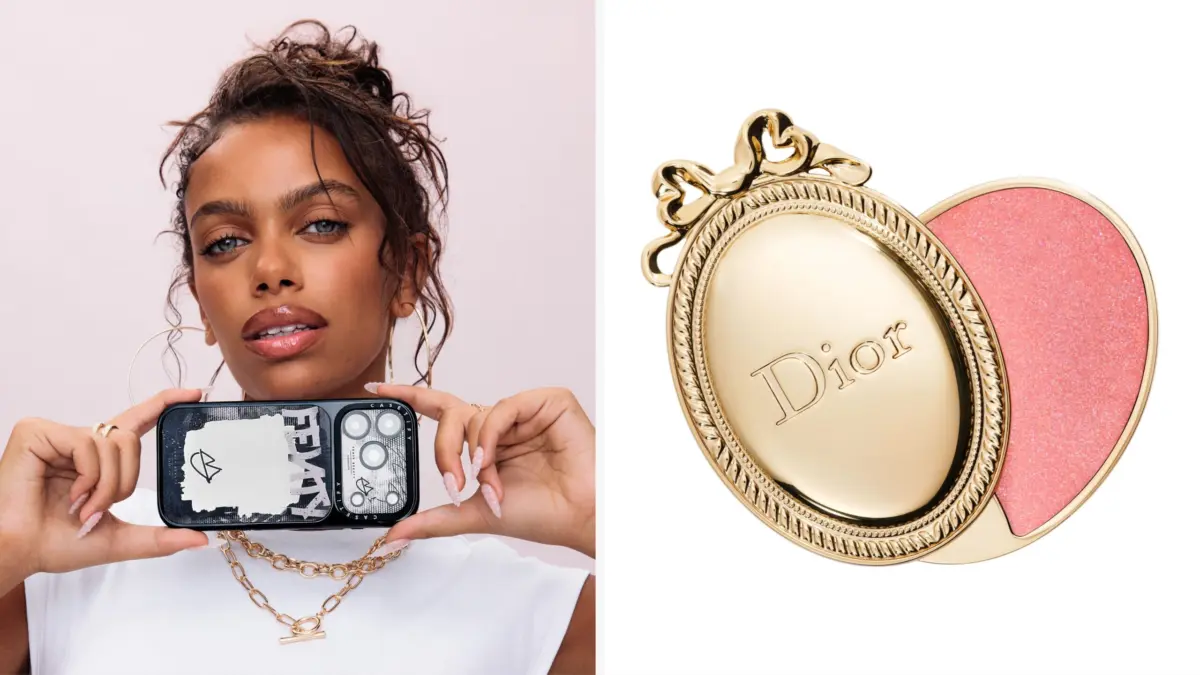
The market has since been steadily saturated with similar concepts. Earlier this year, Daise Beauty launched a mini lip balm that sticks to the back of a phone like a PopSocket. Just this past week, two major legacy and prestige brands released comparable concepts: Dior began selling a miniature lip balm directly on its website, while Charlotte Tilbury announced a mini setting powder designed to adhere to the back of a mobile device. While Dior’s version comes with a steep $95 price tag, Tilbury’s is offered as a free gift with purchase. Meanwhile, Fenty Beauty collaborated with Casetify to create a bulky case designed to hold both a tiny powder and a tiny lip gloss, resulting in a product so cumbersome that it would struggle to fit into a small handbag, let alone a standard pocket. There have likely been other gimmicky iterations thrust upon unsuspecting consumers since 2024, but none of them made enough of a cultural impact to linger in the public consciousness.
Critics and everyday consumers alike are increasingly expressing fatigue with this kind of landfill-bound, wasteful junk. Two years ago, Rhode introduced something undeniably novel, but subsequent brands attempting to hitch a ride on Bieber’s coattails just to make a quick buck are exacerbating the beauty industry’s glaring overconsumption problem. Rather than offering genuine innovation, they are attempting to carve out a new category of highly disposable accessories. Although Bieber recently stated in an interview with Fortune that she is not personally interested in overconsumption, her business model remains anchored in manufacturing products and selling them to the masses, including the current six distinct colorways of the phone case.
The broader ecological implications of this trend are staggering. According to data from Euromonitor International, almost 7.9 billion units of rigid plastic were manufactured solely for beauty and personal care products in the United States back in 2018. That massive figure was calculated before the modern influx of charms, customized cases, merchandise, and other random accessories sold by the very beauty brands currently accumulating the bulk of consumer waste. With the global beauty market expected to grow by 5 percent annually until 2030, according to projections from McKinsey & Company, that environmental footprint is almost certainly larger today. Furthermore, even if a trendy plastic accessory makes its way into a municipal recycling bin, the reality of global waste management is grim: only about 9 percent of all plastic waste ever produced has actually been converted into reusable material.
Beyond the environmental toll, many of these superfluous items present a concerning hygiene problem. Nearly a decade ago, a widely cited study published in Time magazine revealed that the average cell phone is roughly ten times dirtier than a standard toilet seat—a statistic that has almost certainly multiplied over the past decade as modern society has grown even more tethered to miniature glass screens. Around that same era, research data from Dscout uncovered that the average mobile phone user touches their device a staggering 2,617 times per day. Given those figures, sticking an exposed cosmetic product directly onto the back of a bacteria-laden device, only to dig a finger into the formula and spread it across the mouth or skin, defies basic sanitary logic. Additionally, smartphones frequently generate heat during heavy usage, creating a warm, enclosed microclimate that is far from ideal for preserving the integrity of cosmetic formulations.
Reflecting on her brief experiment with the Daise stick-on balm, Allure associate social media manager Katie Gunderman noted that her amusement with the accessory faded quickly. Her initial thoughts were focused on how cute, fun, colorful, and potentially practical the design seemed. However, after about a week of keeping her phone in her back pocket or jammed inside her purse, she realized the pod kept sliding open and collecting pocket lint and environmental debris along the way. After that accumulation of grime, applying the product to her lips was completely out of the question.
This practical failure raises a broader logistical question about modern personal accessories: Does no one put their phone in their pocket anymore? How are consumers expected to comfortably fit an entire mini-computer alongside a bulky pressed powder or lip balm pod inside standard denim pockets? While human grip strength and attachment to trends are impressive, these increasingly oversized configurations make devices awkward and uncomfortable to handle in daily life.
To be fair, virtually every commercial brand contributes to the beauty industry’s overarching waste problem, simply by manufacturing products with finite lifespans. However, the originators of the beauty phone case introduced a distinct level of intentionality to the product’s physical architecture. The Rhode case is comparatively more hygienic than sticking a tiny, exposed pot of sample-sized lip balm onto a PopSocket, and it is engineered to pair with a full-sized cosmetic product. The case itself can be utilized continuously through however many individual lip treatments a user goes through over the natural lifespan of their smartphone—and thus, the lifecycle of the case.
That same level of thoughtful engineering is frequently missing from competing brands scrambling to capture a share of the trend. Yet, pointing the finger solely at individual beauty brands overlooks the broader economic reality of late-stage capitalism. Modern existence has seen nearly every facet of daily life aggressively commodified, extending down to the decorative charms dangling from designer handbags and the miscellaneous trinkets stuck to handheld internet portals. Consumers have inadvertently become walking billboards for corporate entities, performing unpaid marketing legwork every time a branded phone case or accessory prominently features in a mirror selfie or social media video.
The relentless glut of phone-mounted beauty accessories is not only unhygienic and environmentally burdensome; it is increasingly exhausting for consumers to navigate. It points to a rather dismal answer regarding the ongoing cultural discourse over whether true originality is dead on social media feeds. The desire to personalize everyday objects is entirely natural, and consumers should be free to express themselves through the small details of their daily routines. But perhaps it is time to reconsider merging cosmetics with the devices we touch thousands of times a day—especially when society is already trying to find ways to reduce unnecessary screen time.