

Like its coastal counterpart Barcelona, Madrid operates on a distinctively relaxed schedule. It is a city designed for night owls, where traditional evening meals begin late into the evening and social gatherings extend well past midnight. Embracing this slower, more deliberate pace of life—marked by unhurried dining and vibrant late-night social scenes—allows visitors to uncover the authentic beating heart of the local culture rather than merely skimming the surface of its tourist attractions.
For seasoned travelers and first-timers alike, the city offers a unique blend of historical depth and modern cool, driven by a thriving art scene and a deeply rooted culinary tradition. However, navigating such a sprawling metropolis can initially prove daunting. Organizing a five-day itinerary provides a balanced approach, ensuring that visitors not only witness the essential architectural and artistic landmarks but also venture off the beaten path to experience the daily rhythms of Spanish life efficiently and affordably.
Day 1: Immersion in the Art Walk
The inaugural day of exploration centers on a prestigious urban district recognized as a UNESCO World Heritage site in 2021. Known officially as the Landscape of Light, this area encompasses more than 40 historical monuments and architectural landmarks, establishing it as one of the most picturesque zones in the capital.
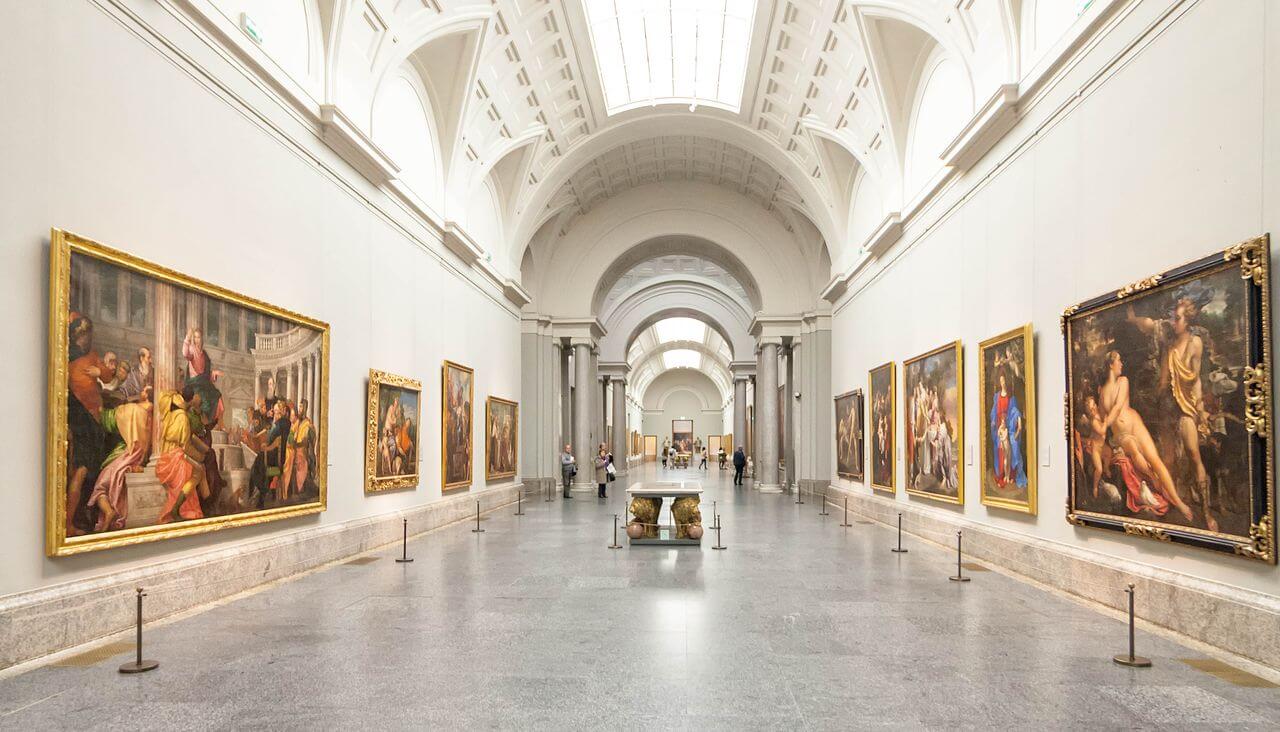
The journey begins at the Prado Museum, widely regarded as one of the preeminent art institutions globally. The museum houses an extensive collection featuring masterpieces by Spanish legends such as El Greco, Velázquez, and Goya, alongside international luminaries like Rubens, Botticelli, and Caravaggio. As one of the largest art repositories in the world, the Prado requires a dedicated commitment of several hours to fully appreciate its immense historical and cultural holdings.
A brief ten-minute stroll along the Paseo del Prado leads travelers to the Thyssen-Bornemisza Museum, which houses an eclectic private collection tracing artistic development from the Renaissance to Pop Art. The day’s formal artistic circuit culminates at the Reina Sofía National Art Center, a premier destination for modern and contemporary art. Featuring works by twentieth-century visionaries including Picasso, Miró, Kandinsky, Dalí, and Francis Bacon, the center’s definitive centerpiece is Pablo Picasso’s monumental 1937 oil painting, Guernica, widely celebrated as one of the most powerful anti-war artworks ever created.
Following a morning of intensive gallery hopping, attention turns to Madrid’s traditional gastronomy. Visitors can sample rustic cocido madrileño at Taberna La Fragua de Vulcano or enjoy renowned local croquetas on the vibrant garden terrace of Arzábal, situated near the Reina Sofía. Alternatively, diners seeking a distinctively atmospheric setting can experience the culinary offerings at Bodega de los Secretos, where meals are served within restored seventeenth-century wine caves located near the Prado.
The afternoon offers an opportunity to explore Madrid’s distinctive house museums, which preserve the intimate domestic spaces of former private palaces. The foremost among these is the Sorolla Museum, dedicated to the luminous works of impressionist painter Joaquín Sorolla. Following a major architectural renovation, the sun-drenched residence reopens to the public, offering renewed access to its tranquil Mediterranean gardens and canvas collections. Additional options include the Museum of Romanticism, featuring a secluded garden café, and the Lázaro Galdiano Museum, which exhibits a diverse private collection within a grand neo-Renaissance mansion.
Day 2: The Grandeur of the Historic Center
The second day investigates the medieval and Renaissance layout of the old city, historically known as Habsburg Madrid, or Madrid de los Austrias. The geographic and symbolic heart of this district is the Puerta del Sol, where visitors routinely gather at Kilometer Zero—the official origin point for Spain’s national highway and railway networks—to photograph the embedded milestone plaque.
Nearby stands the iconic statue of the Bear and the Strawberry Tree (El Oso y el Madroño). Depicting a bear reaching for fruit from a madroño tree, the monument derives from the official coat of arms of Madrid, where the bear symbolizes the city itself and the tree represents the surrounding natural landscape that historically sustained its growth.
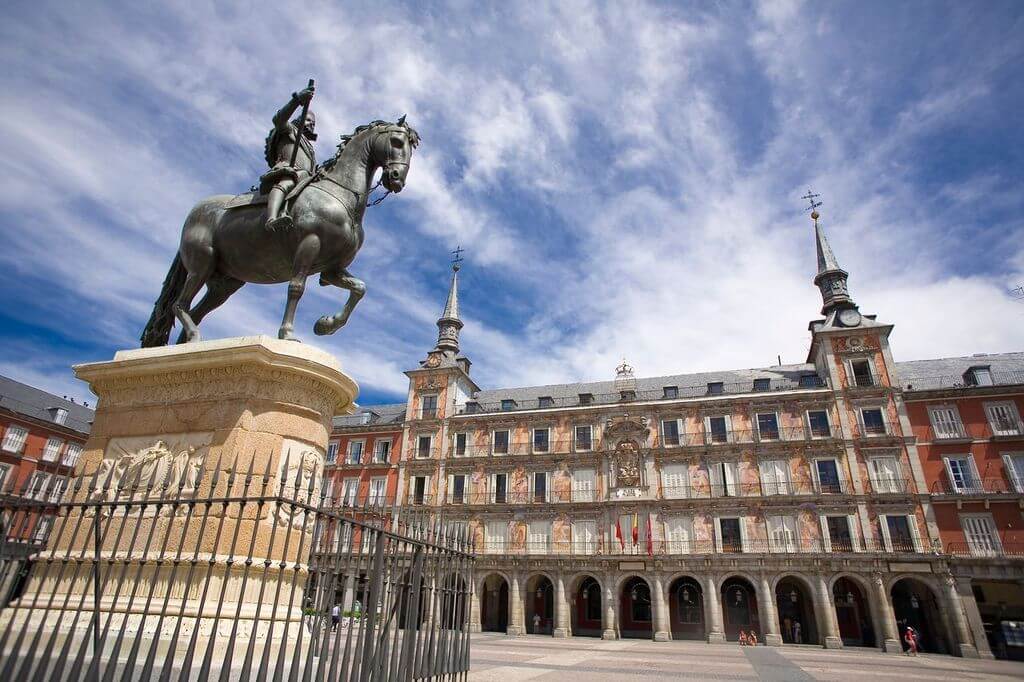
From the square, the route proceeds to the monumental Plaza Mayor. Defined by its uniform porticoed architecture and the historic Casa de la Panadería, the plaza has historically served as a venue for public markets, royal ceremonies, bullfights, theatrical tournaments, and public executions. Today, the expansive square is lined with cafés and shops, functioning as a primary hub for people-watching and public events. Nearby alleyways offer traditional local specialties, most notably classic calamari sandwiches.
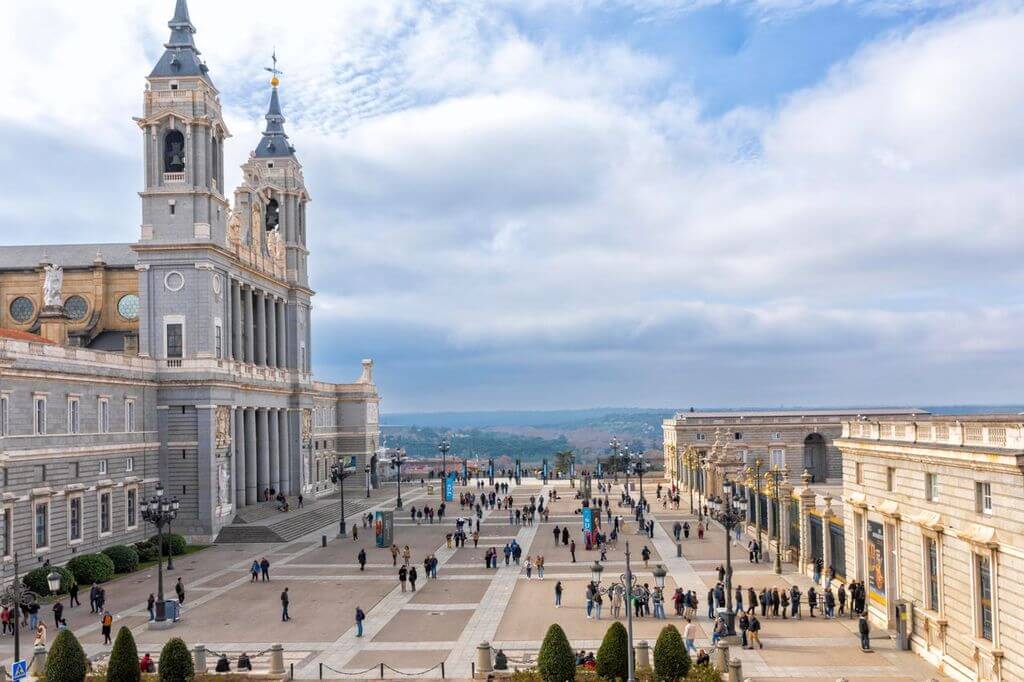
After a midday pause, visitors transition to the Royal Palace of Madrid. Constructed in the eighteenth century on the foundations of a former ninth-century Muslim fortress, the Baroque palace is the largest functioning royal residence in Western Europe, encompassing more than 3,400 richly decorated rooms. Although the Spanish royal family no longer resides on the grounds, the palace remains in active use for official state receptions. Visitors can tour the grand staircases, formal staterooms, and the Royal Armory, which houses an extensive collection of medieval armor and weaponry.
The day concludes at the Almudena Cathedral. Construction on the monumental structure began in the late nineteenth century and concluded in 1993, when it was formally consecrated by Pope John Paul II. While the exterior reflects a neoclassical aesthetic designed to harmonize with the adjacent palace, the interior features a neo-Romanesque crypt supported by more than 400 distinct columns, alongside panoramic views accessible from the building’s central dome.
Day 3: Culinary Discovery
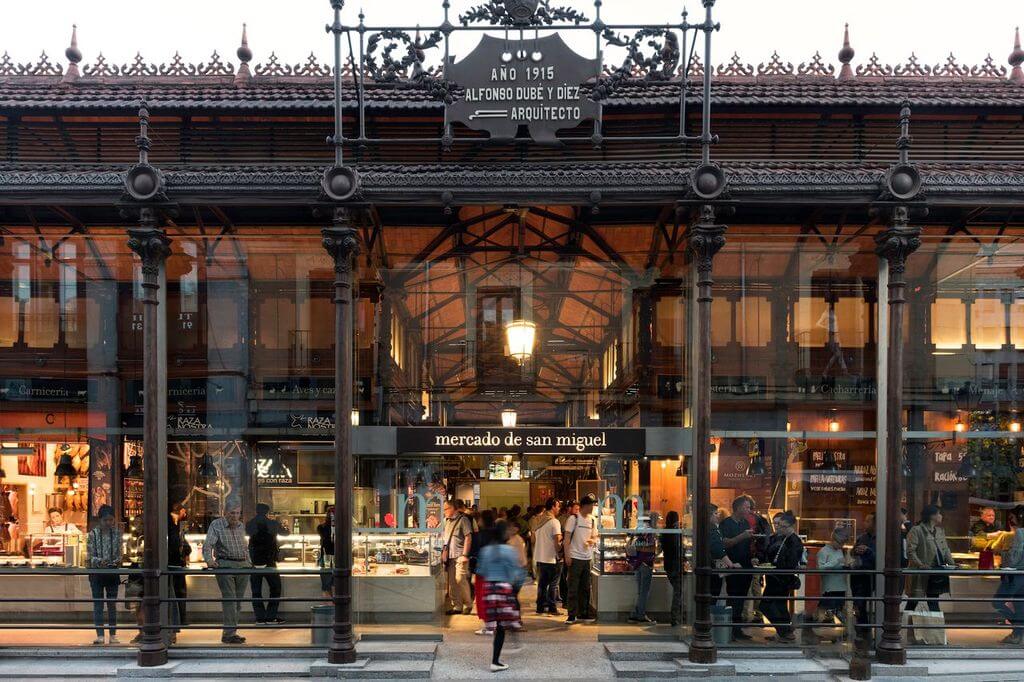
As a recognized capital of global gastronomy, Madrid offers an expansive culinary landscape anchored by its historic food markets. The glass-walled Mercado de San Miguel stands out as a primary destination for gourmet tapas near the Plaza Mayor, drawing steady crowds of locals and visitors alike. Additional neighborhood markets, such as the Mercado de San Antón in Chueca and the Mercado de Vallehermoso, provide deeper insight into regional Spanish ingredients and contemporary dining trends.
For evening dining, travelers frequently seek out Sobrino de Botín, officially recognized by Guinness World Records as the oldest continuously operating restaurant in the world and celebrated historically as a favorite haunt of author Ernest Hemingway. Alternatively, casual dining traditions involve traditional tapas crawls through historic districts such as La Latina or the Barrio de las Letras.
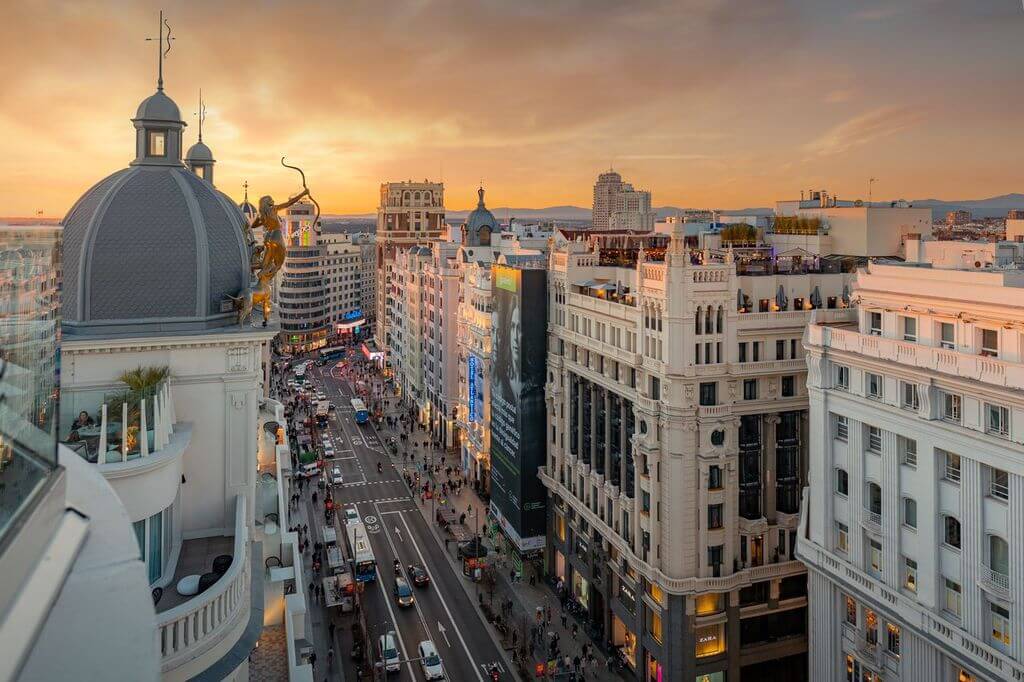
As evening arrives, the city’s sophisticated rooftop culture takes center stage along the Gran Vía. Establishments such as The Roof at Picalagartos and the RIU 360º Sky Bar offer signature cocktails alongside panoramic views of the metropolitan skyline. Concurrently, Madrid has emerged as a leading European hub for plant-based dining, with neighborhoods like Malasaña hosting an expanding array of vegetarian and vegan eateries offering contemporary interpretations of traditional Spanish dishes.
Day 4: UNESCO World Heritage Wonders
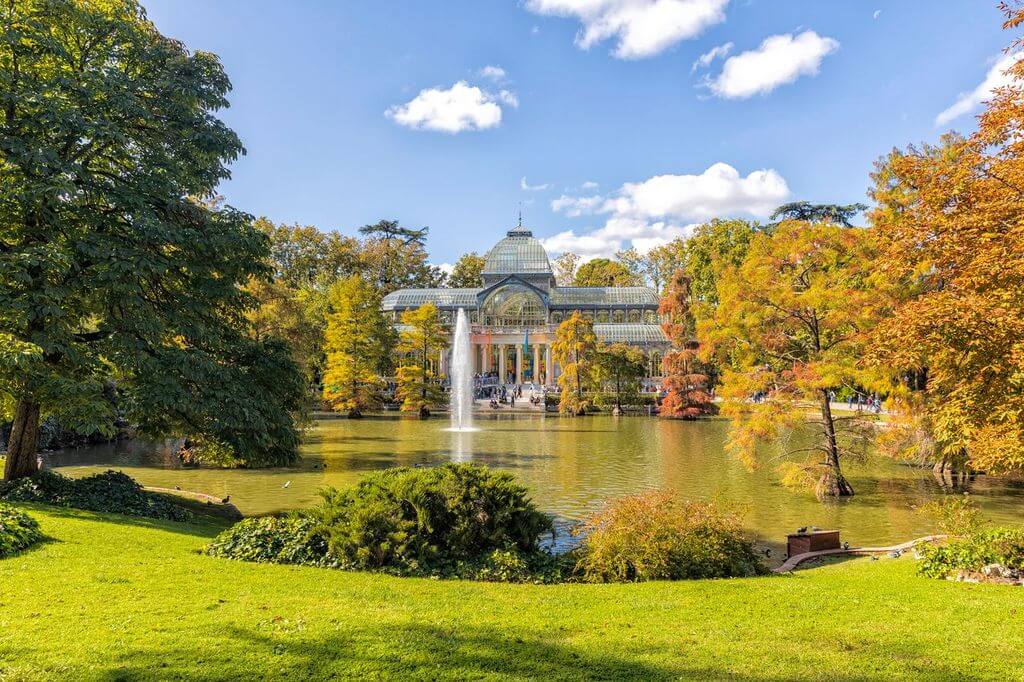
Beyond the immediate boundaries of the capital, the surrounding region contains significant monuments designated as UNESCO World Heritage sites. While the urban Landscape of Light unites nature and royal history within El Retiro Park and the Paseo del Prado, nearby municipalities offer major historical complexes accessible via brief day trips.
Approximately one hour from the city by road lies the Monastery of San Lorenzo de El Escorial. Commissioned in the sixteenth century by King Philip II, the sprawling granite complex functions simultaneously as a royal palace, monastery, basilica, library, and royal mausoleum. Its austere symmetry reflects the serious architectural vision of its royal patron.
A second viable day trip leads south to the Royal Palace and Gardens of Aranjuez. Originally established as a sixteenth-century royal hunting lodge under Philip II, the complex blends Renaissance and Baroque architectural elements within a cultural landscape celebrated for its expansive gardens, fountains, and lavish collections of tapestries and porcelain.
Additionally, the historic university city of Alcalá de Henares lies just 45 minutes from the capital. Recognized for its well-preserved architecture dating from the Spanish Golden Age, the city holds particular renown as the birthplace of Miguel de Cervantes, author of Don Quixote.
Day 5: Off-the-Beaten-Path Treasures
The final day of the itinerary shifts focus toward lesser-known historical sites within the city. The Monastery of Las Descalzas Reales, founded in 1559 by Joanna of Austria, occupies a former palace where aristocratic women historically took refuge, depositing valuable artworks and treasures within the cloistered convent walls. Nearby, the Royal Monastery of La Encarnación, established in 1611 by Queen Margaret of Austria, features austere Baroque exterior walls paired with lavish interior chapels, colorful frescoes, and notable religious relics.
The itinerary concludes at Casa de Campo, the largest public park in Madrid. Spanning 17 square kilometers, the expansive green space incorporates an artificial lake, walking trails, and recreational facilities. Waterfront terraces provide unobstructed views of the Royal Palace and the Almudena Cathedral across the skyline, offering a tranquil setting to complete an extensive exploration of Spain’s historic capital.