

The Queen of Curves: Remembering Zaha Hadid
Seventy-six years ago, the remarkable British-Iraqi architect Zaha Hadid was born. Widely celebrated as the "Queen of Curves," Hadid fundamentally liberated architectural geometry, endowing it with an entirely new expressive identity that challenged conventional design paradigms. Her extraordinary contributions to the field were recognized globally, earning her a damehood from Queen Elizabeth II. Today, the pioneering London-based firm she established, Zaha Hadid Architects, continues her legacy by innovating and constructing breathtaking, avant-garde structures across the globe.
Born into an upper-class family in Baghdad—with a lineage that included a talented writer in her brother and an accomplished artist in her mother—Hadid initially pursued mathematics in Beirut before relocating to London to study architecture. During her time at the Architectural Association School of Architecture, she stood out as an undeniable phenom. Her former professor, renowned architect Rem Koolhaas, famously described her at graduation as "a planet in her own orbit."

In 1980, Hadid founded her own practice and immediately set to work transforming her spectacular, futuristic visions into concrete reality. Among her early groundbreaking projects were the Phaeno Science Center in Wolfsburg, Germany; the Contemporary Arts Center in Cincinnati, Ohio; the administration building of the BMW Factory in Leipzig; and the striking Napoli Afragola railway station in Naples.
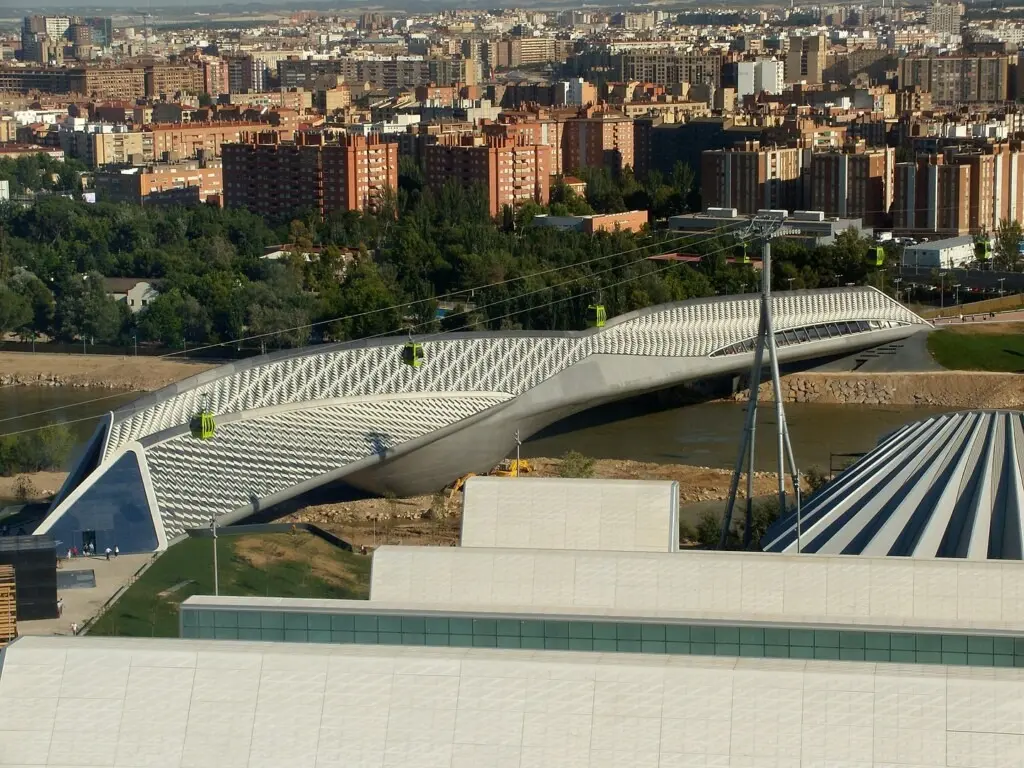
Between 2000 and 2010, Hadid completed a series of monumental works that continuously mesmerized the international architecture community and garnered numerous prestigious awards. Her standout creations from this prolific decade included the iconic Bridge Pavilion in Zaragoza, Spain; the undulating Heydar Aliyev Center in Baku; the fluid architecture of the Guangzhou Opera House; the Vienna University of Economics and Business Library; and the sprawling, organic forms of the Galaxy SOHO in Beijing. Her ability to merge fluid lines with structural engineering pushed the boundaries of what was previously thought possible in modern architecture.

Expanding the Horizons of Knowledge: The Leiden University Libraries
Moving back through the centuries, this date also marks a monumental chapter in the history of European scholarship and education. Four hundred and thirty-nine years ago, the doors of the Leiden University Libraries officially opened, thirteen years after the institution’s initial founding in the Netherlands. This milestone is widely regarded by historians as one of the most critical moments in the development of European learning, serving as a beacon of enlightenment during an era when few cultural centers attempted to widely disperse knowledge.
The establishment of the library coincided with the Dutch revolt against the Hapsburgs, a turbulent period that gave rise to a new nation and a distinct religious identity. The ensuing Dutch Golden Age during the Enlightenment is viewed by many scholars as a high watermark of Western civilization, achieving unprecedented advancements in human and spiritual rights, economic freedoms, and overall standards of living.

According to Nicholas A. Basbanes, a preeminent scholar of libraries, the Leiden University Libraries represent an essential benchmark, celebrated not only for the extraordinary collection of rare materials it has carefully gathered and preserved over the centuries, but fundamentally for being the world’s first scholarly library in a truly modern sense.
The institution boasts a dazzling array of historical firsts: it produced the first printed catalog prepared by an institution of its own holdings; pioneered the systematic identification and preservation of what are now known as "special collections"; made the first organized attempt to cultivate a global network of patrons and benefactors; and operated as the world’s first truly "universal" library. Underpinning all of these achievements was a deep humanistic approach to education and discovery, driven by an unbending belief in the limitless potential of human inquiry.

Carving History into Granite: The Completion of Mount Rushmore
In the United States, this date marks the 85th anniversary of the completion of one of the 20th century’s most ambitious and recognizable sculptural feats: the carving of four American presidents into the imposing granite face of Mount Rushmore.
Located in the Black Hills of Keystone, South Dakota, the monument attracts millions of visitors annually to gaze upon the sixty-foot-high likenesses of George Washington, Thomas Jefferson, Theodore Roosevelt, and Abraham Lincoln. The concept was originally dreamed up by local historian Doane Robinson, who envisioned a monument celebrating Western heroes such as Lewis and Clark, Red Cloud, and Buffalo Bill Cody. However, the Danish-American sculptor Gutzon Borglum argued for a design with broader national resonance, ultimately selecting the four presidential figures whose faces now look out over the landscape.

The realization of the monument required years of intensive labor, beginning with the dynamic blasting away of approximately 450,000 tons of rock before detailed chiseling could commence. Workers utilized a combination of facing bits and pneumatic jackhammers to shape the immense stone portraits. Intriguingly, just twenty miles away in the same mountain range, a sculptor who had previously worked on the presidential faces began blasting granite for an even larger monument dedicated to the Native American warrior Crazy Horse—a project designed to dwarf Mount Rushmore in scale once fully completed.
Empowering Generations: The Birth of Juliette Gordon Low
The day also honors the birth, 166 years ago, of Juliette Gordon Low, the visionary founder of the Girl Scouts of the USA. Reared in a cultured environment and educated at East Coast boarding schools, Low developed a remarkably diverse set of skills and interests. Long before she established the scouting movement in America, she had mastered shorthand, bareback riding, partridge hunting, painting, poetry, theatrical production, nursing, sewing clothes for the impoverished, woodworking, and even metalworking—skills she famously utilized to design and construct iron gates for her home in Warwickshire, Scotland.

After marrying and moving abroad, Low encountered the scouting movement initiated by Robert Baden-Powell and became deeply involved in organizing local Girl Guide groups in Scotland. She encouraged these young women to achieve self-reliance by learning wool-spinning, livestock care, knot-tying, map-reading, knitting, cooking, and first aid, while arranging for military friends to instruct them in drilling, signaling, and camping.
Upon returning to her hometown of Savannah, Georgia, Low made a historic phone call to her cousin Nina, declaring that she had "something for the girls of Savannah, and all America, and all the world, and we’re going to start it tonight." By March 1912, she had officially formed the first two American Girl Guide patrols, setting in motion a movement that would empower millions of young women across the nation and around the globe through leadership, outdoor skills, and community service.

Sparking the Reformation: Martin Luther’s 95 Theses
Finally, this date carries immense religious and historical weight, marking the day in 1517 when Martin Luther nailed his 95 theses to the door of All Saints’ Church in Wittenberg, Germany, thereby igniting the Protestant Reformation.
As an austere monk and scholar, Luther shocked the religious establishment of his time by authoring a sharp academic challenge against the Roman Catholic Church’s widespread practice of selling indulgences to absolve sins. While his legacy is complex—including deeply regrettable anti-Semitic writings later in his life—his theological and cultural impact was monumental. Luther championed widespread literacy by translating the Bible into the German vernacular rather than Latin, arguing that individual believers should read the scriptures themselves and asserting that no human priest stood between humanity and God. This act of intellectual and spiritual defiance catalyzed a massive political and religious movement that forever altered the course of European and global history.