
Fomichova, author of Under My Skin and Empath Diaries, explores the quiet process of healing, boundaries, and self-worth through the lens of her own lived experiences. Her insights suggest that our adult relationship with rest is often a direct reflection of the environments in which we were raised. For many, learning to navigate stress requires dismantling long-held beliefs about productivity, emotional suppression, and what it truly means to find comfort.
The Two Worlds of Childhood Conditioning
To understand the roots of modern burnout, Fomichova points to her own childhood, which she describes as a stark division between two completely different psychological landscapes. This duality, she suggests, laid the foundation for her understanding of stress and nervous system regulation.
The first world was her parents’ home—an environment she likens to an "ice castle." On the surface, the household was pristine, orderly, and beautiful, appearing exactly as a respectable home was supposed to look. Beneath the aesthetic perfection, however, lay a cold emotional climate. In this home, duty reigned supreme. Fomichova recalls that her mother rarely permitted her to pursue genuine desires, expecting her instead to focus solely on what "had to be done."
This rigid emphasis on obligation over inspiration left Fomichova spending many evenings exhausted, frustrated, and quietly holding back tears. Whenever she expressed discomfort or complained about the pressure, her mother’s response was unyielding: "You have to endure it. That’s how everyone lives." This conditioning taught her early on that endurance was the ultimate virtue and that emotional distress was simply a baseline requirement of existence.
The second world was her grandmother’s home—a sanctuary characterized by warmth, creativity, and structural imperfection. Unlike the immaculate but cold "ice castle," her grandmother’s house was rarely perfectly tidy. It was a space constantly in motion, filled with the remnants of baking, sewing, gardening, and culinary experimentation. Her grandmother engaged in these activities not out of a sense of rigid duty, but simply because they brought her joy.
In this warmer environment, Fomichova was never forced to eat food she disliked and was encouraged to connect with her surroundings. On warm summer nights, her grandmother loved sleeping outside in the garden beneath the stars, frequently inviting Fomichova to join her—an experience her mother consistently forbade.
Though her grandmother was not perfect, she left Fomichova’s nervous system with an invaluable lesson: the importance of balance. She demonstrated that life does not require forcing oneself through every obstacle under the weight of obligation, and that some aspects of human existence can only truly flourish when guided by inspiration.
The Pitfalls of Modern Coping Mechanisms
When adult life presents overwhelming days, the natural instinct is to seek immediate relief. However, Fomichova argues that many of the default habits adults turn to after a difficult day do not actually facilitate recovery. Instead, they serve as temporary distractions that postpone emotional processing, ultimately making the following day even more difficult to navigate.
Through her writing and personal reflection, Fomichova identifies five prevalent habits that quietly undermine long-term well-being, offering healthier, nervous-system-aligned alternatives for true recovery.
1. The Trap of Endless Digital Stimulation
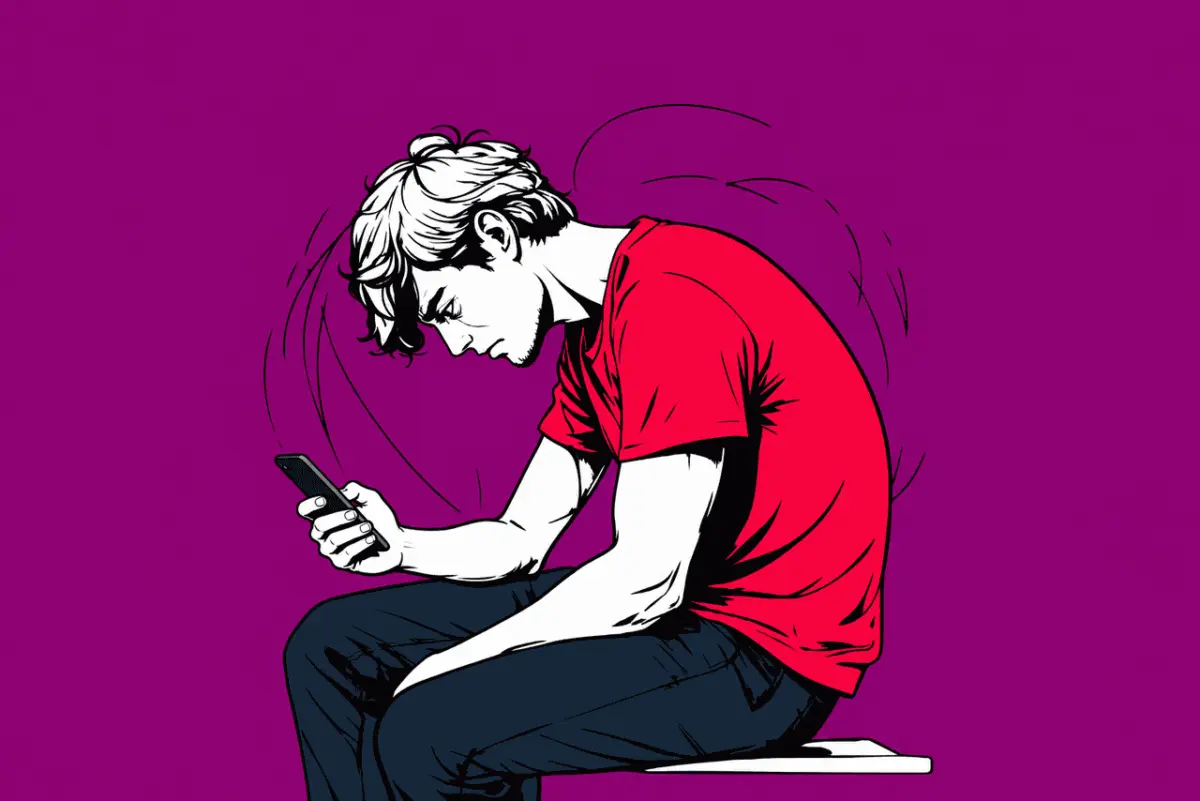
The habit of picking up a smartphone to scroll through social media after a long day is often viewed as harmless relaxation. Yet, a brief check-in frequently devolves into hours of mindless consumption. Rather than feeling rested, individuals often emerge from these digital sessions feeling more overwhelmed than before.
Fomichova notes that the brain often seeks out these distractions because slowing down requires acknowledging the sheer depth of one’s emotional exhaustion. Furthermore, digital algorithms rarely deliver content that aligns with genuine human needs. Instead, they flood the mind with unsolicited recommendations, strangers’ opinions, and endless streams of unnecessary information.
The Alternative: Embracing Intentional Stillness
To counteract digital fatigue, Fomichova advocates for rituals that quiet the mind rather than filling it. She suggests dedicating just ten minutes to doing absolutely nothing. This can involve simple, sensory-rich activities such as:
- Preparing and slowly enjoying a comforting cup of tea.
- Watching the sky change colors during a sunset, ideally shared with a loved one.
- Sitting quietly beside an open window to breathe fresh air.
- Spending time near water, whether taking a warm bath, a shower, or resting near a natural water source.
For Fomichova, even spending a few quiet moments in a small green space near her apartment helps regulate her nervous system. While she cannot sleep under the stars in a garden like her grandmother did, she has found that choosing to step away from social media platforms like Instagram provides her mind with far more genuine inspiration than hours spent searching for it online.

2. The Cost of Emotional Masking
Many individuals learn to wear emotional masks during childhood, carrying these defensive habits straight into adulthood. Phrases such as "I’m fine," "It wasn’t that bad," or "I’ll deal with it tomorrow" are frequently used to deflect internal pain. While postponing emotional processing can occasionally serve as a temporary coping strategy, chronic avoidance ensures that emotions remain trapped. Over time, suppressed feelings tend to resurface as heightened anxiety, irritability, physical exhaustion, or emotional numbness.
Fomichova traces this behavior back to her childhood, where her mother believed that maintaining a public appearance of perfection was a necessity of life. She was expected to smile regardless of her actual feelings. As an adult, Fomichova has rejected this expectation. She no longer forces herself to pretend to be okay, allowing herself to cry when necessary.
Furthermore, she has extended this philosophy to her own daughter, teaching her that every emotion has a legitimate place. In Fomichova’s view, acknowledging difficulty is not a sign of weakness; rather, pretending that feelings do not exist is what ultimately drains human strength.
The Alternative: Validating the Difficulty
True emotional recovery begins with the simple, honest acknowledgment: "Today was hard." Permitting oneself to experience and express difficult emotions is a vital step in preventing them from manifesting as physical or psychological strain.
3. Reframing Stress as Information, Not Failure
A common societal misconception is that experiencing stress is proof of personal inadequacy or lack of resilience. This perspective leads individuals to criticize themselves for feeling overwhelmed, rather than investigating the root causes of their distress.
Fomichova emphasizes that stress should be viewed as valuable information. It serves as an internal signal indicating that boundaries have been crossed, workloads have become unsustainable, or rest is desperately needed. Often, a stressful day is simply the result of external factors beyond one’s control—such as others ignoring boundaries or creating unnecessary pressure. The only element within an individual’s control is their subsequent response.
To illustrate this, Fomichova recalls her grandmother’s lighthearted warning that suppressed emotions were like "tiny worms" that would "start nibbling at you from within" if kept trapped inside. Thanks to this perspective, Fomichova learned not to fear her emotions. By allowing herself to fully feel and then release her feelings, she avoids carrying the accumulated stress of yesterday into the potential of tomorrow, treating each morning as a clean sheet of paper.
4. Dismantling the Belief That Rest Must Be Earned
The modern productivity narrative often dictates that rest is a reward reserved only for those who have completed their tasks. Individuals tell themselves they will rest after answering "one more email," folding "one more load of laundry," or completing "one more hour of work."
The flaw in this logic is that the finish line is constantly moving; there will always be another task, notification, or obligation waiting to be addressed. Fomichova reminds readers that rest is not a luxury to be earned, but a fundamental biological necessity. The human brain cannot recover when it is constantly forced to wait for permission to slow down.
For a period, Fomichova lived in this cycle of constant motion, confusing rapid activity with meaningful progress. It was only after slowing down that she realized many of her daily routines were automatic habits that consumed her time without producing meaningful fulfillment.
When she finally chose to step away from expectations and algorithms, her body, nervous system, and creative work experienced a profound transformation. Her creativity shifted from a state of mere "production" for external audiences to a living, breathing expression of her authentic self.
Moving Toward Gentle Self-Compassion
Ultimately, Fomichova suggests that recovery is not about escaping emotions, but about creating an internal environment of safety where those emotions can be experienced without becoming overwhelming.
When facing an exceptionally challenging day, she recommends a powerful psychological shift: imagining the exhausted adult self not as a resilient grown-up, but as a tired child who has had a difficult day. By asking how one would treat that child—whether with criticism and demands to work harder, or with a warm drink, a soft blanket, and patient comfort—the path to self-compassion becomes clear.
Healing does not require individuals to become tougher or to maintain an artificial state of constant positivity. Instead, it invites them to become the safe harbor they have been seeking. While the external world will continue to demand higher speed, greater achievement, and constant availability, the nervous system requires attention, gentleness, and the occasional courage to simply rest.