
This tension has placed the current AI-driven economic cycle at the center of financial discussions. Investors worry that while artificial intelligence is undoubtedly a major technological milestone, the mania surrounding it is moving too fast and scaling too aggressively. The common fear is that the world is heading toward a magnified version of the dot-com crash of the early 2000s—an era that shaped the early career of financial commentator and long-retired writer Mr. Money Mustache, before the subsequent market correction nearly derailed his employment and citizenship applications.

Addressing these widespread anxieties, financial commentators have taken to public speaking circuits to dissect the psychology of market cycles, recently presenting at events like Camp FI Midwest and preparing further engagements for upcoming national financial forums. The core message running through these discussions is straightforward: while financial media loves to spin a scary story about market bubbles, national debt, and technological disruption, human prosperity does not fundamentally rely on abstract numbers inside the computer systems of the financial market.

To understand why current anxieties mirror those of past decades, it is helpful to look back twenty years. In 2006, investors were asking remarkably similar questions about how anyone could sleep at night given the state of the world. Back then, public discourse was dominated by fears of geopolitical instability, leadership crises, inflation, rising national debt, and an overvalued housing market that eventually triggered the Great Financial Crisis. There were parallel panics over economic outsourcing to rapidly developing nations and intense debates over "peak oil," with forecasters predicting that fossil fuel scarcity would spell doom for global civilization.

Yet, looking at a twenty-year retrospective of the stock market reveals that even the Great Financial Crisis—the deepest market crash since the Great Depression—was ultimately a temporary dip in a long-term upward trajectory. A hypothetical investment made during those peak worry years of 2006 would have expanded significantly over the subsequent two decades, easily weathering both the 2008 crash and the pandemic-induced market volatility of 2020.

Simultaneously, the broader world experienced remarkable progress rather than collapse. Over a twenty-year span, the proportion of the global population living in extreme poverty dropped dramatically, while infant mortality rates were cut in half. Clean energy transitioned from an idealistic talking point to a dominant economic force, with solar panel costs plunging and solar generation expanding rapidly to rival traditional power sources. Electric vehicle adoption surged from near-zero to substantial market shares globally.

This historical perspective highlights a fundamental reality of capitalism: the financial system is inherently choppy and prone to wild swings, but beneath the surface volatility, real people continue to do real work and create genuine innovations. Prosperity stems directly from productivity rather than temporary stock market valuations. If a financial system ever experiences a catastrophic failure due to distorted figures, society simply recalibrates the metrics and gets back to work, relying on the enduring tools of human ingenuity and productivity to drive standards of living forward.

Despite these historical realities, anxiety persists, pointing to a deeper psychological driver than actual economic risk. Human beings are, at their core, danger-detection machines. Evolution has carefully tailored our psychology to watch out for predators, disease, and scarcity. However, a quirk of this detection machinery is that once immediate physical survival threats are successfully resolved, the brain continues looking for new things to worry about, constantly moving the goalposts.

When people conquer basic survival and establish a comfortable upper-middle-class lifestyle, the focus of anxiety often shifts toward abstract financial strategies, tax optimization, or compliance hurdles like Required Minimum Distributions, which force retirees to withdraw and pay taxes on wealth accumulated over a lifetime. This pervasive background fear is further amplified by modern media diets, which rely on a hand-picked selection of the day’s scariest stories to capture attention.

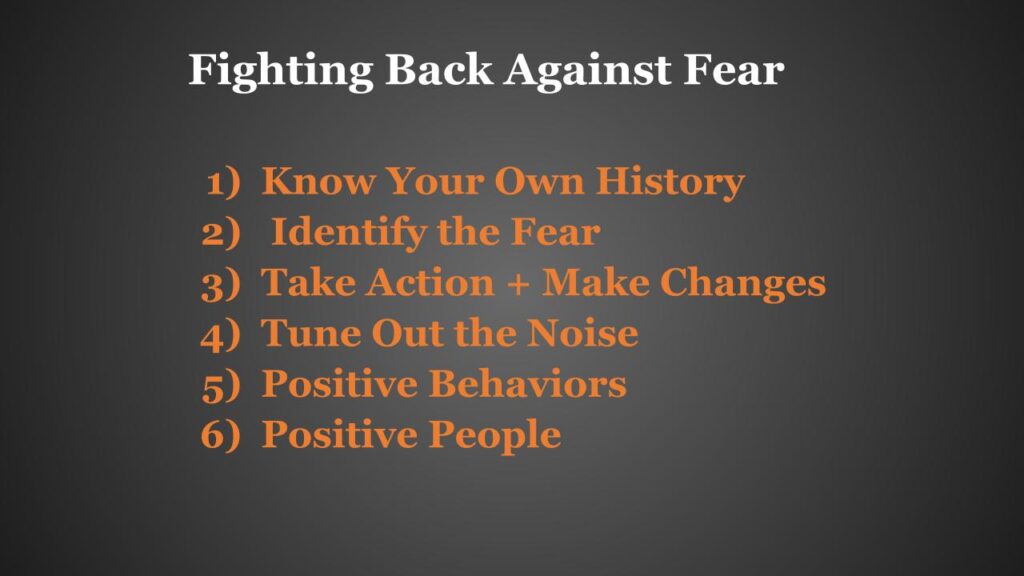
Combatting this cycle requires self-awareness and an understanding of personal history. Many financial fears stem from childhood experiences or generational scarcity mindsets passed down from parents who survived historical hardships like the Great Depression. Recognizing that these fears belong to the past rather than an objective assessment of the present is a crucial first step. Furthermore, taking concrete action helps dismantle unfamiliarity, transforming vague dread into resilience and competence.
Rather than viewing technological shifts through a lens of pure catastrophe, adopting an experimental mindset helps reframe uncertainty as an opportunity. The current AI boom is a prime example. While some view artificial intelligence as an existential threat or an unstable market bubble, it can also be understood as a sophisticated form of cognitive leverage—a technological tool designed to boost human efficiency and productivity.

Like every major technological leap before it, from the printing press to the internet and smartphones, AI will inevitably displace certain entry-level office and industrial roles while simultaneously lowering service costs and catalyzing entirely new industries. Much of the financial reward will naturally concentrate among those who own and implement the technology, benefiting broad market shareholders in the process. Ultimately, artificial intelligence represents another choice point: an opportunity to choose between paralyzing fear and proactive adaptation, learning, and engagement.

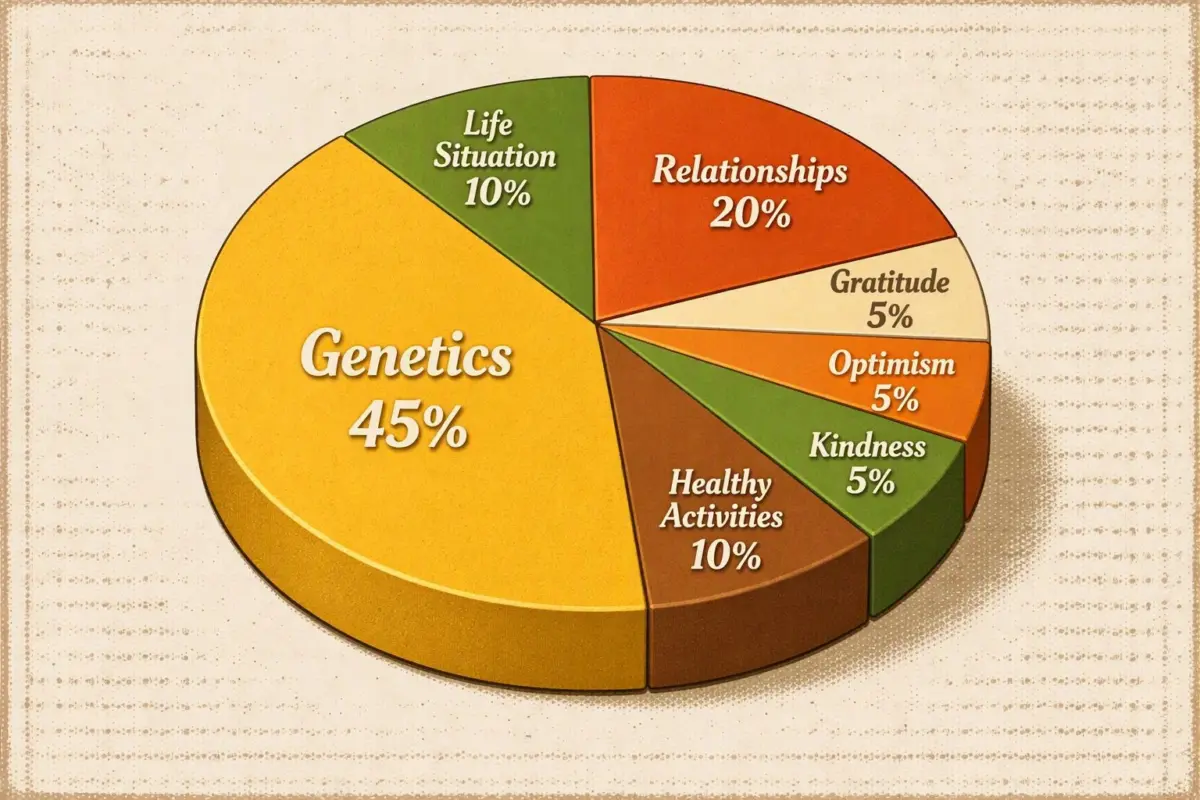
As financial commentators frequently emphasize, the pursuit of a satisfying life requires looking past short-term market noise and focusing on genuine human connections, optimism, and purposeful activity. Everything of value in life lies just on the other side of fear, waiting for those willing to step forward and engage with the world as it is.