For those who have largely tuned out the financial news cycle to focus on daily life, the core narrative of the AI boom can be distilled into rapid technological adoption, massive corporate capital expenditures, and intense public debate over its long-term societal impact. But for active market participants, the pressing question remains whether this cycle is simply too much, too fast, threatening to trigger a modern, amplified version of the dot-com crash of the early 2000s.

That earlier market frenzy holds personal resonance for figures who navigated the turn-of-the-century tech boom, an era that launched early careers and paths to financial independence before the subsequent market correction nearly derailed employment and legal residency statuses. As questions mount regarding the current investment cycle, seasoned financial commentators and early retirement advocates are taking their analysis public. Presentations delivered at gatherings such as Camp FI Midwest and upcoming addresses at the Bogleheads conference aim to contextualize current market anxieties within a broader historical perspective, challenging the pervasive narrative of impending doom.
Will the AI Bubble Ruin Our Retirement?
Having crossed the milestone of two decades of retirement, financial independence advocates have grown accustomed to market volatility. Yet, questions from peers about how anyone can sleep at night given the state of the world continue to highlight a deep-seated cultural anxiety. When presented with a laundry list of modern global worries—ranging from geopolitical instability involving figures like Vladimir Putin to inflation, national debt levels, and the perceived threat of an AI market bubble—it becomes clear that societal anxiety is a perennial condition.

Interestingly, this sense of impending crisis is far from novel. Conversations from twenty years ago, specifically in 2006, featured remarkably similar anxieties. Back then, observers worried about geopolitical leaders like George W. Bush and Saddam Hussein, ongoing conflicts in the Middle East, surging national debt, and inflation. The overvalued stock market of that era was driven by a housing bubble rather than an artificial intelligence boom, while fears of job displacement centered on outsourcing to India and China rather than automated algorithms. Economists and pundits also debated peak oil, warning that relentless increases in fossil fuel demand would inevitably outstrip supply with disastrous consequences.
Looking back, the subsequent reality defied the most catastrophic predictions. The world did experience the Great Financial Crisis, triggered by irrational exuberance over rising home prices combined with complex financial leverage. It was the steepest market downturn since the Great Depression. Yet, viewed through the lens of long-term history, even that severe dislocation appears as a temporary dip. A hypothetical investment of one hundred thousand dollars made prior to that era would have nonetheless grown significantly over the following twenty years, weathering subsequent disruptions such as the pandemic-related market shock of 2020.

Simultaneously, broader global indicators demonstrated substantial human progress. The proportion of the global population living in extreme poverty dropped sharply over a twenty-year span, while global infant mortality rates were cut in half. Clean energy technology advanced dramatically, with solar panel manufacturing costs falling sharply, allowing solar power to become the dominant source of new electricity generation worldwide. Sales of electric vehicles surged from negligible levels to claim a substantial share of global automotive sales, illustrating how technological innovation consistently outpaces scarcity fears.
Prosperity Comes From Productivity
The persistence of financial anxiety raises a fundamental question: is the current AI-driven market environment genuinely different, or is it merely the latest manifestation of cyclical panic? Pundits warn that soaring national debt levels, combined with the sheer scale of the artificial intelligence boom, could prevent a standard economic recovery, or that machine intelligence might eventually outpace human utility altogether.

However, financial media narratives frequently overlook a core economic principle: true economic prosperity is not derived from the financial system or stock market valuations, which ultimately represent numerical expressions of underlying economic activity. Rather, long-term prosperity is rooted entirely in human productivity.
Market economies are inherently volatile, prone to sharp cyclical swings and speculative excess. Beneath the surface turbulence, however, real people perform tangible work and develop genuine innovations. The financial system itself is a human construct; if speculative numbers become detached from reality and the system experiences a systemic reset, financial institutions can and do establish new accounting frameworks and resume productive operations, a mechanism demonstrated during the 2008 financial crisis and prior historical corrections.

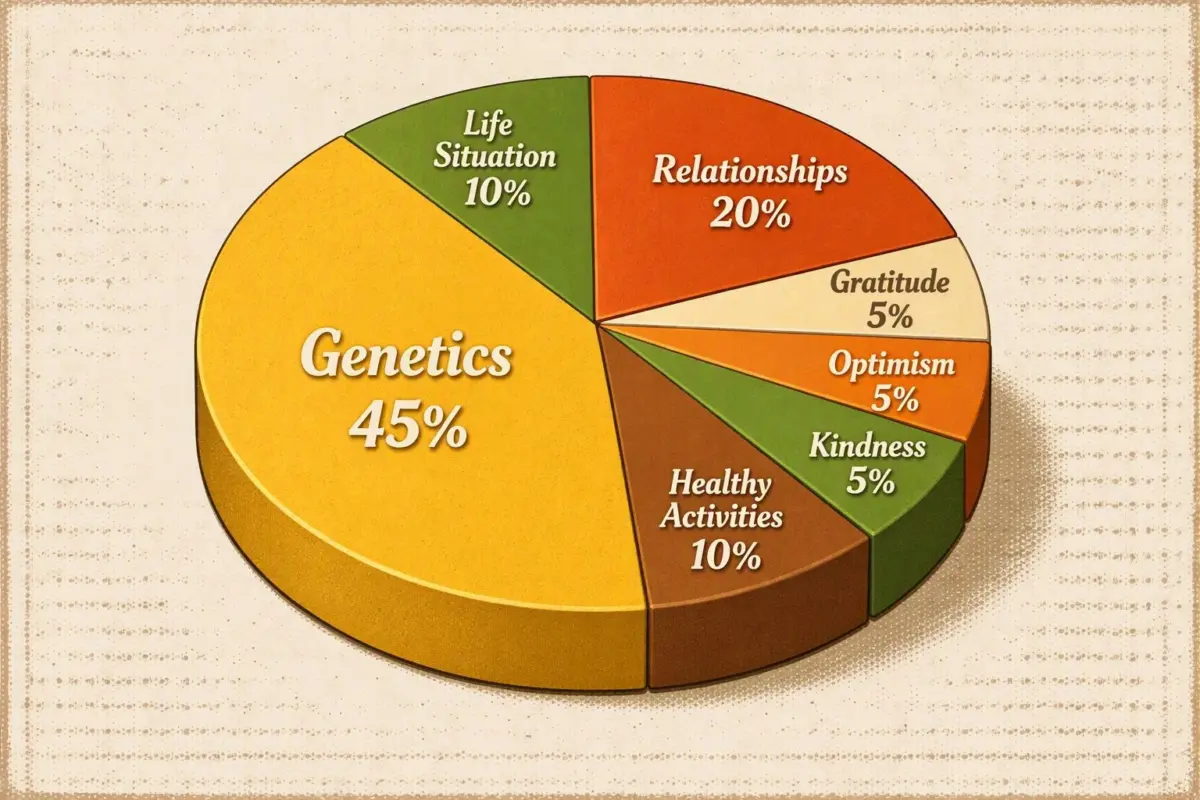
The fundamental drivers of living standards, economic growth, and the feasibility of early retirement remain tied to productivity enhancements. Once a society achieves a baseline level of material wealth and security, further increases in financial accumulation yield diminishing returns regarding subjective human happiness. Modern psychological and sociological observations suggest that beyond meeting basic physiological and security needs, individual well-being depends far more on non-financial factors, including close personal relationships, community engagement, gratitude, and physical health.
Combating Fear in Modern Financial Planning
Despite historical evidence demonstrating that economies adapt and grow following speculative bubbles, many individuals retain a persistent background of financial anxiety. This phenomenon is largely rooted in human evolutionary biology. Humans evolved as adaptive danger-detection machines, utilizing baseline vigilance to protect against physical threats, predators, and environmental scarcity.

When immediate physical dangers are successfully mitigated by modern civilization, the human brain does not simply turn off its vigilance mechanism; instead, it shifts the goalposts. Individuals transition from worrying about starvation and basic survival to fretting about social inclusion, relative socioeconomic status, tax strategies, or regulatory mandates such as required minimum distributions on retirement accounts.
Overcoming this pervasive anxiety requires conscious self-awareness and an understanding of personal history. Fear of financial scarcity is frequently transmitted across generations, stemming from childhood experiences or family histories shaped by historical disruptions like the Great Depression. Identifying the specific roots of financial anxiety and confronting the realistic worst-case scenarios—recognizing that absolute destitution is exceedingly rare for those who have practiced disciplined saving—allows individuals to take rational action.

Action remains one of the most effective antidotes to fear. By actively engaging with unfamiliar situations, individuals build resilience and adaptability. Minimizing exposure to sensationalized daily news media, which disproportionately amplifies fear for commercial engagement, further helps stabilize mental well-being. Aligning daily habits with physical health—prioritizing outdoor activity, interpersonal connection, and constructive problem-solving—reconnects individuals with the lifestyle conditions for which human biology is optimized.
Everything Is an Experiment
Viewing major life transitions—whether changing careers, relocating, or entering early retirement—through the framework of an experiment helps mitigate the paralyzing effects of uncertainty. This experimental mindset applies directly to the technological shifts currently underway.

Rather than succumbing to doom-scrolling and generalized apprehension regarding artificial intelligence, analysts with backgrounds in technology and economics view AI as a transformative tool—effectively a cognitive nail gun designed to enhance human efficiency and productivity. Like previous technological revolutions, including the advent of personal computing and the internet, artificial intelligence will inevitably displace specific routine administrative and logistical tasks while simultaneously reducing service costs and spawning entirely new industries.
While productivity enhancements tend to concentrate economic rewards among capital owners and shareholders—a dynamic reflected in broad stock market performance—they ultimately drive the broader economic growth that elevates overall living standards. Artificial intelligence, much like every preceding technological disruption, presents an opportunity for adaptation, continuous learning, and purposeful action rather than unreasoned panic.

Ultimately, navigating the uncertainties of modern financial markets and emerging technological landscapes requires distinguishing between irrational background fear and objective reality. As long-term financial independence movements frequently emphasize, personal growth and security lie on the far side of perceived apprehension, accessible to those willing to confront and move past their fears through deliberate, rational action.