From Shawn Gude’s reappraisal of American socialist Eugene V. Debs to Barbara Trapido’s rediscovered classic, Meghan O’Gieblyn’s philosophical memoir on addiction, Madeline ffitch’s community-defense novel, and Tom McCarthy’s labyrinthine exploration of legal bureaucracies, these works touch on timeless questions of human nature, community resilience, political resistance, and the relentless machinery of modern institutions.
Reevaluating the Legacy of American Socialism Through Eugene V. Debs
What can the history of American socialism tell us about the present and future of democratic politics? Over the past decade, the United States has witnessed a marked resurgence of interest in socialist politics, propelled by Bernie Sanders’s presidential campaigns, the emergence of prominent figures like Alexandria Ocasio-Cortez, and local electoral victories. Yet, each of these contemporary political figures has had to confront a long-standing, deeply entrenched assumption in American political culture: the widespread notion that socialism simply cannot find lasting traction in the United States.

Addressing this historical skepticism, former Jacobin editor Shawn Gude has penned American Socialist: The Life and Legacy of Eugene V. Debs. In her review for The New Republic, Joanna Scutts notes that Gude’s biography offers an important corrective to conventional narratives by illuminating the forces that shaped America’s foremost socialist evangelist, alongside the exceptional, coordinated efforts of his political opponents to crush both him and his burgeoning movement. Along the way, Gude’s meticulous account reveals a deeper historical truth: that in the United States, the story of socialism is fundamentally intertwined with the story of relentless opposition to socialism.
As Scutts describes, Debs’s formidable political oratory relied on a unique rhetorical brew that fused nationalist and Christian mythology with Marxist theory, evoking the moral spirit of Christ and the fiery conviction of the abolitionists. During an era when political oratory routinely made stars of unlikely speakers, Debs traveled the country spreading what felt to many audiences like a new political religion. Critics and followers alike frequently drew comparisons between Debs and Jesus Christ.
Yet, international socialists who initially inspired Debs were often bewildered by the sheer intensity of the capitalist pushback in a nation lacking traditional monarchies or ancient, entrenched feudal hierarchies. Scutts suggests that while the broader promise of American socialism remains unfulfilled, the American landscape is uniquely defined by its capacity for reinvigoration and resistance. Ultimately, Debs’s story demonstrates that genuine political and social transformation will likely not emerge from a single charismatic leader, but rather from the collective resistance, solidarity, and joyful community of ordinary people.
Rediscovering Barbara Trapido’s Brother of the More Famous Jack
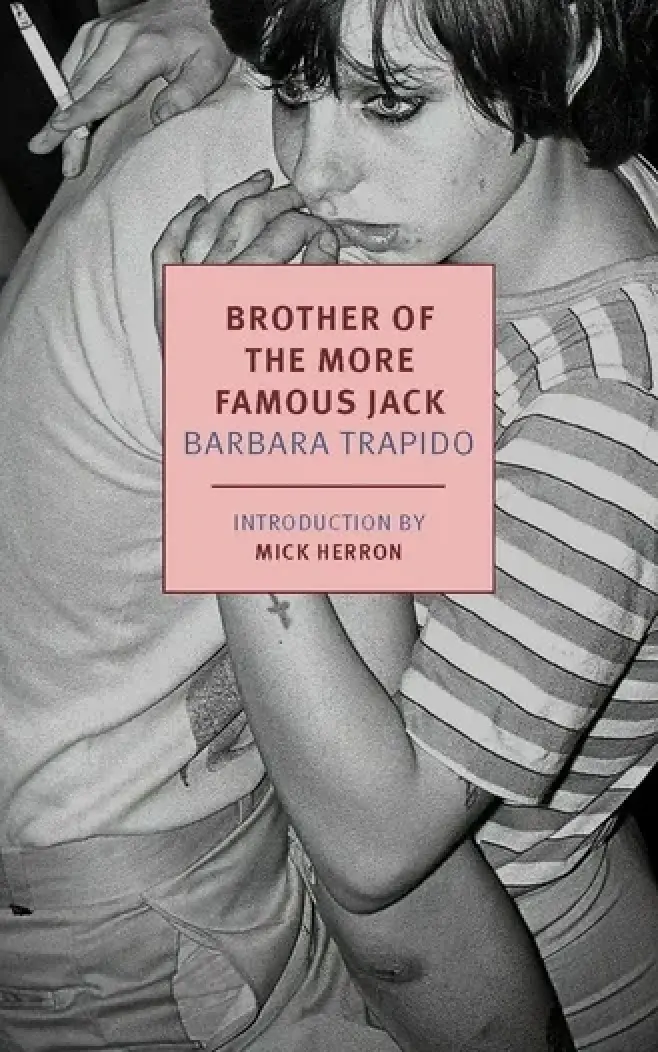
While political histories interrogate the mechanics of systemic change, other literary works turn their lens toward the intimate micro-politics of domestic life, education, and social mobility. Among the notable critical appreciations of the week is Dwight Garner’s review in The New York Times of Barbara Trapido’s novel Brother of the More Famous Jack, which has recently returned to the spotlight.

Garner confesses an immediate captivation with Trapido’s novel, praising its literate, funny, cruel, and eccentric prose. Despite possessing an awkward and easily forgotten title—an allusion to the talented painter brother of poet William Butler Yeats—the book operates as a pocket classic that takes human life seriously without descending into sentimentality.
Garner admits a special affinity for narratives centered on young people who grow up in narrow cultural circumstances, possessing few books or artistic influences at home, only to discover alternate ways of living through unconventional and urbane mentors. Trapido’s novel stands as a premier achievement within this literary subgenre. Highlighting the novel’s razor-sharp dialogue, Garner remarks that the interactions among the characters carry the intellectual and verbal velocity of Tom Stoppard, where constant verbal sparring serves as the primary dialect of affection.
Meghan O’Gieblyn’s Will and Attention and the Geography of the Soul
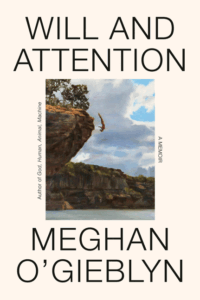
Shifting from fiction to personal nonfiction, Meghan O’Gieblyn’s memoir Will and Attention receives a penetrating analysis from Rhian Sasseen writing in The Baffler. In an era dominated by technological binaries, secularism, and digital disenchantment, O’Gieblyn tackles terms traditionally viewed as antique or overly abstract, such as the human soul and individual consciousness.
Set largely during the isolating period of the COVID-19 pandemic, O’Gieblyn’s memoir traces her frightening, abrupt relapse into severe alcoholism, juxtaposed against an unexpected, intellectual flirtation with Catholicism years after she had formally renounced religion to embrace atheism. Sasseen notes that the book functions as an exploration of various forms of obliteration: the self-erasure caused by substance abuse, which clouds an individual’s self-perception, and the philosophical destruction of the individual ego when brought face-to-face with the divine.
Drawing upon an eclectic intellectual framework that includes French philosopher Simone Weil, German philosopher Arthur Schopenhauer, and traditional Catholic theology, O’Gieblyn elevates the conventional addiction memoir into a profound philosophical inquiry. The book examines the paradox of human willfulness—how individuals who achieve stable, happy lives can occasionally succumb to a destructive boredom that compels them to dismantle their own well-being. By framing addiction through a sweeping historical and philosophical lens, O’Gieblyn successfully avoids reducing the complex human experience of substance abuse strictly to a biological disease or a simple matter of moral choice.
Community, Courage, and Complication in Madeline ffitch’s Avalon, Rise
In contemporary fiction, Madeline ffitch’s new novel Avalon, Rise is examined by Lily Meyer in The Atlantic. Meyer characterizes the book as a sophisticated, intellectually complex, and slyly humorous work centered on the timeless thematic conflict of confronting evil with courage.
Set in a small town that must actively signal that white supremacists are unwelcome, Avalon, Rise explores the grueling reality of standing up to forces that threaten community stability. ffitch deliberately avoids preaching or demanding absolute ideological purity from her characters, allowing the narrative to capture the frustrating, messy, and confusing nature of trying to do good.
Meyer draws a compelling parallel between ffitch’s adult novel and classic children’s literature—such as Maurice Sendak’s Abiyoyo, Arnold Lobel’s Frog and Toad, and Perry Brett’s Herschel and the Hanukkah Goblins—noting that great children’s books and sophisticated adult novels share a common understanding. They recognize that while life presents clear ethical boundaries, navigating those boundaries as small, fallible, and confused human beings is rarely easy. Through this synthesis, ffitch constructs a narrative that balances a clear moral vision with the complicated realities of collective action.
Navigating the Labyrinths of Tom McCarthy’s The Rhyl Poster
Rounding out the week’s critical assessments, Max Callimanopulos reviews Tom McCarthy’s latest novel, The Rhyl Poster, in The New Yorker. Known for his densely intellectual and conceptually rigorous fiction, McCarthy continues a trajectory that emphasizes intricate technical jargon, bureaucratic systems, and institutional infrastructure.
Callimanopulos notes that The Rhyl Poster is saturated with references to networks, spreads, channels of association, vectors, and complex legal frameworks. At a glance, the book resembles a legal thriller filtered through the avant-garde sensibilities of experimental writer Georges Perec, sharing stylistic DNA with McCarthy’s previous works like Satin Island and The Making of Incarnation.
Though initially challenging and resistant to conventional novelistic pleasures—filled with dense sentences and a plot that can feel simultaneously frantic and empty—Callimanopulos observes that the novel gradually exerts a strange, cumulative power upon the reader. By the concluding chapters, McCarthy appears less concerned with X-raying institutional bureaucracies and more interested in adopting a purely topographic view of the world. In doing so, the novelist seems to be charting a path toward a different kind of writing—one that steps away from curated artistic spaces to look more directly at the surrounding world.