
Yet, this rapid ascent has sparked an inevitable question across financial circles: Is this unprecedented market performance real, or is it a bubble driven by financial illusion and artificial intelligence hype?

To answer this concern, it helps to return to the fundamental definition of what a stock actually is. At its core, a stock functions similarly to a rental house. When an investor owns a rental property, they are entitled to collect rent. After covering expenses, the remaining amount constitutes the profit. If local real estate sale prices skyrocket while tenant rents remain flat, the higher valuation looks impressive on paper, but it yields no additional income unless the property is sold—at which point the investor faces equally inflated prices to buy a replacement asset.
An investor’s cash flow only increases if the rental business itself becomes more profitable through renovations, streamlined expenses, or added units. When that property eventually changes hands, the purchase price should theoretically reflect that future stream of income. For instance, a property generating $24,000 annually in net income and selling for $240,000 reflects a price-to-earnings (P/E) ratio of 10. If a buyer pays $480,000 for that same income stream, the P/E ratio doubles to 20, representing a fantastic outcome for the seller but a much less lucrative proposition for the incoming investor.

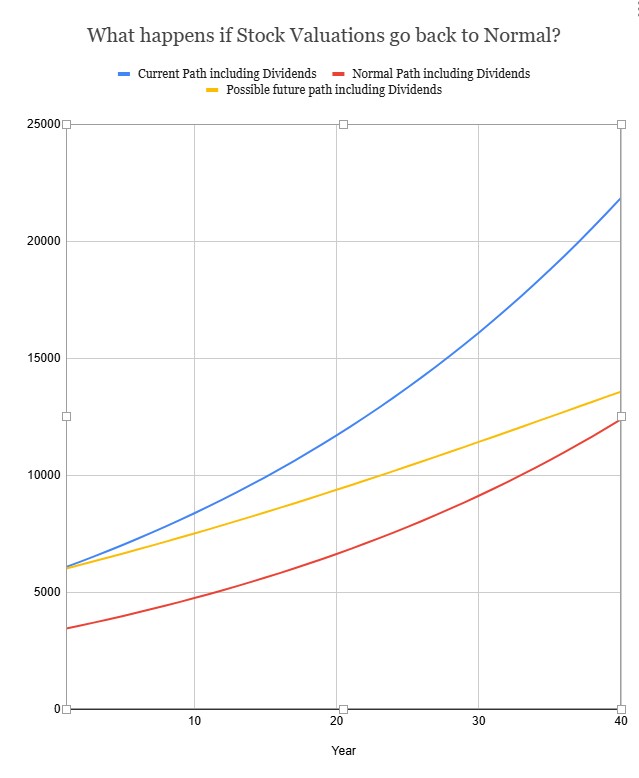
Translating this dynamic to the broader stock market reveals a striking disparity. An investment of $100,000 placed into the market in 2019, with dividends reinvested, would have grown to roughly $256,960 today, marking a 157 percent gain. However, over that exact same timeframe, the underlying share of company earnings from that basket of stocks has risen from $5,290 to $7,540—a modest 42 percent increase, according to market analysis data.
Consequently, the overall P/E ratio of the market has climbed from approximately 20 a few years ago to roughly 30 today. Modern stock investors find themselves in the same position as real estate buyers facing doubled property prices while rental income creeps upward. While owning stocks and rental properties remains profitable over the long term, purchasing assets at higher P/E ratios inherently yields lower future income as a percentage of portfolio value compared to buying during market downturns.

The Role of Earnings Growth and the "Magnificent Seven"
A higher initial purchase price can be justified if future earnings are projected to rise dramatically. For example, a real estate investor might willingly overpay for a rental property if they know a major corporate campus is opening nearby, guaranteeing rapid rental increases. Similarly, individual stock prices surge when temporary consumer demand spikes, as seen during the COVID-19 pandemic when home-exercise trends temporarily propelled companies like Peloton before reality and normalized sales brought valuations back down.
When the entire stock market rises collectively, however, it does not necessarily signal that the broader economy is slated for exponential growth. A closer examination of the S&P 500 reveals that approximately three-quarters of recent market gains have been driven by just seven massive technology corporations: Apple, Nvidia, Microsoft, Amazon, Google, Meta, and Tesla.
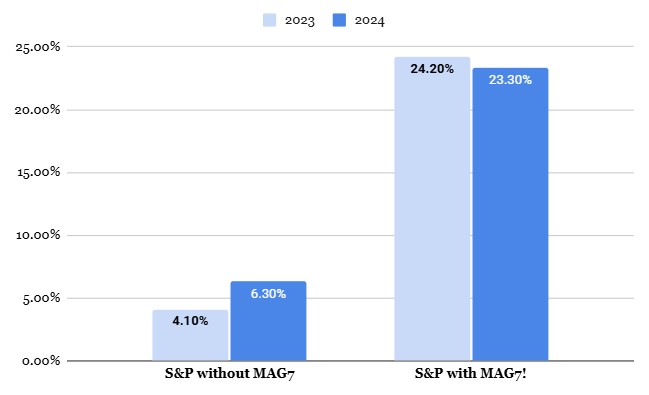
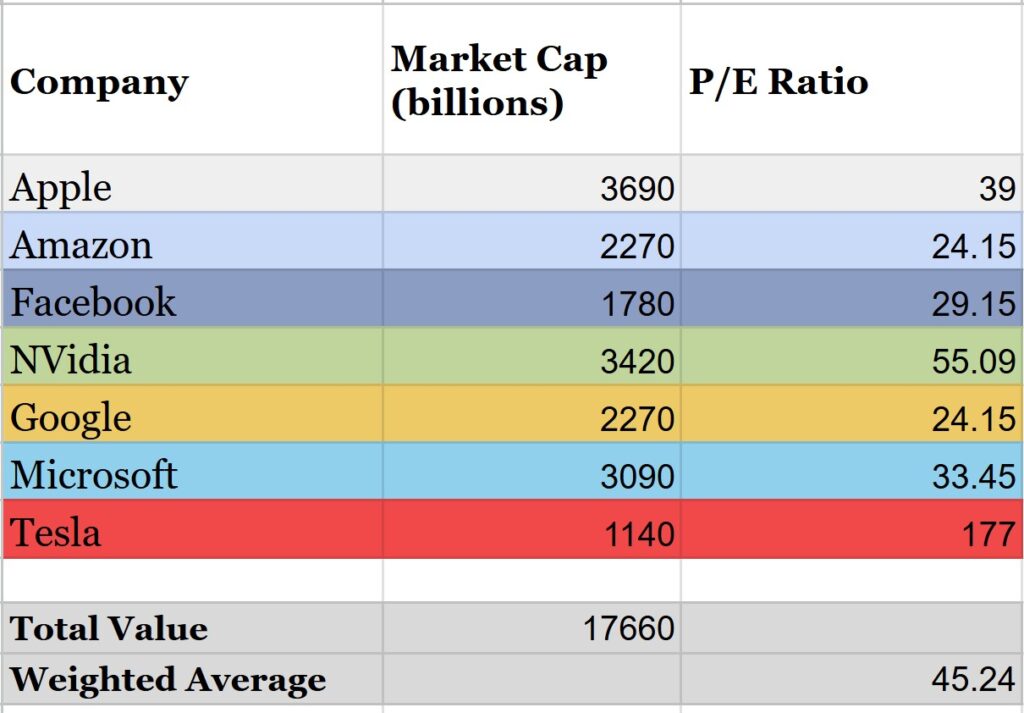
Collectively known as the "Magnificent Seven," these highly profitable tech giants account for more than 25 percent of the entire market’s staggering $17.66 trillion value. They also command significantly higher P/E ratios, with a weighted average sitting near 45. Excluding these seven dominant enterprises leaves the remaining 493 companies in the index trading at a much more moderate P/E ratio of around 20. This divergence indicates that while investors anticipate a healthy general economy, they are placing an immense premium on the future growth trajectories of the tech sector.
Artificial Intelligence, Infrastructure, and Market Hype
The driving force behind this concentrated tech boom is the rapid advancement of artificial intelligence, which has astonished business leaders by demonstrating human-like reasoning across an expanding array of fields. Major corporations are currently pouring hundreds of billions of dollars into constructing massive warehouses filled with specialized supercomputers. Meanwhile, semiconductor manufacturers like Nvidia are experiencing unprecedented demand, allowing them to command exceptional profit margins while shipping hardware in record volume.
Beyond the foundational infrastructure, industries across the board are betting on a new era of enhanced productivity. Modern AI systems can analyze extensive legal documents, identify contractual loopholes, write and debug software code, drive vehicles, assist in medical diagnostics, and potentially power humanoid robotic workers. Proponents argue humanity is on the verge of establishing an infinite, highly intelligent workforce capable of operating without traditional labor constraints.
While technological advancement appears inevitable, uncertainty surrounds whether corporate profit margins will materialize at the aggressive levels currently forecasted by the market. Potential roadblocks include steep cost overruns, intense industry competition, unexpected technological hurdles, or broader socioeconomic disruptions if automation alters traditional employment landscapes.

Long-Term Economic Realities and Alternative Perspectives
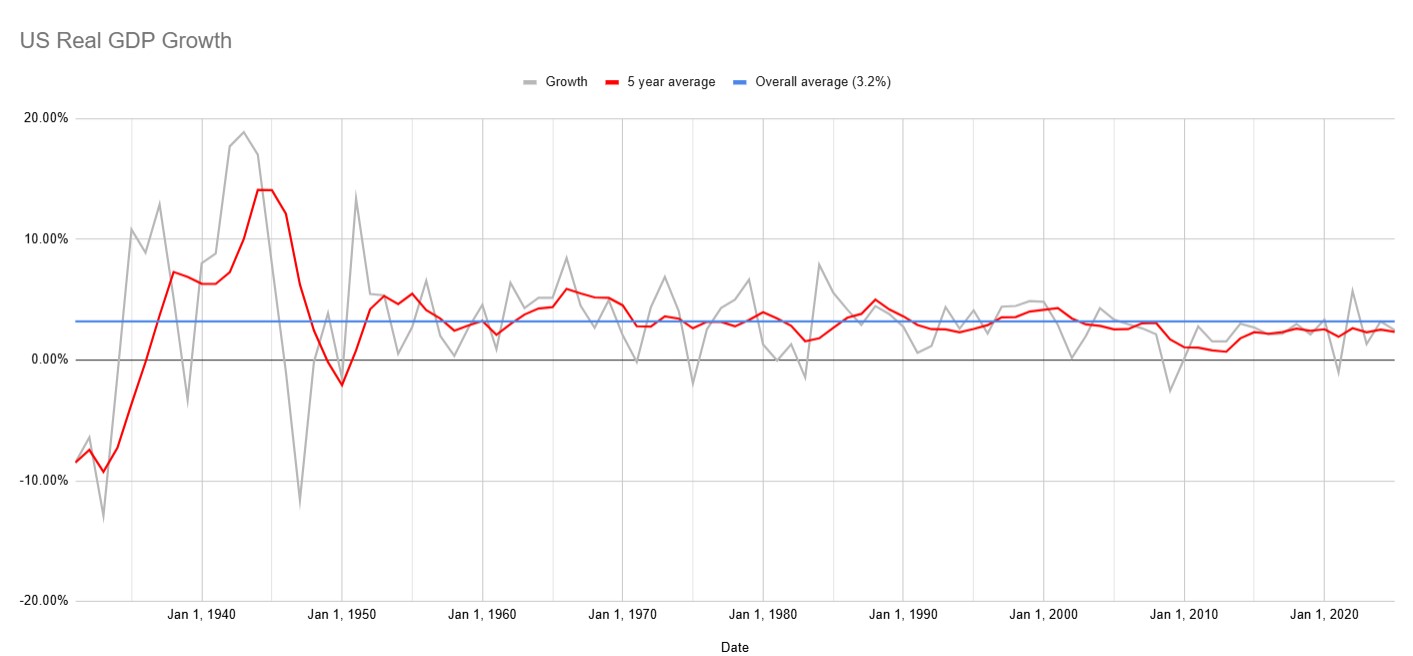
Historically, United States economic growth has followed a remarkably steady trajectory, averaging approximately 3 percent annually after inflation across decades. Interestingly, recent decades have actually experienced slightly slower-than-average economic growth, providing further context that current market valuations outpace historical norms.
Despite these elevated valuations, long-term stock ownership remains historically viable, albeit with adjusted return expectations relative to periods when equities were valued more modestly. Attempting to time market panics or manias by liquidating portfolios in anticipation of a crash has historically proven disadvantageous for long-term investors. Even if overall market valuations eventually return to traditional historical averages, continued corporate earnings growth should support steady economic progress over time.
Broader investment horizons offer alternative perspectives. Major institutions like Vanguard regularly publish ten-year annualized return projections anticipating that international equities and fixed-income bonds may outperform domestic United States stocks in the coming decade. International stock funds, for instance, frequently trade at significantly lower P/E ratios compared to American counterparts, reflecting a potential valuation discount. However, domestic markets have continued to outpace international alternatives in recent years, largely propelled by the localized concentration of artificial intelligence development.
Similarly, conservative investment strategies pursued by prominent figures like Warren Buffett reflect caution regarding current market valuations. Berkshire Hathaway has maintained substantial cash reserves while opting against aggressive share buybacks, signaling a market environment where clear bargains are difficult to secure. For individual homeowners, managing mortgages versus directing excess capital into equity markets remains a personal calculus, particularly as interest rates shift the relative value of guaranteed debt reduction against projected market returns.
Ultimately, navigating current market dynamics involves filtering out daily financial headlines and maintaining a long-term perspective. As market conditions fluctuate, disciplined investing and a focus on long-term financial foundations remain the most reliable strategies for weathering economic uncertainty.