This division naturally prompts a critical question: Which of these two occupational paths is more likely to push an employee toward severe burnout?
For many observers, the immediate assumption points toward the second category. Society operates under the longstanding belief that humans do not live by bread alone, leading to the logical conclusion that careers offering prestige, a sense of purpose, and intellectual challenge should act as a wellspring of energy. Yet, contemporary organizational research consistently reveals the exact opposite outcome. While workers in difficult, low-paying jobs certainly experience exhaustion and distress, burnout as a clinical and psychological phenomenon was first documented in—and remains most frequently diagnosed among—those holding highly desirable positions. Doctors, educators, social activists, and academics appear with disproportionate regularity in case studies examining chronic professional exhaustion.
Why Burnout?
The prevalence of burnout among individuals with enviable careers has puzzled labor researchers and psychologists for years. The most compelling explanation for this phenomenon comes from Jonathan Malesic in his book The End of Burnout. According to Malesic, burnout does not stem solely from heavy workloads or poor conditions; rather, it occurs when the gap between a worker’s expectations of their job and the harsh reality of its daily execution becomes entirely irreconcilable.
People navigating high-status careers face a heightened risk of burnout not because their work environments are objectively worse than others, but because those roles carry deeply idealistic expectations. Individuals enter these fields anticipating profound fulfillment, systemic impact, and intellectual synergy, only to collide with institutional bureaucracy, indifferent audiences, and thankless administrative burdens.
Malesic’s own professional trajectory illustrates this dynamic vividly. Formerly a tenured academic specializing in theology, Malesic entered the professoriate driven by formative college experiences that convinced him teaching students about the deeper mysteries of the universe would be an inherently satisfying and vital endeavor. However, even after achieving tenure—itself a notoriously grueling, burnout-inducing milestone—he discovered a starkly different reality. Most of his students remained indifferent to the curriculum, the academic papers he labored to write went largely ignored, and finding the motivation to drag himself to the lecture hall became a daily psychological struggle.
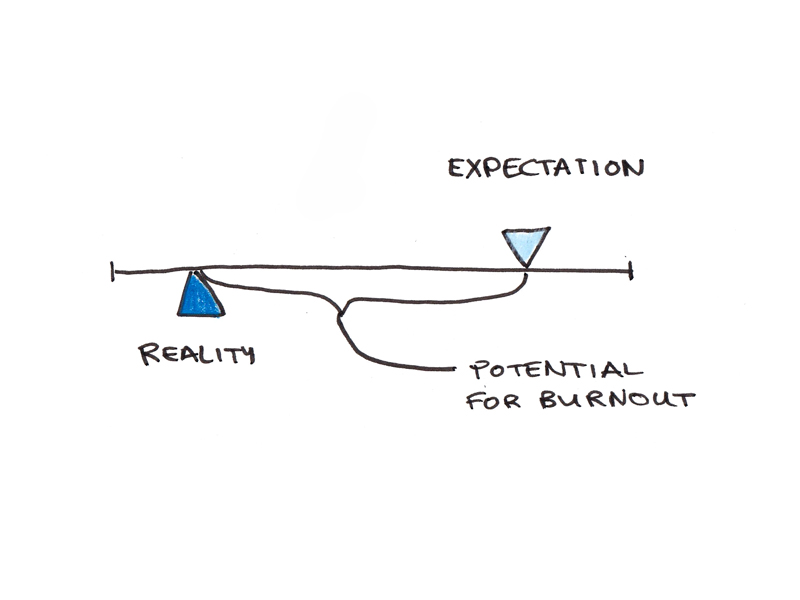
His grand expectations of intellectual stimulation and profound cultural meaning crashed directly into the mundane friction of a classroom filled with bored undergraduates, petty departmental politics, and endless service obligations.
In hindsight, Malesic often reflects on a starkly different chapter of his working life: the period he spent working as a parking lot attendant prior to entering academia. Even though society views parking attendants as holding menial, low-status jobs, not a single person at the facility suffered from burnout. The workers arrived, performed their assigned tasks, collected their pay, and returned to their real lives—lives richly populated by personal pursuits, hobbies, and social connections that genuinely imbued their days with meaning and stability.
The Opposite of Burnout
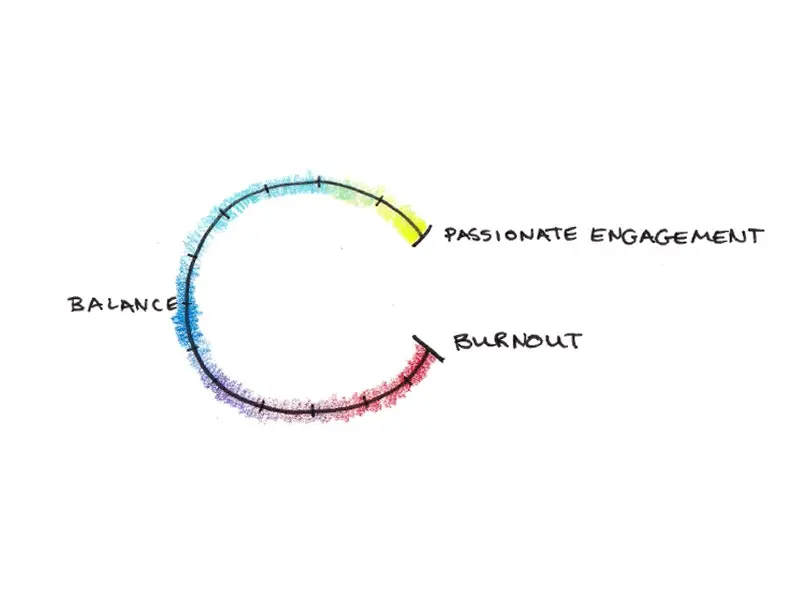
This psychological reality suggests that the true opposite of burnout is not simply passionate engagement. In fact, passionate engagement—and the lofty, unrealistic expectations that inevitably accompany it—frequently creates the ideal psychological breeding ground for burnout to take root.
Recognizing this dynamic does not imply that holding a dead-end or exploitative job serves as a remedy for professional exhaustion. Material conditions still matter; all else being equal, higher pay, better benefits, and greater social prestige are preferable to their absence. Just as the chasm between grand expectations and a mediocre reality can trigger a psychological collapse, minimal expectations of a basic, healthy work environment can easily be shattered when an employee is trapped in a genuinely toxic workplace.
Instead, the true counterweight to burnout is balance. True occupational balance requires that an employee’s expectations for their job are reasonably aligned with its everyday realities, supported by a healthy surplus of alternative sources of meaning and emotional resilience outside the office. These external anchors—strong personal relationships, fulfilling hobbies, physical well-being, and community support systems—act as a vital buffer against the inevitable frustrations of professional life.
A persistent irony of the modern labor market is that this kind of balanced approach often proves far more productive over the long term than an all-consuming obsession with work. The individual who sacrifices every aspect of their personal life on the altar of career ambition may achieve rapid, short-term successes, but they construct a deeply unstable foundation. When the steady stream of professional rewards inevitably fluctuates or fails to match their inflated expectations, the resulting psychological crash can be profound and remarkably difficult to recover from.
Conversely, the worker who approaches their profession as a valued component of a multifaceted life—rather than the sole definition of their worth—builds an effective defense mechanism against chronic exhaustion. By maintaining perspective and nurturing interests outside the workplace, these individuals preserve their energy, allowing them to perform consistent, meaningful work over a much longer duration. Ultimately, this sustainable approach yields far greater cumulative achievement and personal well-being than a sprint toward unsustainable perfection.