
According to physical therapy experts, virtually everyone can reap the rewards of incorporating specific strengthening movements designed to enhance the overall stability of the knee joint. Carrie Whitelam, PT, DPT, OCS, ATC, a physical therapist at the Hospital for Special Surgery in New York City, notes that people across all activity levels can benefit from targeted strengthening to improve how their knees handle daily forces.
Fortunately, adding these vital movements to an existing workout routine is far more straightforward than many exercisers might assume. Physical therapists emphasize that a few foundational exercises, woven thoughtfully into weekly workouts, can make a profound difference. But before diving straight into a new routine, fitness enthusiasts and athletes alike benefit from understanding what knee stability actually means and why it plays such a critical role in overall physical longevity.
What Exactly Is Knee Stability?
While knee stability can encompass a variety of biomechanical factors, physical therapists boil it down to a simple definition: the ability to maintain proper alignment and positioning of the knee during movement and physical activity.
Achieving this stability relies on a combination of passive and active structures within the human body. The passive structures include crucial ligaments, such as the anterior cruciate ligament (ACL) and the medial collateral ligament (MCL), which provide inherent structural boundaries. Meanwhile, the active structures involve the surrounding musculature, specifically the quadriceps, hamstrings, and the muscles of the hips.
Each of these muscle groups plays a distinct yet collaborative role in supporting the joint. The quadriceps work primarily to straighten the knee, while the hamstrings engage to bend it. At the same time, the hips act as the steering wheel that controls the position and alignment of the entire lower extremity. Braidy Solie, DPT, SCS, CSCS, a Minnesota-based physical therapist and strength and conditioning specialist with Training HAUS, explains that knee stability is fundamentally about how well these three distinct muscle groups work in harmony to control the joint during dynamic movements like squatting, lunging, and stepping up.

During a standard bodyweight squat, for instance, a person requires all three muscular players to fire and coordinate efficiently. This synchronization ensures the movement is completed correctly while actively preventing the knee from collapsing inward, a common movement flaw that places undue stress on the joint.
Why Does Knee Stability Matter?
Maintaining good knee stability is not merely about achieving picture-perfect form during a heavy barbell squat. More importantly, it serves as a critical defense mechanism, helping to reduce the overall risk of knee pain and acute injuries whether a person is exercising, participating in competitive sports, or simply navigating daily life.
When the knees are genuinely stable—a state achieved when the quads, hamstrings, and hips are sufficiently strong and well-coordinated—the internal bones, cartilage, and stabilizing ligaments like the ACL and MCL are spared from absorbing excessive, isolated stress. Instead, the load of physical movement is distributed efficiently across the entire lower body musculoskeletal system.
From a broader, long-term perspective, cultivating solid knee stability helps safeguard the joint against the natural wear and tear of aging. Over the long haul, maintaining this joint integrity directly influences an individual’s ability to stay active, retain physical independence, and continue participating in the hobbies and sports they love well into later life.
How to Improve Knee Stability
One of the most accessible and effective methods for improving knee stability is to incorporate targeted resistance movements that engage the primary supporting muscle groups: the quadriceps, hamstrings, and glutes.
Specifically, physical therapists recommend exercises that challenge the quads and hamstrings to work collaboratively across the knee joint, while simultaneously engaging the hips to steer and maintain proper alignment as the knees bend and extend. Solie describes these movements as exceptional starter exercises for building functional knee stability. Such exercises offer high crossover value, directly aiding individuals during everyday functional tasks—whether that means carrying heavy bags of groceries up a flight of stairs or lifting and carrying a growing child.

Three Exercises for Better Knee Stability
Physical therapy professionals frequently recommend three foundational movements to bolster knee stability: the step-up, the forward lunge, and the lateral lunge.
Because these are already common movements in many standard resistance training programs, gym-goers may find they are already performing them regularly. For those who are not, experts suggest introducing them through a mini circuit-style workout. This involves performing the exercises in sequence, executing each movement for 30 seconds, and following it with a 30-second rest period before transitioning to the next exercise. Completing three to four total rounds provides an efficient stimulus for the supporting musculature.
Once an exerciser has mastered proper form and the bodyweight variations begin to feel manageable, external resistance can be introduced. Adding dumbbells or kettlebells helps to progressively overload the muscles and elevate the challenge. When incorporating weights, fitness specialists recommend shifting the programming structure to three sets of 15 to 20 repetitions per exercise. Over time, as strength and stability improve, individuals can gradually increase the amount of weight used while decreasing the repetition range to ensure the muscles are continually challenged to adapt and grow stronger.
Despite the benefits of these exercises, physical therapists issue an important safety caveat for anyone experiencing chronic joint issues. Individuals who experience repeated knee buckling, sensations of the kneecap slipping out of place, or unexplained weakness around the joint should consult a qualified physician or physical therapist before attempting new strengthening routines. Underlying structural damage may be present, and introducing unguided movement without professional clearance risks exacerbating existing injuries.
Integrating Specific Movements Into a Routine
When approaching specific exercises, physical therapists emphasize the unique biomechanical demands each movement places on the lower body.
The step-up is widely favored by practitioners because it encourages individuals to proactively stabilize the knee from the very start of the movement. By placing the working foot directly on top of a box or step before initiating the lift, the exerciser effectively pre-positions the limb in the exact alignment they intend to maintain throughout the repetition. Keeping the knee tracking directly in line with the foot—and consciously preventing it from caving inward—is essential for maximizing the stability benefits.

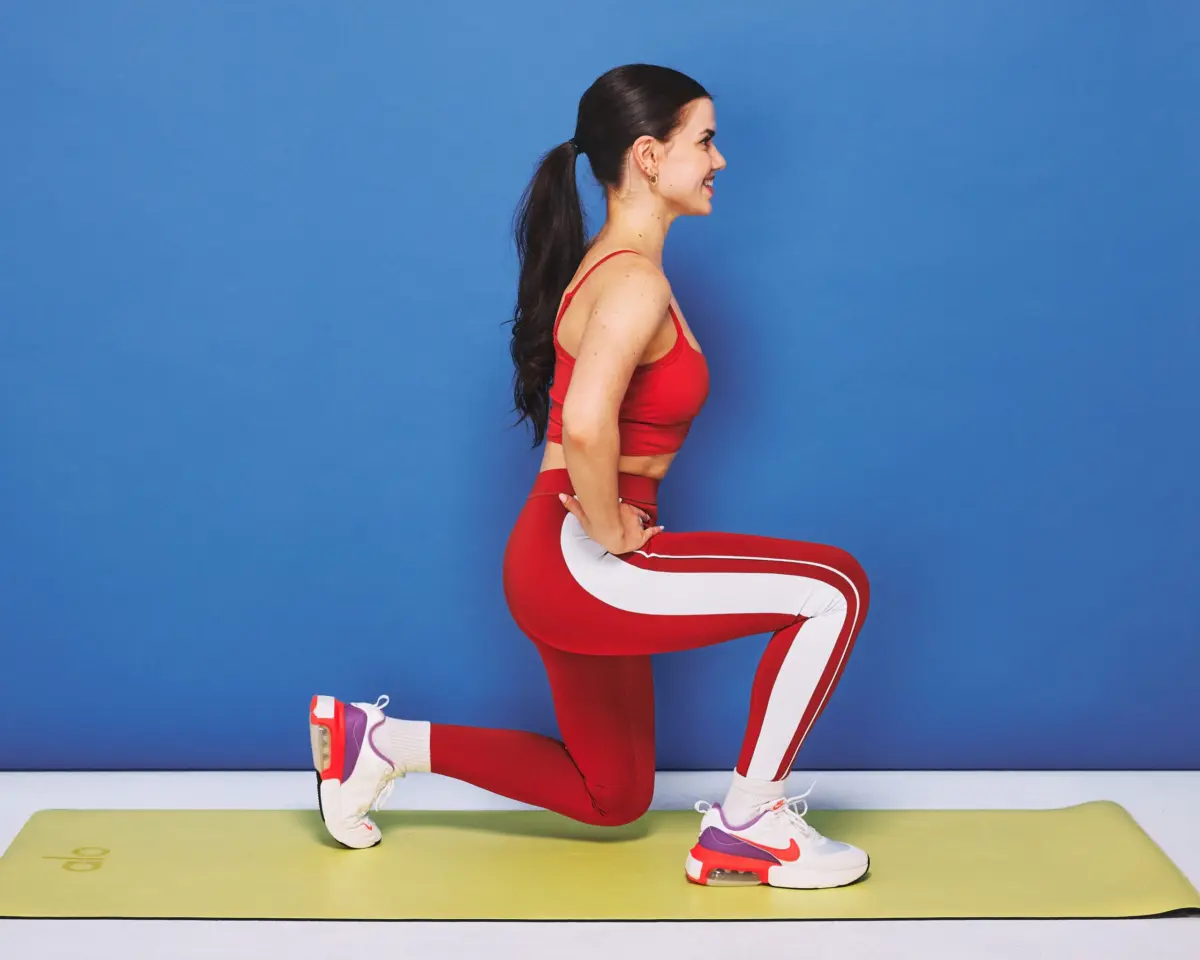
The forward lunge introduces a slightly higher degree of difficulty compared to the step-up. This is because the movement requires taking a forward stride and actively controlling the knee joint as the body decelerates its momentum. Individuals who struggle to maintain stability during a forward lunge, marked by excessive side-to-side wobbling, are often advised to regress temporarily to a standard squat to build foundational strength.
Once the forward lunge is mastered, experts suggest varying the execution to target different muscle groups. Maintaining a more vertical torso during the lunge places greater emphasis on the quadriceps, whereas introducing a slight forward hinge at the hips shifts more of the load onto the glutes. These variations can be alternated across different training days or combined within a single workout depending on individual fitness goals.
Finally, the lateral lunge is often considered the most complex of the three foundational movements. It requires the knee to flex and extend while the body’s center of mass shifts sideways, demanding a significantly higher level of neuromuscular coordination. Throughout each repetition, exercisers must maintain upright posture, resist inward knee collapse, prevent the trunk from swaying, and keep the hip from popping out to the side at the bottom of the movement. For those finding the dynamic version too challenging, static lateral lunges offer a viable regression; by starting with the feet positioned wide and performing the lunge without lifting the foot off the floor, individuals can build the requisite strength and stability before advancing to more complex variations.