
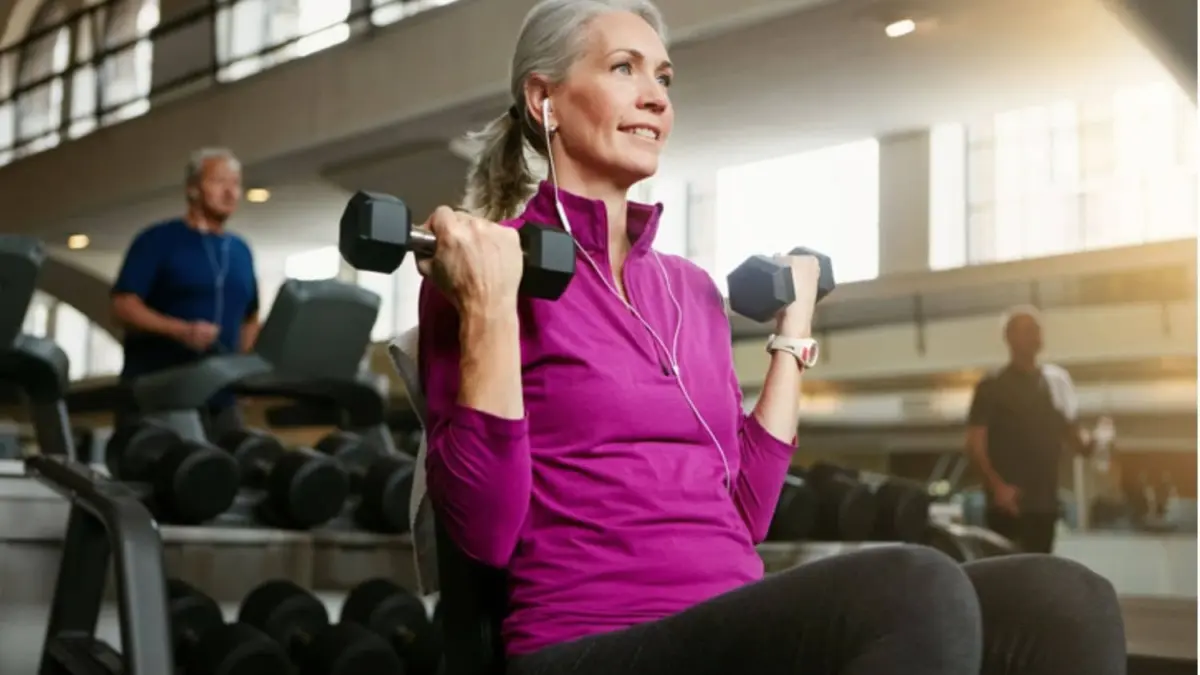
Unlike conventional workouts focused purely on aesthetics or isolated muscle growth, functional fitness is specifically designed to improve an individual’s capacity to complete everyday physical tasks with ease and safety. The most appealing aspect of this training philosophy is its accessibility. These exercises can be performed easily at home, requiring little to no specialized gym equipment, making them an ideal choice for older adults looking to enhance their daily routines without committing to expensive gym memberships or complicated equipment.
What Is Functional Fitness?
At its core, functional fitness helps individuals build the strength, stability, and physical capability required to perform daily activities independently. An added and significant benefit of this training style is that participants become much better equipped to handle activities they may have previously overlooked, avoided, or abandoned due to creeping physical limitations.
In the course of a normal day, a person frequently has to perform movements that require squatting down to pick up an object from the floor, pushing heavy furniture or doors to move them, or reaching upward to grab items from high shelves. These specific types of movements are fundamental functions of everyday life. They can be significantly aided and made safer through targeted functional fitness exercises.
Reinforcing this perspective, a comprehensive meta-analysis published in 2025 indicated that functional task training successfully helped improve balance, mobility, and overall walking ability in adults aged 60 and older. This scientific backing underscores the reality that training the body through movement patterns mimics real-life demands yields practical, measurable health benefits.
Why Functional Fitness Matters After 60
Retaining physical strength and mobility is an essential cornerstone of maintaining a high quality of life as people age. According to guidelines issued by the Centers for Disease Control and Prevention (CDC), senior citizens aged 65 and above should engage in regular muscle-strengthening activities at least twice a week. In addition to these strength routines, older adults should pursue activities that actively strengthen the cardiovascular and pulmonary systems, alongside exercises that challenge and improve their sense of balance.
Extensive health research has shown that activities engaging both muscular strength and physical endurance play a vital role in improving overall balance. Consequently, this improvement directly supports aging adults in preserving their independence in daily living. Functional fitness essentially acts as the synergy of all these critical components of physical wellness.
For instance, simple sit-to-stand movements help individuals gracefully rise from a chair while simultaneously strengthening the lower extremities. Similarly, activities designed to enhance and refine an individual’s sense of balance directly improve their locomotion and confidence when moving through physical spaces.
5 Simple Functional Exercises to Try
Working out safely and effectively from the comfort of home has never been more straightforward. The foundational exercises utilized in these routines require little to no equipment, meaning participants are ready to perform them as soon as they understand the proper movements and alignment.
The first movement is the sit-to-stand exercise, which primarily works the legs and glutes. To perform it properly, an individual sits toward the front of a sturdy chair so that their knees are positioned directly over their ankles. By leaning slightly forward and pushing upward through the legs until fully standing, the participant engages the primary lower-body muscle groups. Slowly lowering back to the starting position completes the movement. Typically, performing between 5 and 12 repetitions provides an effective challenge.
The second movement involves wall push-ups, designed to work the arms and upper body. Standing about an arm’s length away from a solid wall, the individual places their hands flat against the surface. By bending the elbows, they gently bring their upper body and head toward the wall before pushing themselves back to the starting position. Repeating this movement 5 to 12 times helps build upper-body endurance.
The third exercise focuses on supported heel raises to work the legs and glutes. Standing with their back to a chair for security and bending the legs slightly so that the heels are lower than the hips, the individual uses their leg muscles to raise their heels as high as possible before lowering back down. Like the previous exercises, performing 5 to 12 repetitions is recommended.
The fourth movement incorporates supported side steps. Utilizing a sturdy counter or the back of a chair for support if needed, the individual takes several deliberate steps to the side, returns to the starting position, and then steps to the other side. Side-stepping engages lateral stabilizing muscles and improves movement skills in a way that normal, linear walking does not.
Finally, supported balance practice helps refine stability. Standing safely next to a counter or chair, the individual shifts their weight to one leg at a time. If they feel comfortable and secure, they can lift the leg farthest from the counter. It is paramount that whenever balance exercises are performed, a reliable surface remains within arm’s reach for immediate support if needed.
A review of multiple scientific studies has demonstrated that a combination of balance training and targeted functional activities can significantly help prevent falls in older adults while dramatically improving their overall physical well-being.
How to Get Started Safely
Embarking on a new physical routine requires thoughtful planning and patience. Creating a realistic plan for modifying physical activity levels is the best way to ensure long-term success. Individuals can start by simply adding 10 to 15 minutes of functional exercises on two or three days during the week, focusing on movements that they genuinely enjoy and can easily integrate into their schedules.
As these exercises begin to feel easier and more natural, participants can gradually increase their workout duration, add more repetitions, or introduce light resistance tools like a resistance band to safely progress their strength.
The World Health Organization (WHO) suggests that adults aged 65 and older engage in muscle-strengthening activities at least two days a week. For individuals who experience difficulties with mobility, incorporating activities specifically aimed at improving balance and preventing falls is recommended on three or more days a week. These recommended activity volumes should be gradually increased over time if needed and as physical conditioning improves.
It is always best to consult with a qualified healthcare professional before beginning any new fitness regimen, particularly for those who experience limitations due to pre-existing health conditions, chronic pain, dizziness, or other physical concerns. Furthermore, anyone experiencing unusual discomfort or the sensation that something is not right should immediately stop the activity.
Incorporating Functional Fitness into Day-to-Day Activities
One of the most practical aspects of functional fitness is that it does not require dedicated time spent on a traditional exercise mat. People can easily turn functional movements into a seamless part of their daily routines. For example, the next time someone visits the grocery store, they can practice carrying their purchases in a more balanced, ergonomic manner by paying close attention to their posture and alignment.
When the opportunity arises, choosing to take the stairs instead of relying on the elevator provides an effortless way to build lower-body strength. Practicing balance can be done while waiting for water to boil by using a kitchen counter or sturdy wall for support. Even regular, daily walking serves as an exceptional foundation for building and maintaining a functional fitness routine.
Ultimately, the overarching goal of functional fitness is to help older adults maintain their quality of life and preserve their independence. By providing the physical means to continue performing the day-to-day activities and movements they value and enjoy, functional training remains an invaluable tool for keeping up vitality well past the age of 60.