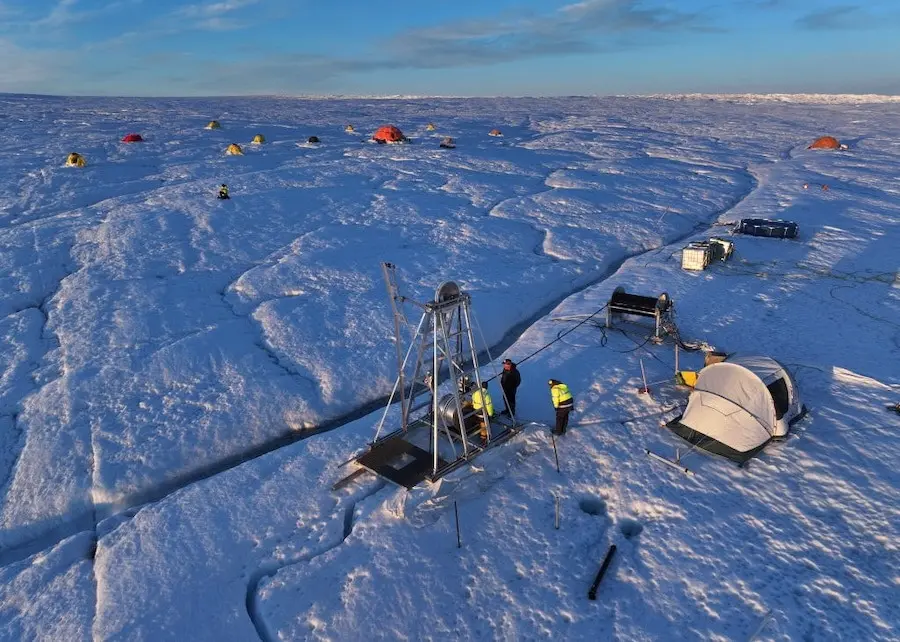
Methane is an invisible, odorless compound found everywhere from swampy wetlands and the digestive tracts of livestock to residential basement furnaces. As the primary component of natural gas—which currently generates roughly 25 percent of the world’s electricity—methane is a powerful greenhouse gas that ranks as the second most significant contributor to global climate change, trailing only carbon dioxide.
Chemically classified as a hydrocarbon, methane consists of four hydrogen atoms bonded to a single carbon atom. It is abundant in nature and forms through both geological and biological processes. Geologically, methane is produced when heat and pressure act on decomposing organic matter over millions of years, forming the foundation of conventional natural gas deposits. It can also form deep underground without organic material through separate geochemical processes. Biologically, methane is generated via methanogenesis, a process where oxygen-free respiration by underwater microorganisms known as archaea produces the gas. This same biological mechanism occurs above ground in wetlands and within the digestive tracts of termites and cattle.
How Is Methane Measured?
Scientific assessment of atmospheric methane relies on two primary methodologies: bottom-up and top-down approaches. Bottom-up assessments start locally on the ground and expand outward, calculating emissions either through direct facility measurements or by multiplying standard emission factors by the number of active sources. For instance, estimating the agricultural footprint of a nation’s livestock sector involves multiplying the average methane output per cow by the total population of cattle. Similar calculations are applied to regional natural gas infrastructure and oil drilling sites.

Conversely, top-down approaches start in the atmosphere, utilizing measurements collected by airplanes, high-altitude platforms, and orbiting satellites. When combined with atmospheric modeling and data regarding natural and industrial sources, these observations offer a comprehensive view of global emissions.
Advancements in satellite technology have increasingly exposed massive, undocumented emission incidents that bottom-up inventories miss. For example, if a fossil fuel operator estimates emissions using standard equipment leak rates, it will fail to account for the extraordinary leaks that typically drive over half of total industry leakage volume. Overall, direct measurements from the ground and sky remain vital for accurately quantifying fossil fuel emissions. Research indicates that direct measurements of U.S. oil and gas infrastructure have revealed emissions running 60 percent higher than official U.S. Environmental Protection Agency inventory estimates.
How Does Methane Contribute to the Climate Crisis?
As a greenhouse gas, methane absorbs infrared radiation emitted from the Earth’s surface and traps that heat within the atmosphere. Natural sinks, primarily soil microbes and reactions in the troposphere that break methane down into carbon dioxide and water vapor, historically balanced natural emissions. However, industrial-era human activities—including fossil fuel extraction, intensive agriculture, and expanded waste storage—have injected methane into the atmosphere far faster than natural sinks can absorb it.
By 2023, atmospheric methane concentrations had surged by 265 percent compared to pre-industrial levels, reaching 1,934 parts per billion. Approximately 60 percent of current emissions stem from human activities, driving roughly one-third of total global heating to date. Projections indicate that without aggressive intervention, emissions could climb another 13 percent between 2020 and 2030.

Controlling methane is critical because the gas packs an immense warming punch over a relatively short atmospheric lifespan of about 12 years. Over a 20-year timescale, a unit of methane traps 86 times more heat than an equivalent amount of carbon dioxide, dropping to 28 times over a 100-year period. Consequently, the Global Methane Assessment concluded that curbing methane represents the single most effective strategy for reducing near-term warming over the next two decades. The Intergovernmental Panel on Climate Change has calculated that global methane emissions must fall by approximately 34 percent by 2030, relative to 2019 levels, to keep global temperature increases within the 1.5 degrees Celsius threshold.
What Are the Main Sources of Methane?
Human activities account for roughly 60 percent of atmospheric methane, while natural sources make up the remaining 40 percent. More than 90 percent of anthropogenic emissions originate from three primary sectors: agriculture, fossil fuels, and waste management.
Agricultural activities drive approximately 40 percent of human-caused emissions, with livestock production alone responsible for about 32 percent. This is largely driven by enteric fermentation, a digestive process unique to ruminant animals like cattle, sheep, and goats, where gut microbes break down feed and produce methane as a byproduct. Manure storage from dairy and swine operations adds further volume, with agricultural emissions projected to rise by six million metric tons annually by 2030. Rice cultivation accounts for another eight percent of human-caused emissions, as flooded paddy fields create ideal, oxygen-depleted environments for methanogenic microbes.
The extraction, transport, and combustion of fossil fuels account for roughly 35 percent of anthropogenic methane emissions. Oil and gas operations represent 23 percent of this total, releasing gas through routine venting during extraction and accidental leaks across supply networks. Coal mining and abandoned coal mines contribute another 12 percent, as methane trapped within coal seams escapes during excavation and ventilation.

Super-emitting infrastructure leaks can release massive volumes of methane instantaneously. In 2022, satellite imaging identified over 1,000 major human-caused super-emitter incidents globally, including severe leaks at oil fields, coal mines, and waste sites. The most severe incident detected, located in Turkmenistan, spewed 427 metric tons of methane per hour—an hourly rate equivalent to the total emissions of France.
Landfills and municipal wastewater systems account for about 20 percent of human-caused emissions, as decomposing organic waste in oxygen-deprived environments generates substantial volumes of gas. Driven by population growth and urbanization, waste-related emissions are projected to grow faster than any other human-caused category, rising by 13 million metric tons per year by 2030.
Among natural sources, wetlands are the leading contributor, accounting for roughly one-third of total global emissions. The saturation of wetland soils creates an oxygen-poor environment perfect for microbial methanogenesis. Climate change has accelerated these emissions through the wetland methane feedback loop, where rising temperatures and altered rainfall patterns expand tropical and Arctic wetlands, inadvertently stimulating microbial activity.
Oceans contribute between 1 and 13 percent of natural emissions via marine geological seeps, sediment release, and coastal groundwater discharge. Meanwhile, positive climate feedback loops—such as the thawing of Arctic permafrost and the increasing frequency of severe wildfires—threaten to release vast underground stores of carbon and methane, further accelerating global warming.

Methane and the ‘Bridge Fuel’ Myth
The rapid expansion of natural gas production, propelled by hydraulic fracturing and the global trade in liquefied natural gas, has intensified the debate over methane’s role in the energy transition. Proponents have long framed natural gas as a bridge fuel away from coal, noting that burning gas emits roughly half the carbon dioxide per kilowatt-hour compared to coal.
However, this argument often ignores upstream methane leakage. Research demonstrates that if even 0.2 percent of methane leaks during extraction and transport, the climate-warming impact of liquefied natural gas matches or exceeds that of coal. Advanced satellite data reveals that industry leak rates are significantly higher than previously acknowledged, leading analysts to conclude that liquefied natural gas can carry a substantially higher near-term global warming potential than coal. Furthermore, studies indicate that newly constructed export terminals risk locking in high emissions levels and displacing renewable energy investments rather than coal.
What Are Other Benefits to Reducing Methane Emissions?
Beyond mitigating near-term global heating, cutting methane yields immediate public health and environmental dividends by reducing ground-level ozone. When methane reacts in the atmosphere, it forms tropospheric ozone, a pollutant that damages human lung tissue and harms agricultural crops. Methane-generated ozone currently contributes to approximately half a million premature deaths annually. Experts calculate that every million metric tons of avoided methane emissions would prevent thousands of heart and respiratory hospitalizations, while preserving hundreds of thousands of tons of vital crops like wheat, rice, and soybeans.
What Can Be Done to Reduce Methane Emissions?
Available technologies and operational practices could reduce methane emissions from fossil fuels, agriculture, and waste by 45 percent by 2030.

In the agricultural sector, mitigation strategies include improving livestock feeding efficiency, administering dietary feed additives such as specific seaweeds or chemical inhibitors like 3-NOP to suppress enteric fermentation, and adopting alternative wetting and drying techniques in rice cultivation. For fossil fuels, rapid deployment of leak detection and repair programs, the elimination of routine venting, and the installation of closed-loop vapor recovery systems can drastically curb emissions from operational infrastructure. Waste-related emissions can be mitigated by diverting organic matter from landfills, upgrading wastewater treatment facilities, and capturing biogas for beneficial energy use.
Diplomatic efforts, such as the Global Methane Pledge launched at COP26, have enlisted nearly 160 nations in a voluntary commitment to cut global methane emissions by 30 percent below 2020 levels by 2030. While these frameworks have elevated political awareness, implementation gaps remain wide, with the vast majority of global emissions still lacking binding regulatory oversight.
Ultimately, addressing methane requires coordinated structural changes across global energy, food, and waste systems, backed by sustained political and economic accountability.