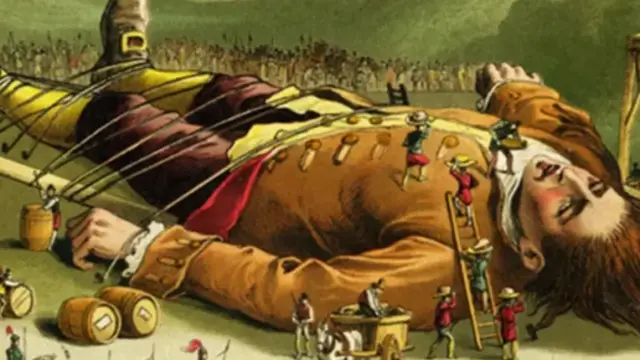
For contemporary novelists attempting to capture the chaotic texture of modern American life, the prevailing impulse has been to meet the hyper-saturated, erratic energy of the culture in kind. Authors like Tony Tulathimutte in his novel Rejection and Mark Doten in Trump Sky Alpha employ a Rabelaisian excess to mirror contemporary American excess. Other novelists have turned toward acidic, class-conscious portraits of the underemployed, as seen in the work of Andrew Martin and Halle Butler. A third distinct group of writers has embraced allegory, reaching back into history, as Zadie Smith did in The Fraud, or drawing on the supernatural, as George Saunders did in Vigil.
While this work is often excellent and occasionally masterful, it operates firmly within a specific political sphere of its own reception: created by the left, concerning the left, and consumed by the left. This raises a compelling question for contemporary letters: What of the writers living in red-state America? Are any of them capturing the denizens of those regions with a compassion that their subjects cannot always reciprocate? And, while examining that landscape, is anyone doing so with a voice that counters political hyperbole with a plainspoken, wry detachment?
The answer points directly to the short fiction of octogenarian author Thomas McGuane, whose most recent collection, A Wooded Shore, stands as arguably some of the most vital literature of the Trump era. Despite a career decorated with significant literary accolades, McGuane remains remarkably underrated and underread by the broader contemporary public.
Among his dedicated readership, however, the consensus is entirely different. For the past half-century, McGuane has steadily produced novels, short stories, and non-fiction—focusing primarily on horses, fishing, and the American rural experience—while gathering critical praise along the way. His third novel, Ninety-Two in the Shade, earned a finalist spot for the National Book Award, with fans noting that its baroque intelligence and post-hippie hangover were perhaps too authentic for the literary establishment of the time.
During the 1970s, McGuane engaged in lucrative dalliances with Hollywood, selling screenplays and socializing with the more inebriated tier of A-list celebrities. His personal life during those years famously intersected with high-profile literary and cultural figures. His first marriage connected him indirectly to the broader Hollywood and literary milieu, his second was to Superman actress Margot Kidder, and his third is to the sister of the late musician Jimmy Buffett.
Despite these early brushes with high-profile glamour, McGuane turned to short fiction relatively late in his established career. Like Donald Antrim, he proved preternaturally suited to the form, or perhaps simply driven by the challenge. McGuane has famously remarked that writing a short story is "like trying to start a fire in the rain." Upon the publication of his career-spanning collection Cloudbursts, The New York Times hailed him as "a master of the short story."
This enduring dedication can largely be chalked up to sheer stubbornness. McGuane remains as fiercely committed to his artistic vision as his stubborn characters are to theirs.
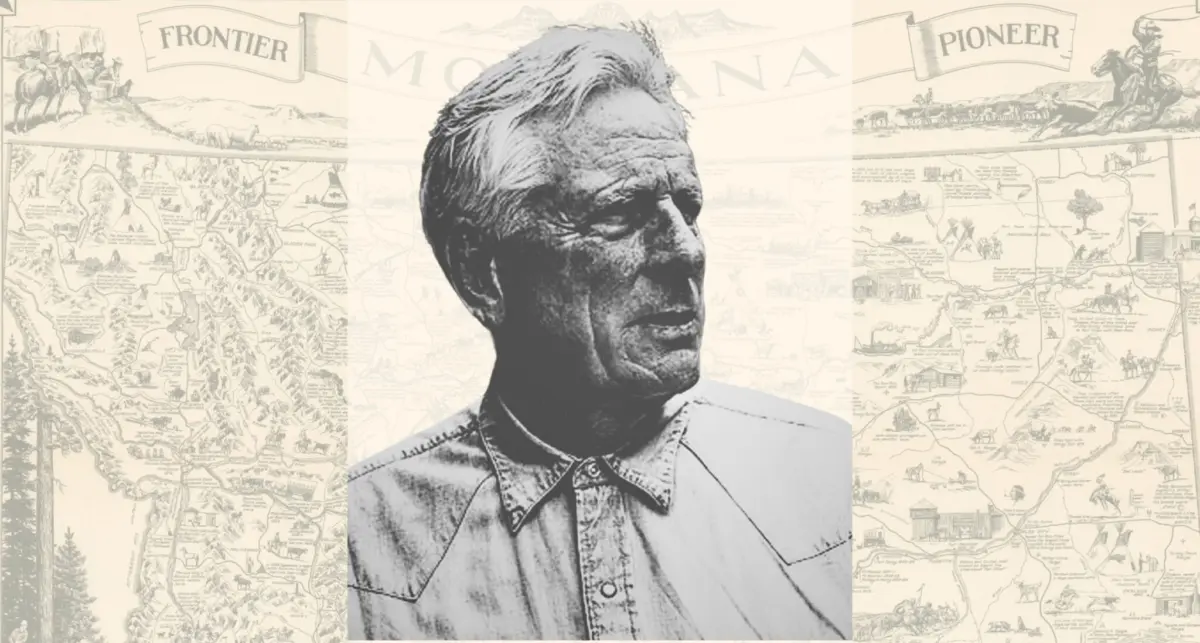
Residing on a ranch in Big Sky Country—famously describing his home as being "out in the boonies, two miles from a town of six"—McGuane remains an anomaly within modern publishing’s bicoastal affinities. His fiction is primarily set in rural Montana, Florida, and small towns where time moves with deliberate slowness and personal grudges outnumber the local population. This is W.H. Auden’s "sunburnt otherwhere," a landscape easily exoticized by regular readers of The New York Times and The Paris Review, where much of his new collection originally appeared. Yet McGuane’s work remains entirely free of the hyper-masculined mise en scène or myopic cultural revanchism found in other contemporary depictions of the American West, such as the works of Taylor Sheridan.
Instead, cultural packaging often attempts to frame McGuane through familiar literary archetypes, drawing echoes of Cormac McCarthy circa All the Pretty Horses. A profile in The Atlantic dubbed him "the last of his kind," accompanied by imagery of the author fly-fishing knee-deep in a pristine riverine idyll, evoking the timeless ghost of Ernest Hemingway.
Of course, Hemingway and McCarthy were not writing amid an era of democratic backsliding and historic political polarization. Moreover, contemporary readers often ask: Who genuinely wants to read about conservative-voting baby boomers attempting to reckon with their own blind spots? Life is already difficult enough, prompting many to seek the balm of historical fiction, improbable serial killers, time-traveling domestic fiction, or fantasy epics involving dragons.
McGuane’s literary aims may, in some ways, be self-defeating. Part of the brilliance of A Wooded Shore lies in its implicit acknowledgment that the America it depicts deliberately occludes much of the standard literary readership. McGuane’s characters are defined by an unyielding momentum; as a line in his story "Motherlode" from Cloudbursts describes a man jumping headlong into danger, "He declined to be swayed by second thoughts." That sentiment could easily apply to nearly every figure inhabiting his fiction.
In "Slant Six," a story from the new collection, a couple drives home from a party hosted by wealthy acquaintances. The husband has made multiple passes at the hostess for reasons that remain unclear even to himself, presuming throughout that his wife has remained oblivious. Noting the hosts’ underlying tension with one another, he turns to his wife and asks, "Do you suppose that’s who we are?" She offers no reply, representing about as close to an epiphany as McGuane is willing to grant his subjects.
Similarly, "Wide Spot" follows a middling politician conducting a get-out-the-vote tour across his constituency in Montana. The narrative reveals his competency and perspective through his wry observations of local divisions, noting how the combination of agriculture and local mining had left his town politically fractured. Desiring to visit his side of the divide while seeking "the sweet ache of old days (mine) gone by," he attempts to reconnect with an old rock singer from his youth in a moribund, one-tavern town where a taxidermied vulture has been discarded in a bank’s shrubbery.
When his political charm fails to impress his old acquaintance, the protagonist attempts to visit the singer’s daughter, resulting in a predictable awkwardness. Labeled "the perfect politician" by the bitter singer, the unflappable narrator refuses to let his internal mask slip, concluding with the kind of unshakeable rationalization typical of insulated political figures: "You never know what’s next, and that is why I can say with all honesty that I am not a depressed person. Unlike Mr. Fixit, I have a future and I don’t intend to fade."
As for Donald Trump himself, the sitting president is explicitly named just once, appearing in the opening line of the collection’s titular novella. The story traces how a widower named Fred Latham ended up late in life living aboard a Trump-branded yacht at the Capital Yacht Club on the Potomac—a vessel historically tied to the era of John F. Kennedy. The sentence showcases late McGuane at his finest, infusing the narrative with wit and the authentic texture of an overheard conversation, leaping across decades from political trysts to Jackie Kennedy Onassis.
Unlike the glamorous figures of Camelot who receive their own distinct nouns, Trump functions here as an adjective—an atmospheric condition rather than a solid object, akin to a toxic airborne event that has settled permanently into bad weather. The syntactic construction mirrors the subject: "late in life living" crashes into the repetition of "yacht," a word that sounds bilious and oxymoronic when contrasted with genuine high-class luxury. Like Trump himself, Latham’s vessel represents more boast than reality—a small-scale river-bound cabin cruiser rather than an oceangoing palace.
Latham fits a familiar McGuane archetype: a white man who desperately clings to his self-conception at the complete expense of self-awareness. Across these narratives, comeuppance frequently arrives for half-forgotten past transgressions, reflecting McGuane’s affinity for karmic symmetry, mirrored in titles like "Take Half, Leave Half."
While A Wooded Shore contains several masterclass stories, the central novella is more uneven, operating as a generational exploration of the arbitrariness of family dynamics. It examines how people who are fundamentally unsuited for one another end up marrying, and how their children come to suspect they were raised by the wrong parents. McGuane extends deep narrative care even to characters who are difficult or abhorrent, such as a matriarch who fails to protect her daughter, leaving lifelong consequences that the family chooses to ignore.
In contrast, the story "Thataway" stands out as a masterwork destined for anthologies. It opens in a windblown prairie town where elderly sisters Mildred and Constance Parrott live in codependent retirement in their childhood home, fantasizing about a reunion with their brother Cooper, who departed decades earlier for minor fame in Westerns and entrepreneurial success in the furniture business.
When Mildred dies on page two, Constance is immediately struck by an unexpected feeling of envy. She is left to manage funeral arrangements alongside her new roommate, Mildred’s adopted son Wayne, who prefers eating fast food alone in his truck. Meanwhile, Cooper is in Palm Springs, dodging the Better Business Bureau and reluctantly participating in his daughter Bonny’s documentary about his upbringing. Bonny eventually convinces Cooper to return home to visit Constance.
Throughout the narrative, characters fiercely safeguard their former glories. Constance navigates funeral logistics with an undertaker who happens to be a runner-up Miss Big Sky, seated beneath her framed pageant photograph. Cooper’s fortune is built on dubious going-out-of-business sales, and his past encounters surface through awkward local altercations where old acquaintances remind him of his impoverished youth. When Bonny asks her father if he was ever truly homeless, Cooper replies, "Not always," prompting her to realize how effectively he manages his public narrative for the camera.
Eventually retreating back to Palm Springs, Cooper leaves behind a constellation of unresolved family tensions, while Constance eventually sells the house and Bonny abandons her documentary after realizing it obscures genuine familial understanding. The story concludes with Constance arriving unannounced on Cooper’s doorstep with her bags in tow, asking simply, "I have arrived! Is it a problem?"
While readers might be tempted to view characters like Bonny through the lens of contemporary cultural tropes, or see Cooper and Constance as broader comic figures, "Thataway" remains subterranean, complex, and unshakeable.
McGuane’s subtle literary wonders succeed largely because of their concise length. While contemporary novelists often combat daily political turbulence through sweeping, expansive narratives, McGuane finds rich territory in the stubborn intractability of his subjects. In his hands, the ideological divide of modern America provides ideal material for the short story form, capturing characters at moments of comic and karmic reckoning where deeply held self-belief collides with a buckling status quo.
In an era of intense political anxiety, engaging with an author who resolutely charts these insular American landscapes may seem out of step with the immediate cultural moment. Yet by meeting McGuane on his own terms, contemporary readers can expand both their literary reach and their understanding of the human condition.