The phone case immediately went viral after launching in February 2024. The people of the internet—namely, the girlies—couldn’t get enough, matching it to their favorite lip shade and anticipating new colorways. For Rhode fans, it was a way to showcase allegiance to their favorite brand and its very famous and influential founder. An accessory that seemingly came out of nowhere, it changed the beauty merch game—and maybe not in a good way.
Now, two years later, it’s not hard to find knockoffs that don’t exactly live up to Rhode’s creation. Temu and Shein are flooded with dupes in every color of the rainbow, and loads of brands have been inspired to create their own phone case-beauty product hybrids to, at best, try and replicate some of Rhode’s original magic or, at worst, reheat Bieber’s nachos into a stale soggy mess.
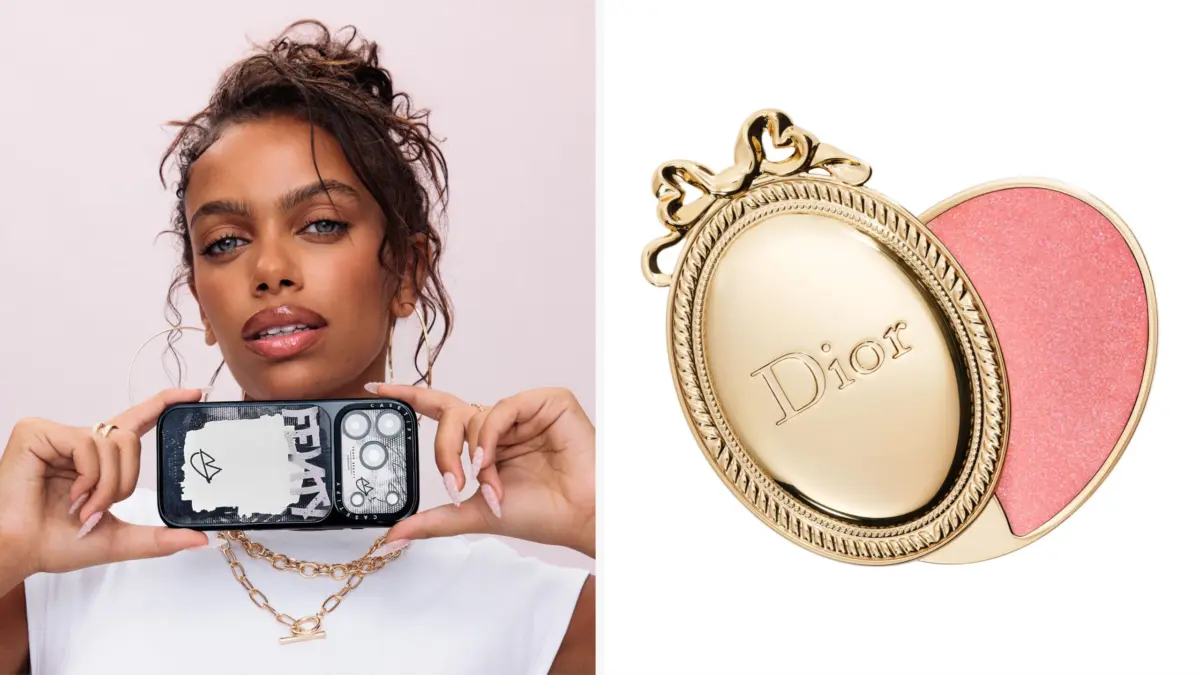
Earlier this year, Daise Beauty launched a lip balm that sticks to the back of your phone like a Pop Socket, and just this past week two brands released similar concepts: Dior started selling a mini lip balm on their website and Charlotte Tilbury announced a mini setting powder, both of which adhere to the back of your phone. Dior’s costs $95, while Tilbury’s is free as a gift with purchase. Fenty Beauty also collaborated with Casetify to create a case that holds both a tiny powder and a tiny lip gloss, resulting in a product so clunky it couldn’t possibly fit in a cute little purse, let alone someone’s pocket. There have likely been other gimmicky iterations thrust upon consumers since 2024, but none of them made enough of an impact to come to mind.
Frankly, observers and industry critics have had enough of this landfill-bound, wasteful junk. Two years ago, Rhode did something novel, sure, but brands attempting to hitch a ride on Bieber’s coattails just to make a buck aren’t helping when it comes to overconsumption in the beauty industry—they’re only making it worse by attempting to create a new category of highly disposable products. Although Bieber recently told Fortune she’s not interested in overconsumption, she is firmly in the business of making products and selling them, including the current six colorways of the case.
According to Euromonitor International, almost 7.9 billion units of rigid plastic were created just for beauty and personal care products in the U.S. in 2018, and that was before the influx of charms, cases, merch, and other random accessories sold by the very beauty brands accumulating the bulk of the waste. The global market is expected to grow by 5 percent annually until 2030, meaning that number is likely now even larger. And even if your of-the-moment accessory ends up in the recycling bin, it may never be recycled: Only 9 percent of all plastic waste ever produced has actually been turned into something reusable.
Not only are many of these items superfluous and a waste of both money and resources, but they also sound like a hygiene nightmare. Almost a decade ago, a study published in Time said our cell phones were ten times dirtier than most toilet seats—a stat that has undoubtedly multiplied over the past decade as people become even more glued to their miniature screens. It was around that time that Dscout data uncovered that the average cell phone user touches their phone 2,617 times per day. So why, on God’s green Earth, would you purposely stick a beauty product onto the back of a filthy device just to then jam your finger into a formula you’re going to spread onto your mouth or over your skin? Phones can also heat up during heavy use, meaning a warm surface is likely not an optimal environment for preserving delicate cosmetic formulas.
Detailing the real-world utility of these accessories, Allure associate social media manager Katie Gunderman notes that her amusement with the Daise stick-on was short-lived. Her initial thoughts were about how cute, fun, colorful, and potentially practical it was. However, after about a week of her phone being in her back pocket or jammed in a purse, it kept sliding open, collecting debris along the way. After that, there was no way she was applying it on her lips.
That also begs the question: Does no one put their phone in their pocket anymore? How are we fitting an entire mini computer and a pressed powder in our already tight denim pouches? And while consumer grip strength is undeniably impressive, as these accessories grow larger, they raise questions about basic physical comfort and usability.
Every brand contributes to beauty’s waste problem, including Rhode, simply because they make products that don’t last forever. But at least the originators of the beauty phone case brought a level of intentionality to the product’s design. It is considerably more hygienic than a pot of sample-sized lip balm stuck on pop socket-style, and it pairs with a full-size product. The case, of course, can be used with however many lip treatments you go through in your phone’s—and thus your case’s—life cycle.
Consumers and critics are struggling to see the same level of thoughtful design from other competing brands entering the space. When examining the broader picture, the proliferation of these items points directly toward late-stage capitalism. Every aspect of modern life has been commodified, down to the charms that hang off of handbags and the trinkets attached to handheld internet portals. Consumers have effectively become walking billboards for brands whether they like it or not, and considering the sheer volume of mirror selfies featuring branded phone cases, everyday users are doing a massive amount of marketing legwork for free.
The glut of phone accessories isn’t just unhygienic or exhausting to keep up with; it also points to a dismal answer to questions about whether originality is truly dead in the consumer goods market. While beauty enthusiasts should certainly retain the freedom to express themselves through their favorite products, reevaluating the intersection of technology and cosmetics might be overdue. Ultimately, keeping these items off handheld devices might be a welcome shift—especially since most people are likely trying to reduce their screen time anyway.