
Given this dichotomy, conventional wisdom suggests that the second category—repetitive, low-status, or unstimulating jobs—would be the primary breeding ground for professional burnout. The assumption is that humans do not live by bread alone; careers offering the possibility of prestige, societal impact, and intellectual challenge should inherently energize and sustain those who hold them.
Yet, contemporary sociological and psychological research reveals the exact opposite. While workers in difficult, low-paying jobs certainly experience stress and exhaustion, the phenomenon of burnout was first documented in, and is most frequently diagnosed among, individuals in highly desirable, high-status professions. Physicians, educators, social activists, and academics appear with disproportionate frequency in clinical case studies and academic literature regarding chronic workplace exhaustion.
Why Burnout?
The pressing question for organizational psychologists and labor experts is why individuals with enviable, purpose-driven jobs experience burnout at rates higher than their peers in more routine occupations.
The most compelling explanation for this counterintuitive finding comes from Jonathan Malesic in his book The End of Burnout. According to Malesic, burnout occurs when the gap between a worker’s expectations of a job and the gritty reality of its day-to-day execution becomes irreconcilable. Individuals pursuing high-status or mission-driven careers face a higher risk of burnout not necessarily because their working conditions are objectively worse, but because these roles attract profoundly idealistic expectations from the outset.
Malesic’s own career trajectory serves as a poignant case study. Previously a tenured academic specializing in theology, Malesic entered the profession because his formative college experiences convinced him that a life spent teaching students about the deeper mysteries of the universe would be inherently satisfying, intellectually vital, and socially significant.
However, even after achieving tenure—a milestone that is itself often the culmination of a grueling, burnout-inducing quest—the reality of the profession fell vastly short of his vision. He discovered that the majority of his students were indifferent to his curriculum, the academic papers he labored over were largely ignored by the broader academic community, and finding the motivation to drag himself to the lecture hall became a daily struggle.
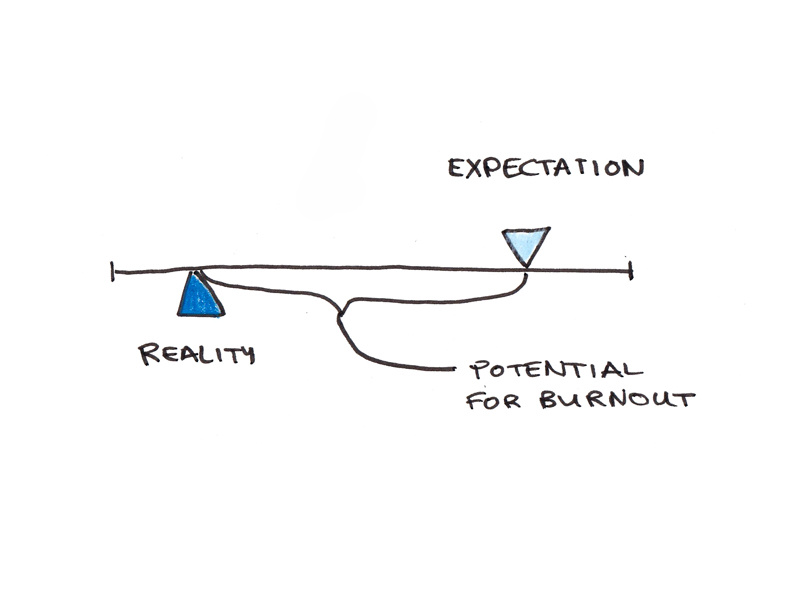
The lofty expectations he held for his work—that it would be constantly stimulating, intellectually rigorous, and profoundly meaningful—collided violently with the mundane realities of unengaged students, departmental politics, academic squabbling, and thankless administrative service work.
In reflecting on his journey, Malesic often contrasts his academic career with a prior job he held as a parking lot attendant. Even though society typically categorizes parking attendant work as menial and low-status, none of the workers at the facility experienced burnout. They arrived at their shifts, performed their assigned duties, collected their pay, and returned to their real lives. Their identities were not bound up in the prestige of parking cars, leaving them free to invest their emotional energy in personal pursuits, hobbies, and relationships that genuinely imbued their lives with meaning.
The Opposite of Burnout
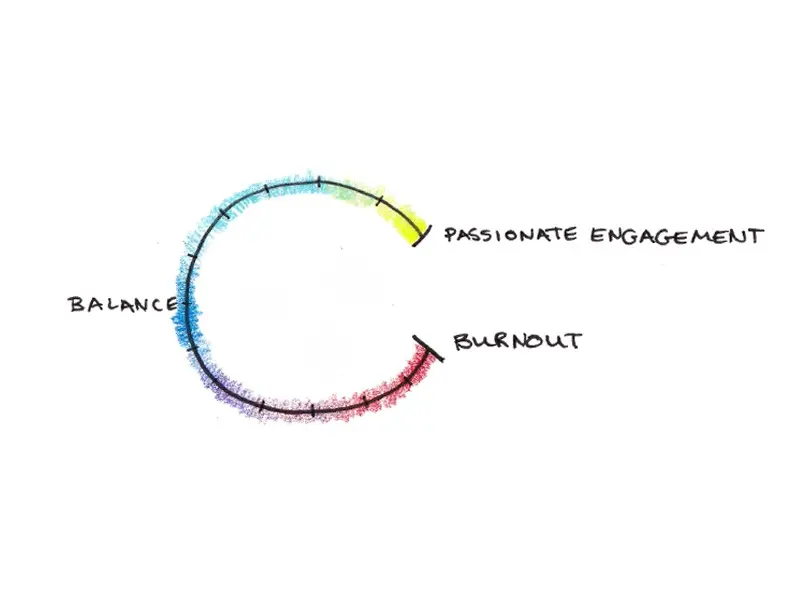
This dynamic suggests that the conceptual opposite of burnout is not simply passionate engagement. In fact, passionate engagement—and the heavy, often unrealistic expectations that accompany it—frequently creates the psychological preconditions for burnout to take root.
Of course, this does not imply that trapped in a dead-end, low-paying job is a viable prescription for mental health. Objectively, good things are good. All else being equal, securing a position with higher compensation, robust benefits, and societal prestige is preferable to the alternative. Just as the gap between lofty expectations and mediocre reality can trigger a psychological crash, even minimal expectations of a healthy, respectful work environment can be shattered when an employee is trapped in a genuinely toxic or hellish workplace.
Instead, research and observations from workplace experts indicate that the true opposite of burnout is balance. Achieving balance means that an individual’s expectations for their occupation are reasonably aligned with the actual realities of the daily work, supported by a rich surplus of external sources of meaning and psychological resilience. This surplus includes healthy personal relationships, dedicated hobbies, positive physical habits, and a strong social support network.
An enduring irony of the modern knowledge economy is that this balanced approach is frequently more productive over the long term than an all-consuming obsession with work. The individual who sacrifices every other aspect of their existence to their career may achieve rapid success and short-term milestones, but they are building an unstable foundation. When the steady drip of institutional rewards, praise, or advancement inevitably fails to match their towering expectations, the resulting psychological crash can be severe and exceptionally difficult to recover from.
Conversely, the professional who approaches their job as one valuable component of a multifaceted life—maintaining active pursuits, interests, and responsibilities outside the office—builds a durable buffer against burnout. By protecting their personal boundaries and emotional reserves, this balanced individual is equipped to sustain high-quality work consistently over the span of decades, ultimately achieving far more in the long run than someone who burns bright and fast before collapsing.