
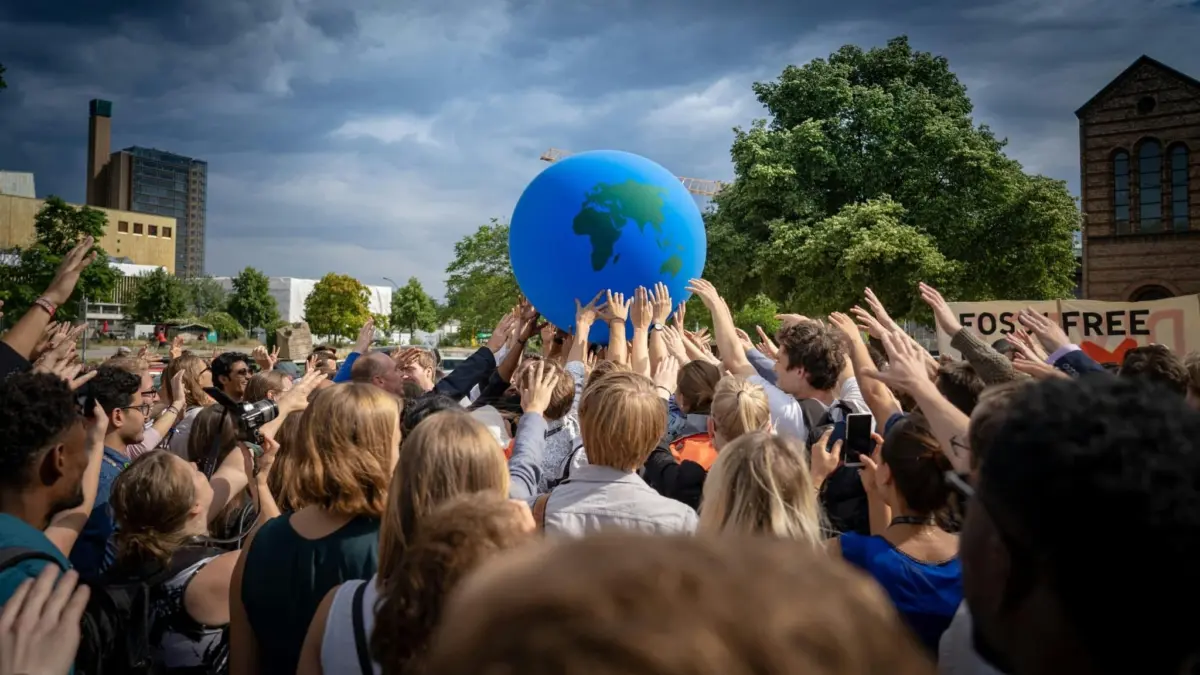
Yet, public sentiment is shifting away from resignation. Observers point out that everyday citizens are far from powerless. For well over a century, regular working people have relied on a historical, highly potent tool to force institutional and governmental change, one that bypasses the traditional constraints of running for office, donating scarce personal funds, or engaging in exhausting political debates with relatives across the holiday dinner table.
That mechanism is the general strike.
What is a general strike?
At its core, a general strike is an organized collective event in which working populations temporarily withhold their labor to pursue specific, concrete demands from those holding political and economic power. While traditional strikes often manifest within a single corporation or industry—where employees refuse to work until securing improved healthcare benefits, better financial compensation, or safer workplace conditions—a general strike operates on a vastly broader canvas.
In a true general strike, an entire society coordinates to halt labor, financial spending, and standard economic participation until systemic social or political demands are formally met.
The strategic efficacy of this approach is backed by notable sociological research. Studies conducted by political scientist Erica Chenoweth have demonstrated that non-violent mass campaigns, such as coordinated general strikes, are statistically twice as likely to succeed as armed conflicts. This research suggests that non-violent collective action is not only the more ethical and sustainable option for civic disruption, but it is also demonstrably more effective at dismantling institutional resistance than violent confrontation.
Participating in such an event shifts the balance of leverage directly back into the hands of the citizenry. In contemporary society, organized labor actions frequently target topical socioeconomic grievances, ranging from wealth inequality and corporate accountability to broader environmental and legislative policies. However, political analysts emphasize that a general strike remains a versatile instrument, capable of being deployed by the populace to influence governing bodies on virtually any issue. In a consumer-driven economy, everyday purchases and labor output serve as direct endorsements of the status quo; withdrawing them changes the economic calculus for those in power.
Rules of a general strike
Executing an effective general strike requires various levels of participation, depending on individual circumstances, but the overarching objective remains uniform: economic momentum must slow down and eventually stop in the most disruptive manner possible.
In an ideal scenario, this translates to a complete cessation of labor and consumer spending—no one goes to work, and no one purchases non-essential goods or services. Recognizing that absolute economic non-participation is frequently impossible for hourly wage earners or individuals bound by rigid employment contracts, strike organizers advocate for alternative tiers of involvement. When walking off the job outright is not immediately feasible, participants often utilize accrued sick leave, vacation time, or other forms of paid time off to withhold their labor without facing immediate termination.
When workers must remain on the job, the secondary objective shifts to withholding consumer spending. If financial expenditures are strictly necessary, participants are encouraged to redirect their capital toward hyper-local, single-location establishments rather than large multinational corporate chains, thereby supporting localized micro-economies and community resource-sharing networks. Organizers note that while local ownership does not automatically guarantee ethical business practices, keeping capital circulating within immediate neighborhoods serves as a reliable default strategy during periods of broad economic non-compliance.
Building personal power and resilience
The ability to seamlessly participate in a general strike is frequently a matter of socioeconomic privilege, heavily dependent on an individual’s financial runway and whether they can afford an interruption in income. To make such actions more accessible, community organizers and financial planners advocate for long-term lifestyle adaptations designed to insulate citizens from economic retaliation and grant them greater personal autonomy.
Chief among these preparations is the establishment of a robust emergency fund. Financial experts typically recommend maintaining three to six months’ worth of living expenses in reserve. Building this financial buffer significantly mitigates the disruptive impact of a missed paycheck, empowering individuals to step away from traditional employment when collective action is called upon.
Beyond personal finances, strengthening localized community ties is viewed as a foundational pillar of sustainable resistance. A unified community possesses inherent resilience that atomized individuals lack. Cultivating relationships with neighbors creates informal support networks that can absorb the shocks of an economic slowdown through shared resources, mutual aid, and cooperative services such as collaborative childcare.

Simultaneously, striving for a degree of self-sustainability helps reduce complete dependence on centralized corporate and governmental infrastructure. While achieving a completely off-grid lifestyle is neither practical nor necessary for most citizens, small, incremental actions—such as cultivating home gardens, harvesting rainwater, or learning basic survival and trade skills—help buffer households against the immediate repercussions of economic volatility.
These practices align closely with a broader cultural reassessment of modern consumerism. Observers note that contemporary society is burdened by an over-accumulation of unnecessary goods, a dynamic that keeps individuals trapped on an endless treadmill of work and spending. Curbing consumerist habits not only frees up personal capital and accelerates emergency savings, but it also trains citizens to live more intentionally, making the transition into periods of economic withholding significantly easier.
Furthermore, grassroots organizing provides a structured entry point for those looking to align with broader movements. Platforms like digital organizing hubs allow citizens to connect with regional chapters, granting access to localized resource directories, educational forums, and community-led mobilization efforts. Engaging with these networks transforms isolated frustration into coordinated, purposeful community action.
The role of short-term actions
For many citizens accustomed to the modern comforts of convenience-driven consumer society, the prospect of going without—even for a single day—can introduce considerable psychological and logistical friction. Because American daily life is optimized for seamless consumption, short-term actions serve as vital training grounds for the public.
One-day strikes and brief economic blackouts function as a form of practical conditioning, allowing the populace to acclimate to the discipline required for longer, sustained campaigns. These micro-actions test an individual’s capacity for self-control, forward planning, and resourcefulness outside of traditional commercial channels. By treating short-term strikes as rehearsals for broader resistance, communities gradually build the institutional muscle memory necessary to mount effective, sustained challenges to entrenched power structures.
Ultimately, public engagement campaigns emphasize that the initial feeling of powerlessness experienced by many news consumers is largely an illusion. Through organized labor withdrawal, intentional consumer choices, and robust community solidarity, citizens retain a vast array of accessible tools capable of reshaping the political and economic landscape from the ground up.