
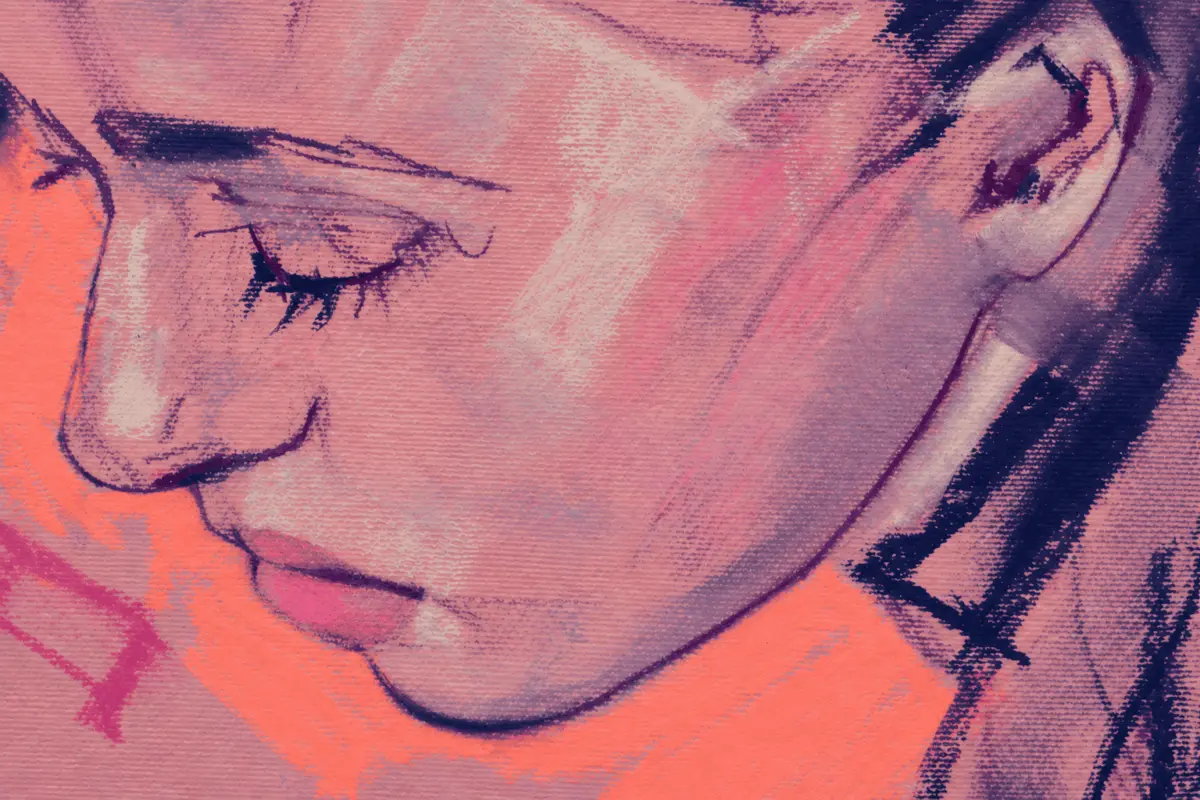
Behind a locked bedroom door, a fourteen-year-old girl stood in the damp, stark cold of her room. The window air conditioning unit hummed loudly, dripping water droplets into the outside air, while a sliver of light from the hallway cut through the darkness beneath the door. On the other side, her father was banging hard with the flat of his hand, screaming at her to return to the dinner table and finish her plate.
She refused, terrified to go near her older sister, who had just struck her across the back.
Then came the sentence that would alter the course of her life for the next forty-five years.
“Well, you know, I used to give your mother a good swift kick in the ass when she deserved it,” her father shouted through the wood. “You act like that, and you get what you deserve.”
For trauma-informed author and digital creator Stephanie Roese, that evening was a watershed moment. For years, her father had vehemently denied ever laying a hand on her mother—during a bitter divorce, to her maternal grandparents, and to anyone else who asked. Yet, in two casual sentences, he not only confirmed the domestic violence but used it to justify a physical assault against his own daughter.
It would take Roese nearly half a century to fully unpack the psychological damage of that night, tracing the invisible threads that linked her childhood dinner table to a lifetime of self-sabotage and troubled adult relationships.
The Dinner Table as a Psychological Battleground
Long before that pivotal night behind the bedroom door, the foundation for Roese’s internalized shame was laid at the family dinner table. In many households, mealtime is a space for connection; for Roese, it was a nightly gauntlet of criticism.
Every single meal came with a side of commentary directed entirely at her. Her father routinely criticized how long she took to eat, how much she talked, and how she negotiated for dessert. He even developed a specific voice reserved solely for mocking her—a nasal, pinched, caricature of a little girl, which he used to repeat her requests: “How many bites ’til I get dessert?”
Though her father framed these interactions as playful teasing, the repetition wore away at her self-esteem. When a child is subjected to the same mocking routine during every shared meal of their developmental years, it ceases to be a joke. It becomes the definitive narrative of who they are.
Constantly branded by her father as a "royal pain in the ass," Roese noticed a glaring double standard that she could not reconcile: her older sister, Jill, could leave her own plate half-empty and ask for dessert without facing any backlash. The criticism, Roese realized, was never actually about the food on the plate. It was about her.
To understand why she became the designated target, it is necessary to look at the broader family dynamic. Jill, four years older, was highly accomplished—physically attractive, a gifted student, a varsity athlete, a talented musician, and multilingual. On paper, Roese felt aggressively average by comparison.
However, beneath the surface of Jill’s achievements lay severe mental illness and a capacity for unpredictable, sometimes dangerous physical outbursts. In a household where the adults could not—or would not—confront the reality of one daughter’s profound psychological unraveling, the younger daughter’s normal dinner-table chatter became a highly convenient repository for her father’s unexpressed anger and frustration.
Roese was cast in the permanent role of the family’s "annoying pain in the ass," absorbing the systemic tension of a dysfunctional household.
The Night the Label Became Permanent
The underlying tension finally boiled over on a summer afternoon when Roese was around fourteen. While visiting her father and sister in New York, the two sisters went downtown to get ice cream. That evening at dinner, her father launched into his familiar routine, criticizing Roese for ruining her appetite with ice cream before dinner.
Frustrated by the persistent inequality, Roese looked at her sister’s unfinished plate, looked her father in the eye, and spoke up: “How come you always come for me, and you never say anything about the fact that Jill was right there with me eating the same ice cream and didn’t finish her plate either?”
The comparison enraged Jill. Lunging across the table, Jill struck Roese across the back with an open hand hard enough to leave a physical mark. Roese fled past her father and locked herself in her bedroom, setting the stage for the confrontation at her door.

The damage of her father’s subsequent defense of the violence was profound. By justifying the assault, he fused two highly destructive concepts: the domestic abuse he had hidden for years, and the implication that Roese was inherently the kind of person who deserved to be abused.
In a single breath, he admitted his own past violence and blamed his child for her own victimization. Lacking the psychological maturity at fourteen to separate her father’s projections from reality, Roese absorbed both statements as absolute truths.
The Scientific Link Between Parental Criticism and Shame
The long-term consequences of this type of parental rejection are well-documented by modern developmental psychology. A landmark 2025 meta-analysis published in the journal Child Development analyzed sixty-five distinct studies involving more than 19,000 adolescents. The researchers identified a clear, measurable link between critical, rejecting parent-child dynamics and an adolescent’s vulnerability to deep-seated shame.
Significantly, the study revealed that the primary driver of adolescent shame was not merely a passive lack of parental warmth. Rather, it was the active presence of harsh criticism, overt rejection, and conditional love—the explicit message that a child is only worthy of affection when they conform to rigid behavioral expectations.
For Roese, this internalized shame manifested clearly as she entered adulthood. The "pain in the ass" label became a self-fulfilling prophecy. In her dating life, she began using the insult as a preemptive defense mechanism, joking about her difficult nature early in relationships to beat others to the punch.
Unconsciously, she repeatedly selected partners who would confirm her worst fears about herself, leading to decades of unstable relationships. She remained trapped in a cycle of believing she was fundamentally unworthy of sustained love, fidelity, and affection.
Psychologists refer to this phenomenon as repetition compulsion—the subconscious drive to recreate unresolved childhood trauma in adult relationships. The goal of this compulsion is not to experience pain, but to attempt to master the original conflict, hoping that this time, a cold or critical figure will finally grant the validation that was withheld in childhood. Roese was adult in years, but emotionally, she remained fourteen, standing in a freezing bedroom, waiting for a kind word from the other side of a closed door.
Reconciling a Complicated Legacy
The reality of emotional abuse is rarely simple, and Roese’s father was not a one-dimensional villain. To tell her story truthfully, she acknowledges the genuine support he provided alongside his cruelty.
Her father generously funded her entire college education without hesitation. Later, when she built a highly successful career in sales, their dynamic underwent a significant shift. He was genuinely impressed by her professional achievements, often teasing her by saying, “I never would’ve imagined you’d be doing so well. I thought all you cared about was your hair!”
Underneath the teasing, a real mentorship developed. The two spent hours on the phone discussing business strategies, forming a genuine, supportive adult bond that became one of the most meaningful relationships of Roese’s life.
As her father aged and began battling Alzheimer’s disease, his rigid exterior softened further. For decades, Roese’s expressions of affection had been met with a flat, routine, “Okay. Thanks, hon, bye.” Near the end of his life, however, he began returning her "I love you" freely and warmly. He lit up when she entered the room, offering a sense of unconditional love she had spent her life craving.
During one of these late-stage conversations, he made a quiet, vulnerable confession: he admitted he had been deeply disappointed when he found out he was having daughters, having desperately wanted sons. While the admission stung, Roese recognized it as a sincere, somewhat shameful apology—an acknowledgment of the gender-based resentment that had likely fueled his early hostility.
Reconciling these two opposing realities is one of the greatest challenges for survivors of parental abuse. Her father was the man who justified domestic violence and subjected her to years of targeted emotional abuse; he was also the man who financed her future, mentored her career, and eventually learned to express genuine, unconditional love. Both realities coexisted.
Reclaiming the Narrative
For survivors of complex childhood trauma, healing often begins with the realization that a parent’s harsh definitions are not objective truths. The labels applied at childhood kitchen tables are frequently projections—convenient narratives created by parents to justify their own emotional limitations and failures.
Today, Stephanie Roese works as a trauma-informed author and digital creator, dedicating her platform, Unseen Scars, to helping survivors of emotional abuse and neglect shed the labels they were forced to carry. Through her blog, educational resources, and a specialized relationship quiz, she guides others in identifying narcissistic patterns, gaslighting, and the lingering effects of covert abuse.
Her message to those still standing at their own metaphorical doors is clear: the roles assigned by dysfunctional family systems do not define your worth. It is entirely permissible to feel anger toward a parent for the harm they caused, while simultaneously cherishing the genuine, loving moments they shared.
Human beings are complex and contradictory. By accepting that both the hurt and the love were real, survivors can finally stop trying to rewrite the past, hand back the labels that were never theirs to begin with, and step into their own defined identity.