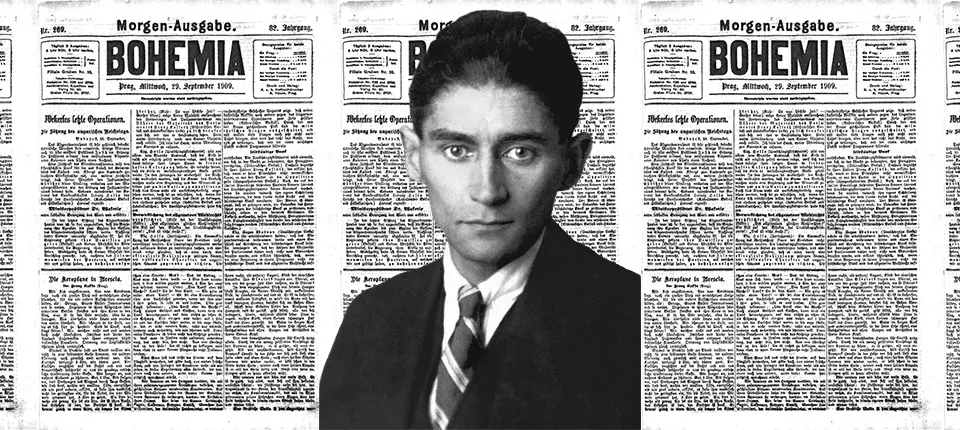
The publication in Bohemia—a prominent German-language daily newspaper based in Prague—marked an intriguing departure from the internal, psychological landscapes that would later come to define Kafka’s legendary fiction. Long before the publication of masterpieces such as The Metamorphosis, The Trial, and The Castle, Kafka was navigating the early twentieth-century world as an observant traveler and a meticulous writer recording the rapid modernization of European society.
The context of the publication sheds light on Kafka’s diverse early literary outputs. In September 1909, Kafka, alongside his close friends Max Brod and Otto Brod, traveled to Italy to attend the great aviation meeting at Brescia. The Brescia Circuit was one of the earliest and most celebrated airshows in Europe, drawing massive crowds eager to witness the marvel of flight. For contemporaries, the sight of heavier-than-air machines defying gravity was nothing short of miraculous. Writers, journalists, and artists flocked to these events to document the dawn of the aviation age, recognizing that the world was changing rapidly before their eyes.
Kafka’s account for Bohemia is not structured as a traditional work of fiction, nor is it a dry journalistic report. Instead, it offers a deeply atmospheric, impressionistic portrayal of the atmosphere at Brescia. He describes the vast crowds, the roaring engines, and the daring aviators who risked their lives to pilot fragile wooden and fabric aircraft into the sky. Through his precise prose, the event becomes more than just a sports competition or a technological exhibition; it transforms into a grand, almost bewildering spectacle of human ambition and mechanical power.
The publication of "The Aeroplanes at Brescia" in Bohemia also highlights the crucial role that newspapers played in the dissemination of early modern literature and cultural commentary. Daily periodicals served as vital forums where writers could engage with contemporary events, experiment with prose styles, and reach a broad readership. For Kafka, who spent his professional days working in the workers’ accident insurance sector, writing for newspapers provided a platform to engage with the rapid technological and social changes sweeping across Europe during the pre-World War I era.
As we reflect on this literary milestone today, Kafka’s essay reminds us of a unique historical crossroads. It captures a moment when the airplane was still a terrifying and wondrous apparition in the sky, viewed with a mixture of awe and philosophical detachment by one of literature’s most perceptive observers. The appearance of "The Aeroplanes at Brescia" in the pages of Bohemia on this day in 1909 remains a fascinating window into both the history of early aviation and the diverse writing career of Franz Kafka.