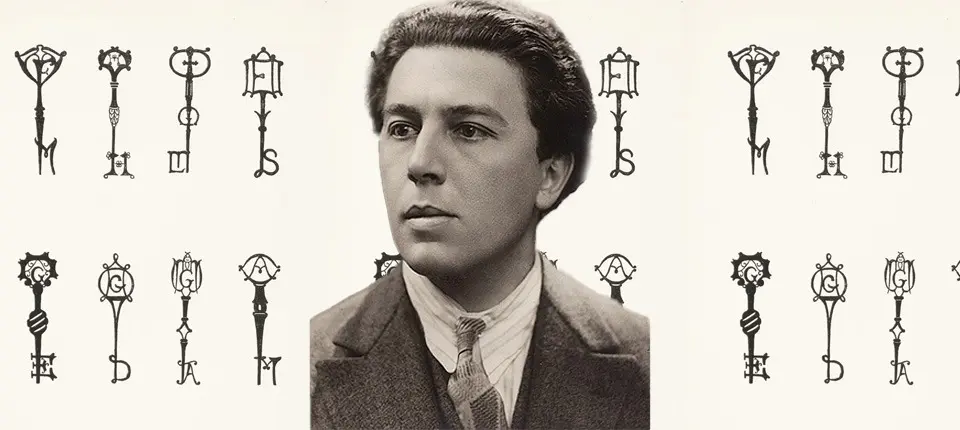
As the literary world reflects on the vast and enduring currents of intellectual history, today marks a significant and solemn anniversary in the annals of modern letters. It was on this day in 1966 that André Breton, the visionary writer, theorist, and principal founder of the surrealist movement, passed away. Breton’s death closed the final chapter on a life dedicated to subverting rationalism, liberating the human imagination, and redefining the boundaries of art, poetry, and thought.
To understand the monumental impact of André Breton is to trace the very origins of surrealism as both a philosophical stance and an artistic revolution. Born in France in 1896, Breton initially trained in medicine and psychiatry, a background that deeply informed his fascination with the workings of the human mind. His exposure to the psychological theories of Sigmund Freud, particularly the interpretation of dreams and the concept of the unconscious, provided the bedrock for what would become a radical departure from traditional artistic norms. Breton came to believe that World War I had exposed the utter bankruptcy of the rationalist society that permitted such devastation, and that a total re-evaluation of human consciousness was urgently required.
In 1924, Breton codified this nascent philosophy with the publication of the first Surrealist Manifesto. In this seminal text, he defined surrealism as "psychic automatism in its pure state," proposing that writers and artists should express—verbally, graphically, or by other means—the actual functioning of thought. Dictated by the thought, in the absence of any control exercised by reason, and outside all aesthetic or moral preoccupations, surrealism sought to resolve the previously contradictory conditions of dream and reality into an absolute reality, a super-reality, or surreality.
Throughout the interwar years, Breton stood at the undisputed center of the surrealist movement in Paris, acting as its chief theorist, polemicist, and arbiter. He gathered around him a brilliant constellation of painters, poets, and thinkers, including Salvador Dalí, Max Ernst, Joan Miró, Paul Éluard, and Louis Aragon. Under his guidance, the movement expanded rapidly, transforming from a literary experiment into an international cultural phenomenon that challenged bourgeois values, embraced political radicalism, and sought to liberate the human spirit from the shackles of conventional logic.
Breton’s leadership, however, was also marked by intense intellectual rigor and ideological debates. He frequently utilized the pages of surrealist journals—such as La Révolution Surréaliste and Le Surréalisme au service de la révolution—to debate the intersection of art and revolutionary politics, aligning himself for a time with Marxism before ultimately breaking with orthodox political parties in defense of absolute artistic freedom. His belief that poetry and art were essential instruments for human emancipation remained steadfast until the end of his days.
When Breton passed away in 1966, the literary and artistic communities lost one of the most provocative and influential figures of the twentieth century. His legacy extended far beyond the specific historical confines of the Parisian avant-garde, leaving an indelible imprint on subsequent generations of writers, artists, and thinkers across the globe. From the Beat generation in the United States to magical realism in Latin America, and continuing into contemporary explorations of the subconscious in literature, the shockwaves of Breton’s original vision continue to resonate.
As the digital literary community looks back at this pivotal anniversary, the discussions surrounding Breton serve as a reminder of a time when literature was viewed not merely as a form of entertainment or commercial enterprise, but as a dangerous, transformative force capable of altering human perception. Through online essays, archival retrospectives, and digital explorations of his manuscripts and manifestos, contemporary readers and scholars continue to grapple with the complexities of his thought.
The enduring fascination with Breton’s life and work underscores a timeless human desire to look beyond the mundane and the rational, seeking out those hidden territories of the mind where dreams, poetry, and reality converge. As today’s literary internet pauses to remember his passing in 1966, André Breton remains a towering sentinel at the crossroads of art and revolution, a writer whose insistence on the absolute freedom of the imagination continues to challenge and inspire.