To understand the immense wave of fascination surrounding the exhibition, a brief historical primer is helpful. The Bayeux Tapestry is an extraordinary artifact—immense in scale, measuring nearly two feet wide and stretching to a length comparable to a Boeing 747 airliner. Despite its conventional name, it is meticulously embroidered onto cloth rather than woven on a loom, meaning purists will gently remind observers that it is not technically a tapestry in the strictest textile sense.

The artwork chronicles the dramatic events surrounding the 1066 Norman Conquest of England by William the Conqueror. It vividly details the Battle of Hastings, where William faced Harold II, the final Anglo-Saxon King of England. Historical consensus suggests the piece was commissioned by Odo, William’s half-brother, to commemorate the sweeping conquest, though scholars believe it was likely crafted by English artisans, possibly nuns, on the losing side of the conflict.
For centuries, the history documented within the threads of the Tapestry has held profound cultural meaning for the English people. However, the physical object itself has long been housed in a relatively small museum in Bayeux, France. Now, following years of intricate diplomacy, the Tapestry has finally crossed the English Channel to land in London. Its arrival has proven to be such a monumental attraction that the British Museum has been forced to adapt and overhaul how it manages the exceptionally long lines wrapping around the institution.
While visitors wait in those winding queues for their chance to step up to the embroidered chronicle, or for those enjoying the exhibition from afar, the cultural moment offers a prime opportunity to dive deeper into the history, literature, and human stories of the medieval era. A curated selection of books provides an ideal companion for anyone afflicted with Bayeux Fever.
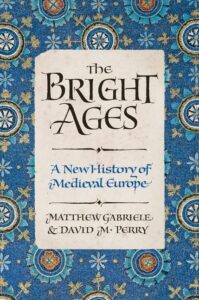
Among the top recommendations for exploring the era is The Bright Ages by Matthew Gabriele and David M. Perry. This immensely readable history challenges the outdated preconceptions that often bog down popular understanding of the Middle Ages. Gabriele and Perry take a wide-ranging approach, reevaluating a series of pivotal topics, figures, and moments, including the Vikings, the Black Death, and Charlemagne, presenting an engaging and curious look at a vibrant epoch.
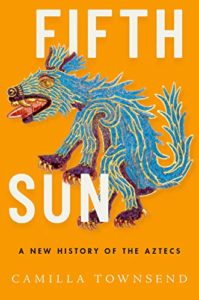
Expanding the geographical and cultural scope beyond Europe, Camilla Townsend’s Fifth Sun offers a fresh perspective on the pre-modern, pre-nation-state world. While many students in the West learn the date 1066 by heart, fewer are as familiar with 1325, the founding year of Tenochtitlan. Published as a groundbreaking history that draws on new scholarship and a rich breadth of primary sources, Fifth Sun presents a modern and comprehensive telling of Aztec history, enriched by Townsend’s engaging prose and subtle narrative flourishes.
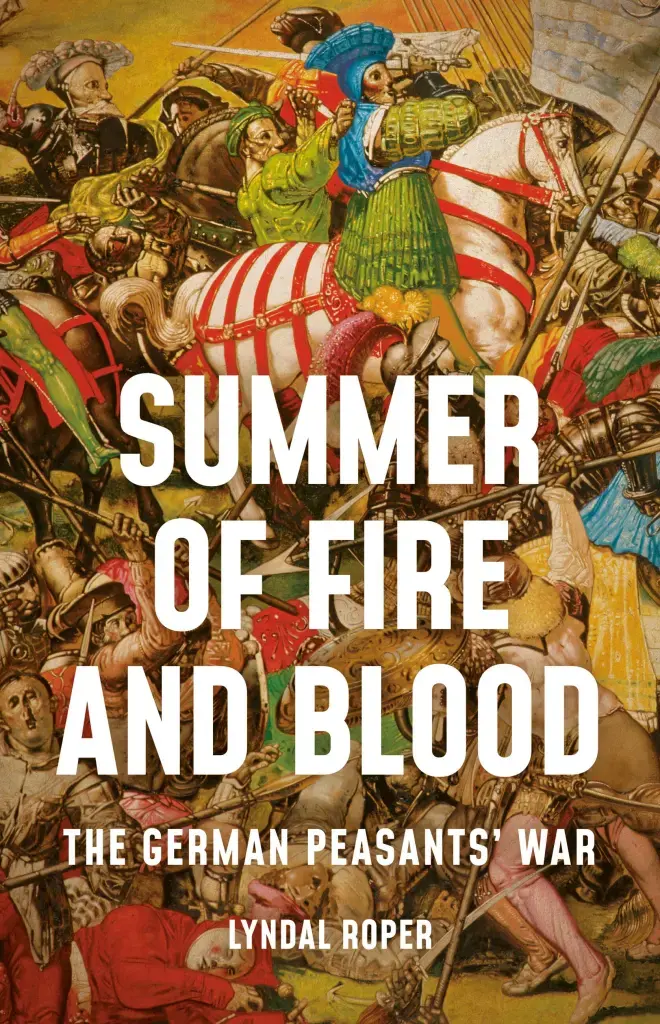
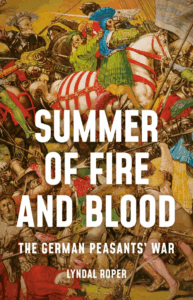
For readers seeking a perspective often missing from elite-commissioned artifacts like the Bayeux Tapestry, Lyndal Roper’s Summer of Fire and Blood provides a ground-up look at sixteenth-century Europe. While the Tapestry includes marginal illustrations of daily life, it fundamentally serves as a narrative of elite conquest rather than revolutionary history. Roper’s history of the German Peasants’ War explores the short-lived, doomed rebellion of lower-class individuals who took up arms against the church and the aristocracy between 1524 and 1525. The revolt was brutally repressed, with an estimated quarter of a million peasants and farmers killed in retaliation. Roper’s examination highlights the proto-socialism and early ideas of justice, communal decision-making, and resistance to arbitrary power that emerged among the rebels, inspired by radical strains of the Protestant Reformation.
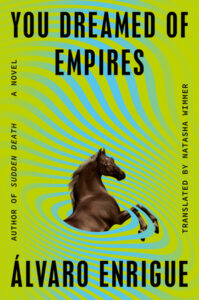
Fictional explorations of the period offer another avenue for engagement, such as Álvaro Enrigue’s novel You Dreamed of Empires. This surreal and gripping historical novel offers a novelist’s perspective on the disorientation and violence of imperial conquest within Aztec history. Enrigue explores the profound cultural exchange that occurs at the edge of a sword, touching on themes of cross-border sovereignty, memory, and justice that remain deeply urgent today.
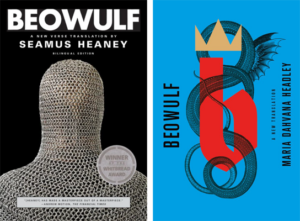
Primary sources from the ancient and medieval past also offer direct insight into the mindset of these societies, exemplified by dual translations of Beowulf by Seamus Heaney and Maria Dahvana Headley. Headley’s translation generated significant discussion and debate for its radically contemporary, colloquial approach, notably rendering the Old English opening word "Hwæt" as "Bro!" While some critics viewed this approach as gimmicky, Headley taps into a deeper historical truth: long before modern superhero and monster stories dominated popular culture, ancient audiences were deeply invested in dramatic tales of heroes and beasts. Headley translates context alongside words to bridge the gap across millennia. In contrast, Seamus Heaney brings the full weight of his legendary poetic lyricism to the text, translating the opening word simply as "So" and crafting a timeless, rhythmic masterpiece from the Old English original.
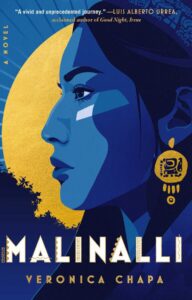
Another intimate, fictionalized account of the Spanish conquest of the Aztec Empire is Veronica Chapa’s novel Malinalli. The book focuses on a deeply controversial figure in Mexican history: the indigenous woman who served as a translator and intermediary for Spanish conquistador Hernán Cortés. While the historical legacy remains complex—reflected in the modern Mexican term "malinchista," used pejoratively for those who favor foreign cultures over their own—Chapa provides a sympathetic and nuanced portrait of an individual forced to navigate a harrowing existence between two colliding worlds.
For readers drawn to the themes of memory, resilience, and post-conflict society, Kazuo Ishiguro’s classic novel The Buried Giant offers a moving portrait of a fantastical post-Arthurian England. The novel examines the fragility of collective memory and the heavy costs of burying past conflicts, themes that resonate strongly with the historical weight carried by artifacts like the Bayeux Tapestry.
Diving further into the darker, more violent realities of medieval life, Christopher Buehlman’s Between Two Fires delivers a gripping historical monster story. Set against the backdrop of war, plague, and societal collapse, the narrative follows a disgraced former knight and a young girl burdened by visions as they journey through a supernatural landscape of horror and redemption.
Finally, Lauren Groff’s novel Matrix reimagines the life of the 12th-century poet and mystic Marie de France, placing her at the head of a struggling English abbey that she transforms into a breakaway utopia. Through transcendent prose, Groff explores themes of holy visions, intellectual autonomy, and female political power, capturing the fierce determination of women carving out space within the rigid structures of the medieval world.
As the Bayeux Tapestry continues to draw immense crowds in London, these literary works offer an expansive gateway into the complex, violent, and deeply human worlds that shaped the medieval and early modern eras.