
For those familiar with the e-commerce giant, Amazon Vine is an exclusive invitation-only program designed to populate new or slow-moving products with early feedback. Participants, commonly referred to as "Vine Voices," are permitted to order items from a curated selection for free, provided they agree to review at least 80 percent of the merchandise they claim. To a long-time advocate of frugality and smart spending, the proposition initially sounded harmless and even rewarding. Adeney reasoned that since he already wrote product reviews out of the goodness of his heart, receiving complimentary items in exchange for his candid thoughts was a natural and fun progression. Without giving the terms and conditions much deeper consideration, he accepted the invitation, inadvertently stepping onto a psychological treadmill that would consume his time and attention for the next nine months.
Reflecting on the experiment, Adeney noted that the program did deliver some tangible upsides, fulfilling his original goal of saving money on items he would have purchased anyway. Over the course of the year, he secured several thousand dollars worth of tools, construction materials, and supplies for his business and the MMM-HQ coworking space entirely for free. Furthermore, the entire endeavor served as a living experiment meant to be chronicled for his readership. Yet, despite his deeply ingrained financial discipline, Adeney found himself genuinely surprised by how effectively Amazon’s micro-incentives and behavioral nudges could hijack his frugality instincts, compelling him to perform low-value labor that ultimately detracted from his daily productivity.

Scarcity Brain and the Online Casino Effect
To understand how a dedicated proponent of financial independence could fall into such a trap, Adeney looked to behavioral science, specifically referencing Michael Easter’s book Scarcity Brain. The text explores the subtle ways modern marketing platforms, social media algorithms, and online gambling sites exploit evolutionary vulnerabilities in human psychology—specifically, an innate fear of missing out on scarce resources and the addictive pull of unpredictable rewards.

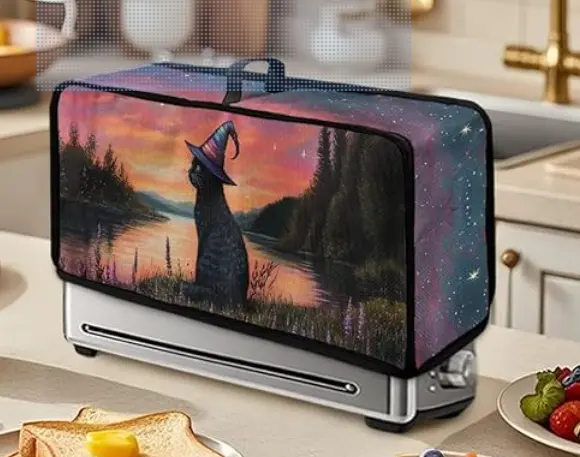
As Adeney analyzed his behavior, he realized that the Amazon Vine program mirrors the architecture of a casino floor or a continuous-scroll social media feed. Every time he logged into the restricted portal reserved for reviewers, a constantly rotating inventory of available goods greeted him. Much like pulling the handle of a slot machine, searching for practical household items often yielded bizarre or irrelevant results—endless pages of pink plastic party plates or toaster covers featuring cats wearing witch hats.
Occasionally, however, the digital slot machine would hit a jackpot. Genuine, highly useful items would appear, including premium light fixtures, specialized plumbing parts, EV chargers, clothing items like a memorable eagle-themed shirt featured in a Mustachianism music video, and remarkably realistic artificial plants used to green up the hard-to-water courtyard garden areas at MMM-HQ. Adeney even roped in friends and coworkers to share the bounty, allowing them to request and keep items they wanted while sharing a laugh over the more absurd products circulating through the system.

Yet, as the spring and summer progressed, Adeney noticed a troubling shift in his daily routines. Driven by the goal of upgrading his account from Vine Silver to the higher Vine Gold tier—which ultimately proved to offer little functional difference beyond the same assortment of trinkets—he found himself compulsively checking the portal every single day, even when he needed nothing. Scarcity and unpredictable rewards were quietly dictating his habits. Packages arrived with assembly-line speed, demanding hours of uncompensated photography and batch-written reviews. The constant stream of packaging waste and manufactured clutter stood in direct contradiction to the environmental and minimalist values he had championed for years.
Recognizing the Consumerism Bender

During the peak of the experiment, the domestic fallout became difficult to ignore. Packages arrived almost daily, causing the household recycling bin to overflow with cardboard boxes. Frictional humor from his son and girlfriend regarding his growing collection of frivolous acquisitions prompted Adeney to discreetly tuck away deliveries to evade scrutiny. He soon recognized that his participation had morphed from a fun experiment into a form of procrastination and intellectual laziness—ordering items online provided an illusion of productivity, masking the more challenging effort required to pursue genuinely fulfilling activities like physical exercise, construction projects, and creative writing.
The structural design of the program itself eventually aided in his recovery. Navigating the poorly designed search functionality, enduring arbitrary AI-driven evaluations that flagged factual reviews for community standards violations without explanation, and wading through endless screens of useless trinkets ultimately sparked a sense of frustration rather than excitement. Adeney observed that the bureaucracy of the system served as a stark reminder that reviewers functioned more like low-wage laborers within a rigid corporate framework than valued VIP partners. Reminiscent of a previous experiment where he drove for Uber in 2017 and immediately identified structural flaws he had no power to fix, the experience reinforced his preference for autonomy. After two decades of financial independence, being his own boss remained non-negotiable.

The Financial Reality and Tax Surprises
A critical realization for participants in the Amazon Vine program involves the tax implications of receiving complimentary merchandise. Because Amazon tracks the retail value of all acquired items, participants receive a Form 1099 at the end of the year, meaning the goods are not truly free, but rather discounted by the recipient’s marginal tax rate. For Adeney, whose marginal tax rate sits around 25 percent, a total account value of approximately $7,000 in goods translated to a potential tax liability of $1,750.

While roughly 75 percent of the acquired merchandise was funneled into his business for commercial construction and renovation projects—effectively converting tax burdens into legitimate operational income—and other items were earmarked for personal household use, roughly $1,000 worth of impulsive acquisitions remained. Thanks to advice from knowledgeable readers in the comments section of his blog pointing to a standard valuation adjustment for opened and reviewed goods, his actual tax liability was significantly reduced, mitigating the financial penalty of his impulsive ordering habits.
Escaping the Loop Through Keystone Habits

To break the cycle without formally closing his account, Adeney employed a strategy centered around a "Keystone Habit." Instead of removing the temptation entirely, he remapped his browser bookmark to point directly to his daily habits list—a tracking chart he refers to as his "Badassity Tracker." Whenever the impulse to browse the Vine catalog struck, clicking the bookmark triggered a reminder to step away from the computer and engage in physical exercise.
Adeney concluded that his experiment with Amazon Vine mirrors a broader phenomenon observed in the financial independence community, often described as "One More Year Syndrome." Many individuals continue working long past the point of financial security simply out of habit, routine, or psychological inertia. By continuously questioning personal assumptions, maintaining self-awareness, and seeking constructive feedback from trusted peers, individuals can make subtle course corrections that profoundly alter their life’s trajectory. Perfection is never required; meaningful change stems from recognizing missteps and choosing a slightly better path forward each day.