
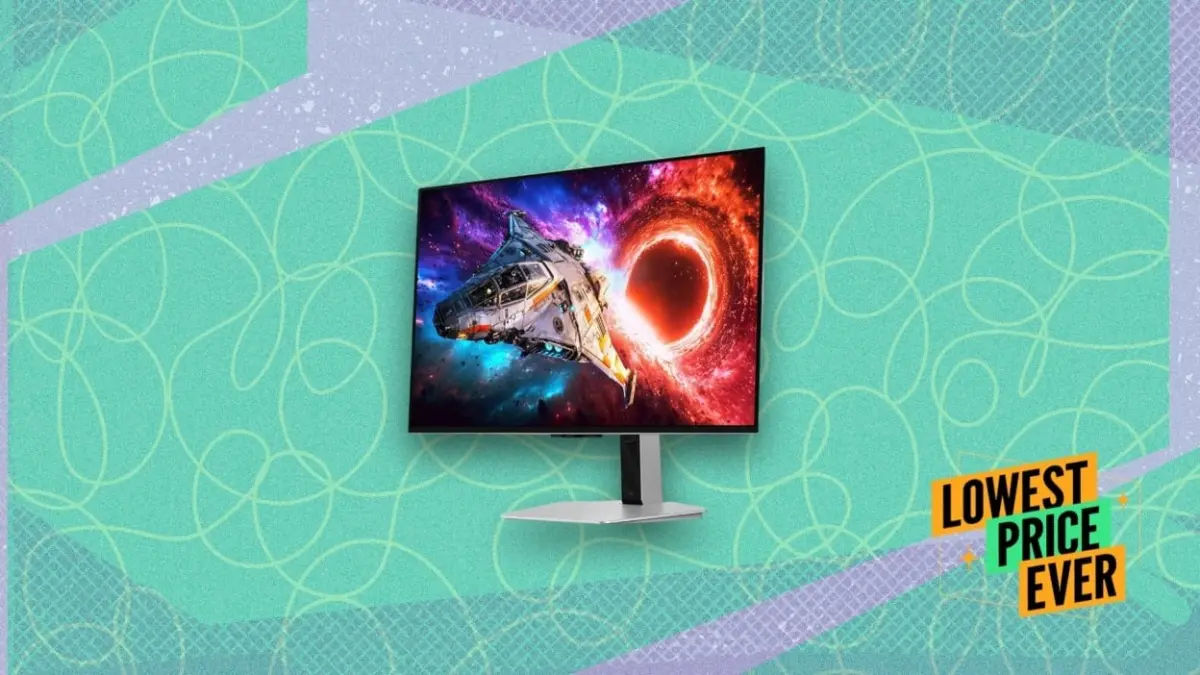
The promotion highlights the newer 4K QD-OLED model rather than Samsung’s similarly named G80HS, which is a 6K IPS variant. This distinction is vital for buyers navigating the high-end monitor market, as the G80SH is specifically tailored for individuals who want a single, versatile screen capable of handling both demanding competitive gaming and everyday desktop productivity without requiring the massive desk footprint of an ultrawide monitor.
At the core of the Odyssey OLED G8 is a vibrant 4K QD-OLED panel that operates at a rapid 240Hz refresh rate. This combination provides the monitor with the extreme speed required for fast-paced competitive shooters and high-octane racing games, while maintaining the crisp pixel density needed to keep slower, more atmospheric, and cinematic titles looking sharp and detailed. Utilizing a high refresh rate alongside 4K resolution places heavy demands on hardware, meaning users will require a powerful gaming PC equipped with top-tier graphics components to fully leverage the monitor’s performance ceiling.
To support this modern hardware, the display is equipped with comprehensive connectivity options, including DisplayPort 2.1 and HDMI 2.1 inputs. These ports ensure that the monitor can handle uncompressed high-bandwidth signals from the latest graphics cards and current-generation gaming consoles. Furthermore, the inclusion of a USB-C port with up to 98W of power delivery adds a layer of practical versatility for remote workers or hybrid setups. A compatible laptop can transmit high-resolution video and charge the device simultaneously over a single cable, effectively reducing desk clutter by eliminating the need for a separate power brick and display connection.

For gamers experiencing screen tearing and stuttering, the monitor features FreeSync Premium Pro and G- совместимость (G-SYNC compatibility), which help maintain smooth visual performance. However, as is common with many OLED panels, users may occasionally notice visible variable refresh rate (VRR) flicker in darker scenes when frame pacing fluctuates inconsistently during gameplay.
The visual advantages of the QD-OLED technology become most apparent in darker games and when viewing High Dynamic Range (HDR) content. In these scenarios, deep blacks remain genuinely dark rather than glowing gray, and bright light effects stand out with striking luminance, avoiding the distracting backlight blooming commonly observed on traditional LCD monitors.
Despite these substantial visual benefits, QD-OLED panels come with specific trade-offs that potential buyers should consider. In brightly lit rooms with significant ambient light, deep blacks can occasionally take on a distinct purplish tint. Additionally, pixel burn-in remains a long-term consideration for organic light-emitting diode displays. To mitigate this risk, Samsung has integrated active cooling systems and multiple automated screen-protection features designed to reduce uneven pixel wear over time. Furthermore, the manufacturer covers burn-in resulting from normal usage under its standard product warranty.
For consumers who primarily play games at lower frame rates or those who place little priority on the infinite contrast ratios offered by OLED technology, the Odyssey OLED G8 may exceed their everyday requirements. However, for enthusiasts and professionals who possess the advanced graphics hardware necessary to take full advantage of a 4K resolution running at a blistering 240Hz, this substantial price reduction makes the investment in the G80SH considerably easier to justify.