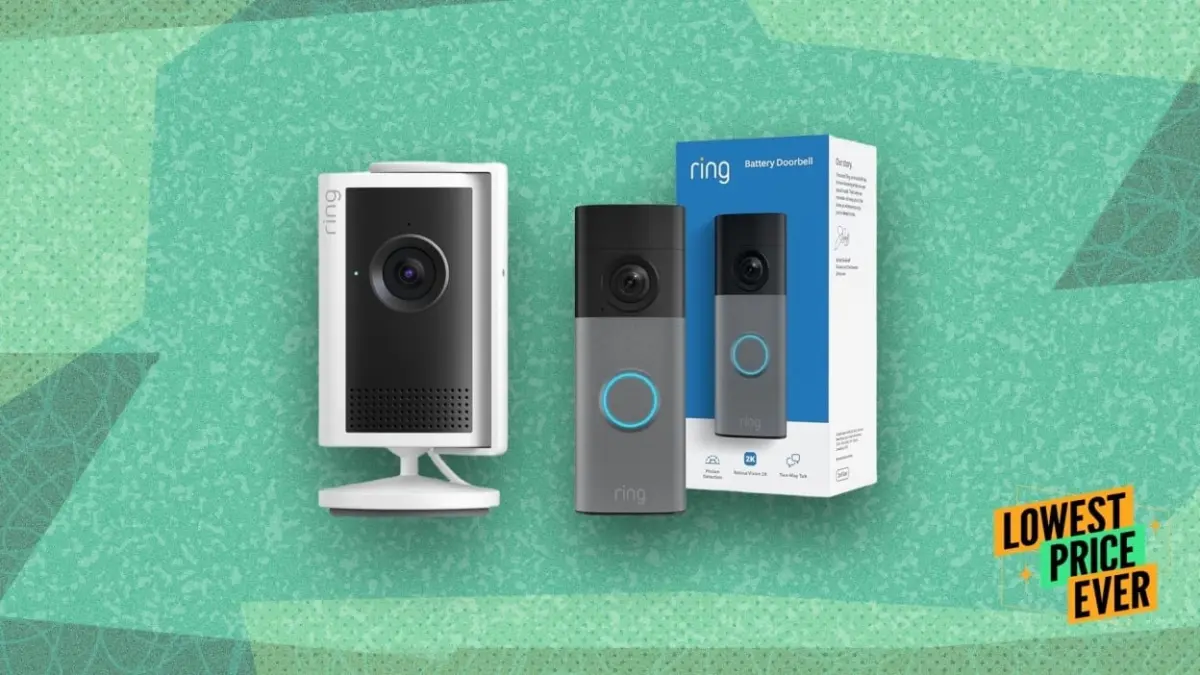
At the center of the current promotional offering is the Ring Indoor Cam 2K, which has received a steep 58 percent discount. The camera, which typically retails for $59.99, is currently available for purchase at $24.99. Alongside it, the Ring Battery Doorbell 2K has been marked down by 60 percent, dropping from its standard retail price of $99.99 down to $39.99. Together, these simultaneous price cuts provide an unusually affordable entry point for consumers wanting to secure both the interior and exterior perimeters of their homes without investing heavily in complex, professionally installed security networks.
Both devices share core technological capabilities that have become standard expectations in the modern smart home market, including high-definition 2K video resolution and two-way audio communication. However, they are engineered for distinctly different deployment scenarios and user requirements.
The Ring Indoor Cam 2K is designed as a straightforward, plug-and-play solution tailored for interior spaces. Whether a homeowner’s primary objective is keeping an eye on household pets while away at work, monitoring children returning home from school, or keeping a watchful eye on main entry points from the inside, the indoor camera offers a direct approach. Because it plugs directly into a standard electrical outlet, users are spared the inconvenience of regularly removing and recharging internal batteries. Furthermore, the device incorporates advanced low-light color video technology, a feature that preserves color fidelity and visual detail even when interior illumination is dimmed or completely turned off at night.
Despite its simplicity, the indoor model requires careful physical placement due to its fixed-view design, lacking the mechanical pan-and-tilt capabilities found in some competing models. To address privacy concerns—a frequent talking point among consumers installing cameras inside their living spaces—Ring equipped the device with a physical, removable lens cover. Sliding this cover into place physically blocks the camera lens, providing immediate visual confirmation of privacy. However, industry observers note an important operational nuance regarding this privacy feature: closing the manual lens cover does not automatically deactivate the device’s internal microphone. To achieve complete audio privacy, users must manually disable the audio recording function within the companion Ring smartphone application.

By contrast, the Ring Battery Doorbell 2K is engineered specifically for exterior deployment, positioning itself as the primary line of defense at a home’s front entrance. It is tailored for users whose main priority is receiving immediate alerts regarding approaching visitors, incoming package deliveries, and potential unauthorized intruders. The doorbell camera features a wide field of view, spanning 140 degrees both horizontally and vertically. This geometry is specifically configured to provide comprehensive, head-to-toe visual framing of anyone standing at the door, a significant upgrade over traditional landscape-only viewfinders that often miss packages left directly on the porch floor. Additionally, the device supports up to 6x digital zoom, allowing users to closely inspect fine details when necessary.
Installation of the Battery Doorbell is designed to be accessible for DIY enthusiasts, functioning independently of existing doorbell wiring through the use of a rechargeable internal battery. However, this battery-powered convenience requires routine maintenance, as owners will eventually need to unmount and recharge the unit. The doorbell also requires a stable 2.4GHz Wi-Fi network connection to maintain reliable communication with the cloud and user devices.
While the upfront hardware costs have dropped significantly during this promotional window, prospective buyers must weigh the ongoing operational expenses associated with the Ring ecosystem. Both the indoor camera and the battery doorbell deliver their core functionality—including live video streaming, two-way audio communication, and basic real-time motion notifications—without requiring a financial subscription. However, accessing and reviewing recorded video history requires a paid subscription plan.
Ring structures its cloud storage pricing tiers based on the scale of the deployment. For a single device, protection plans start at $4.99 per month or $49.99 annually. For households utilizing multiple cameras and doorbells at a single location, coverage expands under a multi-device plan that starts at $9.99 monthly or $99.99 annually.
Industry analysts point out that while the hardware discounts make the initial purchase exceptionally economical, the long-term subscription costs are a critical factor for consumers to consider when calculating the total cost of ownership. For buyers who already maintain an active multi-device Ring protection plan, adding these heavily discounted units represents a cost-effective expansion of their existing security network. Meanwhile, casual users seeking occasional live check-ins may find the hardware value proposition compelling enough to justify the purchase, regardless of whether they choose to subscribe to cloud storage services.