My first real exposure to the controversial program came just days ago through the new Hulu documentary The Swan: Behind The Mirror. As a journalist whose decade-long professional beat has been dedicated entirely to plastic surgery, I found myself emailing my editor at Allure after watching the documentary three times: "As a supporter and frequent defender of plastic surgery, I feel rattled by this viewing experience." Beyond the ugly-duckling implications and the patent objectification and humiliation of women, the show’s portrayal of plastic surgery itself struck me as dark and profoundly sickening.
As the documentary explains, Fox initially presented The Swan to the public as inside-out makeovers intended to restore beauty and confidence. The show promised to provide contestants—described by their own narrative as "broken women"—with cosmetic interventions alongside personal training, nutritional guidance, psychotherapy, and life coaching courtesy of the show’s creator, Nely Galán. But as one Swan producer shares in the documentary, the network’s true mission quickly became clear: "We’re gonna take ugly chicks and make them hot." After three months of mandatory surgeries, intense dental work, severe caloric restriction, and rigorous squat sessions, the contestants were forced to see their reflections for the first time during a dramatic onscreen reveal. They were then thrust into a grueling beauty pageant, wearing lingerie and swimsuits, an element Galán considered to be the ultimate motivator. "It’s enough to kill yourself," she remarked bluntly in a 2004 interview. In the documentary, former contestants reveal that they were kept entirely unaware of this pageant requirement until weeks into filming.

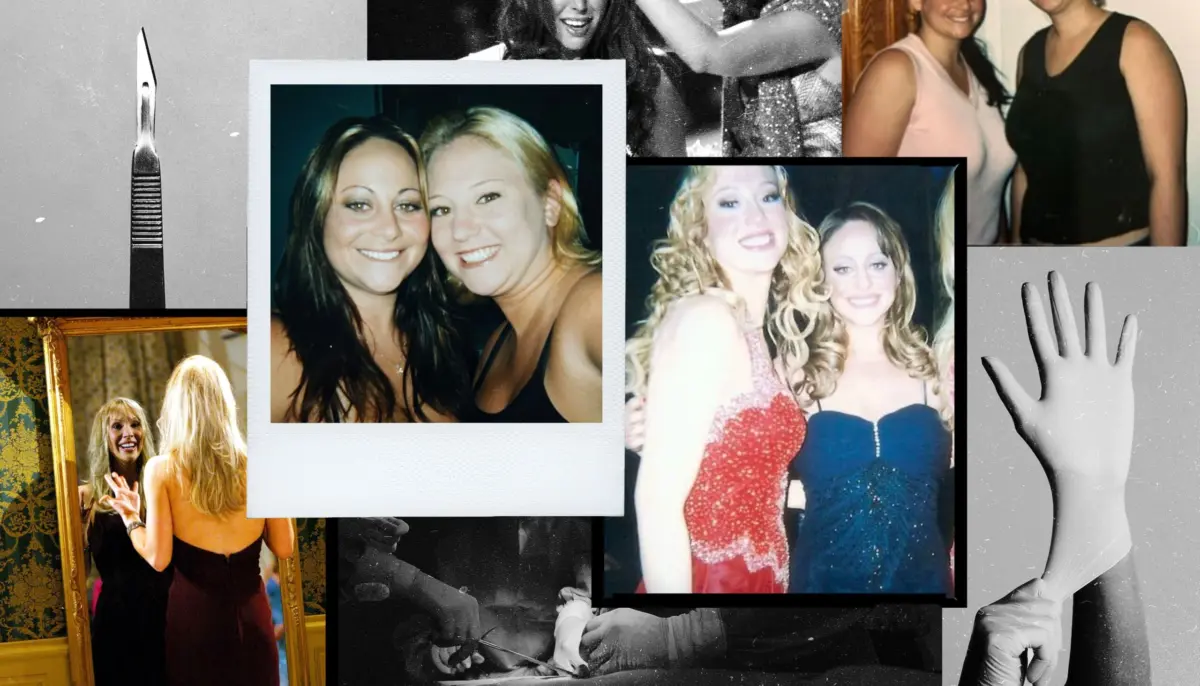
Behind the Mirror opens with a stark flashback to season two, featuring Swan contestant Kari Bravata on the operating table, her vitals dangerously tanking as nurses struggle to rouse her from deep anesthesia. Cut to the present day: Kari, alive and well, shares a sofa with her sister and fellow Swan contestant Gina, recounting the harrowing experience for the cameras. "I almost died for reality television," she says.
A moment later, the documentary introduces one of The Swan’s primary plastic surgeons, Randal Haworth, MD, who was well-known on the show for his cutting critiques. Terry Dubrow, MD, whom one contestant warmly describes as kind and funny, largely played the good cop to Haworth’s harsher persona. Offering no apologies, Dr. Haworth tells the documentary crew, "Plastic surgery is barbaric. You’re putting a cold scalpel onto flesh and certain things fail." This is not a perspective from 2004, mind you, but Dr. Haworth explaining his craft in interviews surrounding the 2026 documentary release. The show’s depiction of this doctor, both past and present, remains deeply disturbing. Callous and offensive then, and ostensibly unrepentant now—even with the benefit of hindsight, he describes the show as "empowering"—he plays the stomach-turning stereotype of a plastic surgeon, seeming almost like a theatrical spoof of himself. When Allure reached out to Dr. Haworth this week for comment after he watched the documentary, he stated, "I agreed to participate in the documentary in good faith and spoke candidly because I believed it was important to have the perspective of someone who was actually there. Having now watched it, I do feel some of my comments lost important context in the edit. The former contestants deserved the space to tell their stories fully, and I only wish some of my own explanations had been given the same room."
Was the approach to plastic surgery seen in The Swan the accepted industry norm in 2004? Did the general outlandishness of the decade fuel this sort of toxic behavior? It is difficult to say definitively. In 2004, at age 27, I was not personally interested in plastic surgery the way some younger adults are today. As someone who now covers the field almost exclusively, I have come to know many of the surgeons behind the scalpels. In my experience, the best of them—the medical sources I call on most frequently—possess credentials and compassion in equal measure. That is my view of the field through an admittedly modern lens.
Looking back at the reality series, Beth Lay, the first runner-up from season one, says of The Swan surgeons, "I think they had to dehumanize us, because ultimately we were just a job." Multiple procedures were routinely foisted upon the contestants, and while some Swans voiced genuine concerns, most acquiesced, believing they had no choice but to submit to the prescribed surgeries. "I was told that if I didn’t get everything that was on my list, I would be sent home," Lay says. "I didn’t feel like I could say, ‘No, I don’t want that,’" adds Cindy Ingle, a season-one Swan. As it turns out, their fears were entirely founded: "The women had maybe 1% say over which procedures they had," notes a former Swan producer.

In the documentary, viewers also learn that each woman was placed under anesthesia for staggering 10-hour stretches while Haworth and Dubrow performed as many procedures as possible to achieve dramatic, high-impact physical overhauls. Dr. Dubrow, who did not participate in the new film, told Vice in a 2024 video series, "I think in the two weeks of everyday surgery that we did, we did something like 200 plastic surgery operations on these patients. That was more than what a typical plastic surgeon would do in an entire year."
Given how poorly The Swan has aged culturally, one might assume its surgeons have faced lasting professional consequences, but both men continue to practice successfully in Beverly Hills with robust followings on social media. Both include The Swan prominently on their professional websites, with Dr. Haworth offering considerable detail on the project. He actually attributes a portion of his ongoing success to the show, noting, "Even though it’s been a number of years since the last episode aired, we still get calls in the office from prospective patients who mention The Swan as their inspiration for coming in to meet us." Perhaps as a testament to how the broader culture around plastic surgery has evolved less than we might hope, there are still individuals actively seeking out a surgeon who has publicly stated things like, "This nose has got to go."
In his statement to Allure, Dr. Haworth offered further reflection: "I’ve changed enormously in 22 years, both as a surgeon and as a person, and I’m comfortable looking critically at the show through the lens of 2026. There are aspects of the format, the language, and the way physical transformation was presented that I would approach differently today… The Swan absolutely deserves to be reexamined, including its shortcomings. My hope is that the conversation can make room for both the women’s experiences and the full context of what happened behind the scenes." He continued, "I take seriously the women who now describe parts of the experience as difficult or painful, just as I respect those who remember aspects of it positively. There clearly was no single ‘Swan experience.’"
Dr. Dubrow went on to star in E!’s long-running series Botched and its various spin-offs, alongside appearing with his wife, Heather Dubrow, in Bravo’s The Real Housewives of Orange County. He declined to be interviewed for the Behind the Mirror documentary. When this news first broke, many felt heartened, assuming he wished to distance himself from the controversial show. However, according to Vanity Fair, he had reportedly asked for an extraordinary amount of money to participate—a financial figure that Behind the Mirror director Erin Lee Carr told the outlet was neither possible nor appropriate. When Allure reached out to Dr. Dubrow for comment on that assertion and on the new documentary, his representative shared a formal statement: "Twenty-three years ago, I was one of two plastic surgeons on The Swan. Today, I sat down and listened to the stories of Delisa, Gina, Kari, Tawnya, Kristy, Cindy, Beth, Dore, and Kelly. I want to thank each of them for sharing their experiences so openly. Their voices deserve to be heard, and I recognize the weight of what they’ve shared. I take seriously my role in the series and the responsibility that comes with revisiting that chapter of television history. I wish each of them continued healing and peace moving forward." Dr. Dubrow’s representative did not address the request for comment regarding the financial negotiations mentioned by the documentary director.

The Swan didn’t just center, but actively celebrated, a dynamic of misogyny and shame within plastic surgery. It normalized medical care that in many ways fundamentally disempowered patients. This is what I found most unsettling while watching the documentary—this reality, combined with the show’s unholy recovery scenes. Viewers witness women waking from massive surgeries heavily bandaged, incoherent from heavy anesthesia, and already swollen and bruised beyond recognition. For many viewers at the time, these images likely served as a ghastly introduction to plastic surgery, long before modern social media began desensitizing audiences to the healing journey that now frequently goes viral. After spending just a single day in professional aftercare, the contestants were shuttled back to shared apartments where, at certain points, a single nurse was reportedly left tending to more than 20 recovering women. The Swans note that they had to help each other through the post-op misery—handling lipo leaks and endless icing—all while battling severe depression and homesickness. During the filming process, one contestant lost a beloved uncle, another discovered she had cancer, and a third was unexpectedly served divorce papers.
In the early postoperative period, with nose splints and chin straps still firmly in place, the Swans were filmed back in the gym, being berated by trainers during twice-daily workouts. During this most critical and vulnerable phase of recovery, they subsisted entirely on sponsored Jenny Craig microwavable meals, which one contestant recalls in the documentary as tasting "like bad decisions and regret."
It is impossible not to compare the contestants’ ordeal to the plastic surgery experience marketed to patients today, which is built on promises of safety, informed consent, realistic expectations, optimized aftercare, and natural results—a refreshed version of oneself. Modern surgeons routinely boast about their trauma-limiting techniques, choreographing procedures carefully to limit anesthesia exposure. They issue strict dietary guidelines and movement restrictions to minimize post-op swelling and bruising while thwarting complications. They design elaborate aftercare protocols complete with luxury recovery suites, private nursing, hyperbaric oxygen therapy, therapeutic lights and lasers, lymphatic massages, specialized supplements, and recovery swag.
How do we reconcile our current impressions of plastic surgery with the culture of casual cruelty that was embraced by The Swan not all that long ago? Have we been too blithe in accepting the sanitized marketing for glow-up facelifts and minimally invasive procedures, certain that the shame and misogyny of the Swan era are entirely behind us? And what about plastic surgeons at large? How are they reckoning with the legacy of The Swan—described by one commentator in Behind the Mirror as "the most sadistic reality show ever made"—and their profession’s toxic historical ties to it?

More than two decades later, former Swan contestants are still grappling with the physical consequences of their transformations, including hardened and ruptured implants, faulty veneers, and permanently damaged gums. They claim they were ultimately dismissed from the show without adequate follow-up care or ongoing support. For some, the psychological damage runs even deeper. "I went home feeling emotionally scarred from the situation," Lay says in the documentary. "It makes me feel so frustrated and ashamed to know that I participated in and fed into the world’s view of beauty."
Dr. Haworth remains less contrite in the film, stating, "I think The Swan did a pretty good job at trying to show the warts and all of the process," though he acknowledges that some of the women struggled with their aftercare.
As the documentary draws to a close, a tearful Kristy Garza watches vintage snippets from season one, expressing deep sympathy for that younger version of herself who was simply desperate to feel pretty. Season two sisters Gina and Kari—the latter of whom nearly died on the operating table—reflect that despite everything they endured, The Swan experience did not ultimately sour their personal opinions of plastic surgery. "What people expect us to regret the most is the surgery—that was the taboo or bad part," Gina notes. "I don’t regret the surgeries. I just regret that the process tore us down quite a bit."