For his room at this year’s prestigious Kips Bay Decorator Show House in New York City, acclaimed interior designer Peter Dunham decided to chart an entirely different course. Rather than chasing fleeting trends or constructing a theatrical installation meant strictly for shock value, Dunham chose to design the exact room that he himself desired.
Describing the creative process behind the space, Dunham admits that the project was inherently personal. "It was a very selfish room," he says, reflecting on the completed design. "It’s the pied-à-terre that I would like to have in that very location for me in New York. It was very personal."
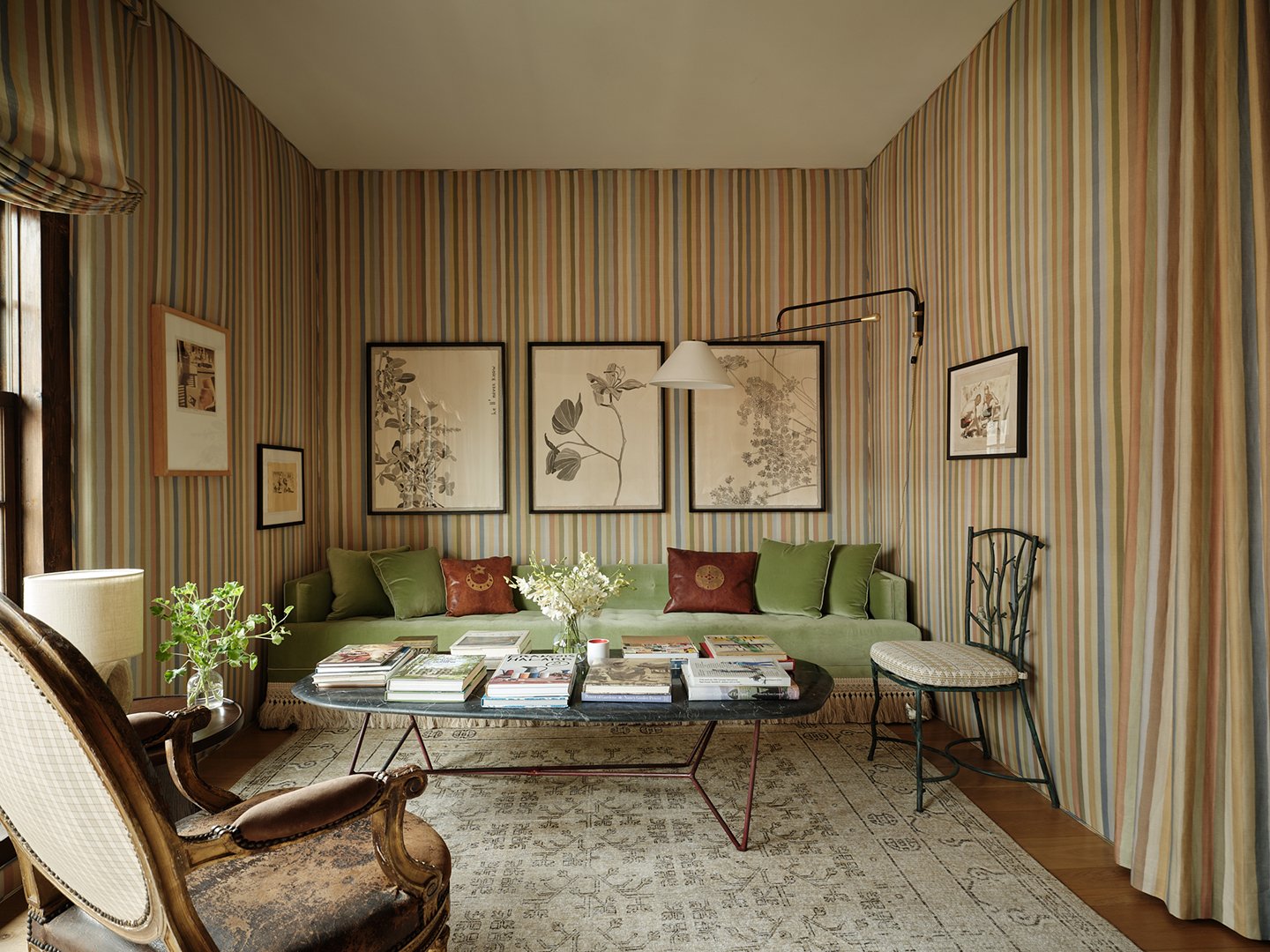
Beyond satisfying his own aesthetic cravings, Dunham was deeply intentional about anchoring the space to the physical reality of the building’s historic architecture and the vibrant energy of the surrounding Greenwich Village neighborhood. He sought to create an environment that felt simultaneously light and atmospheric—a delicate balance that would maintain a tangible dialogue with the historic structure of the house and the bustling streetscape just outside the windows. To achieve this, his color palette was carefully curated to pick up the verdant greens of the neighborhood’s mature trees alongside the rich, rusty hues of classic New York City brick. Through a meticulous layering of art, textiles, diverse materials, and furniture spanning multiple eras, Dunham crafted a space that feels as though it has been lovingly collected and lived in over the span of decades rather than hastily assembled over a few intense weeks.
To better understand how Dunham managed to orchestrate such a harmonious, inviting atmosphere under a notoriously demanding timeline, the designer broke down the foundational strategies and design philosophies that brought the room to life.
Employing the 75/25 Rule
A cornerstone of Dunham’s approach to creating depth and historical resonance within a space is the 75/25 rule. This principle dictates that a maximum of 75 percent of the items in a room should be brand new, while a minimum of 25 percent should consist of found objects, antiques, or vintage pieces. In his Kips Bay showhouse room, Dunham successfully met and arguably exceeded that 25 percent threshold.
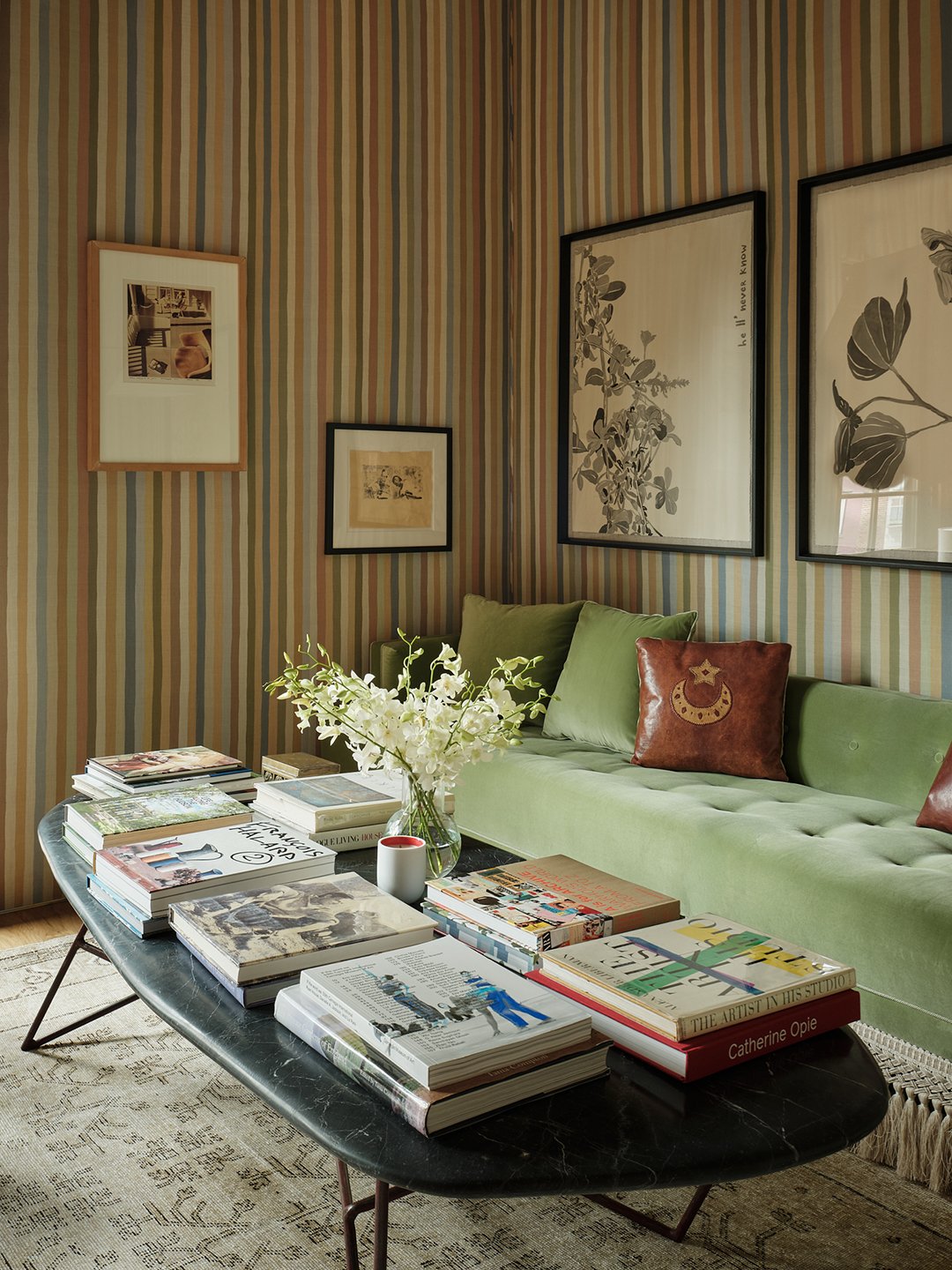
The space features a curated collection of vintage elements, most notably a vintage sofa that was carefully reupholstered in a rich green velvet from Kravet and finished with a custom trim of Samuel & Sons fringe. This is complemented by a classic Louis XVI armchair and a modern French black marble tabletop. According to Dunham, this deliberate juxtaposition of old and new is essential for establishing an eclectic atmosphere. The mix is specifically intended to bridge the gap between the building’s distinguished, landmarked exterior and its modern interior architecture.
Combining Thick and Thin Elements
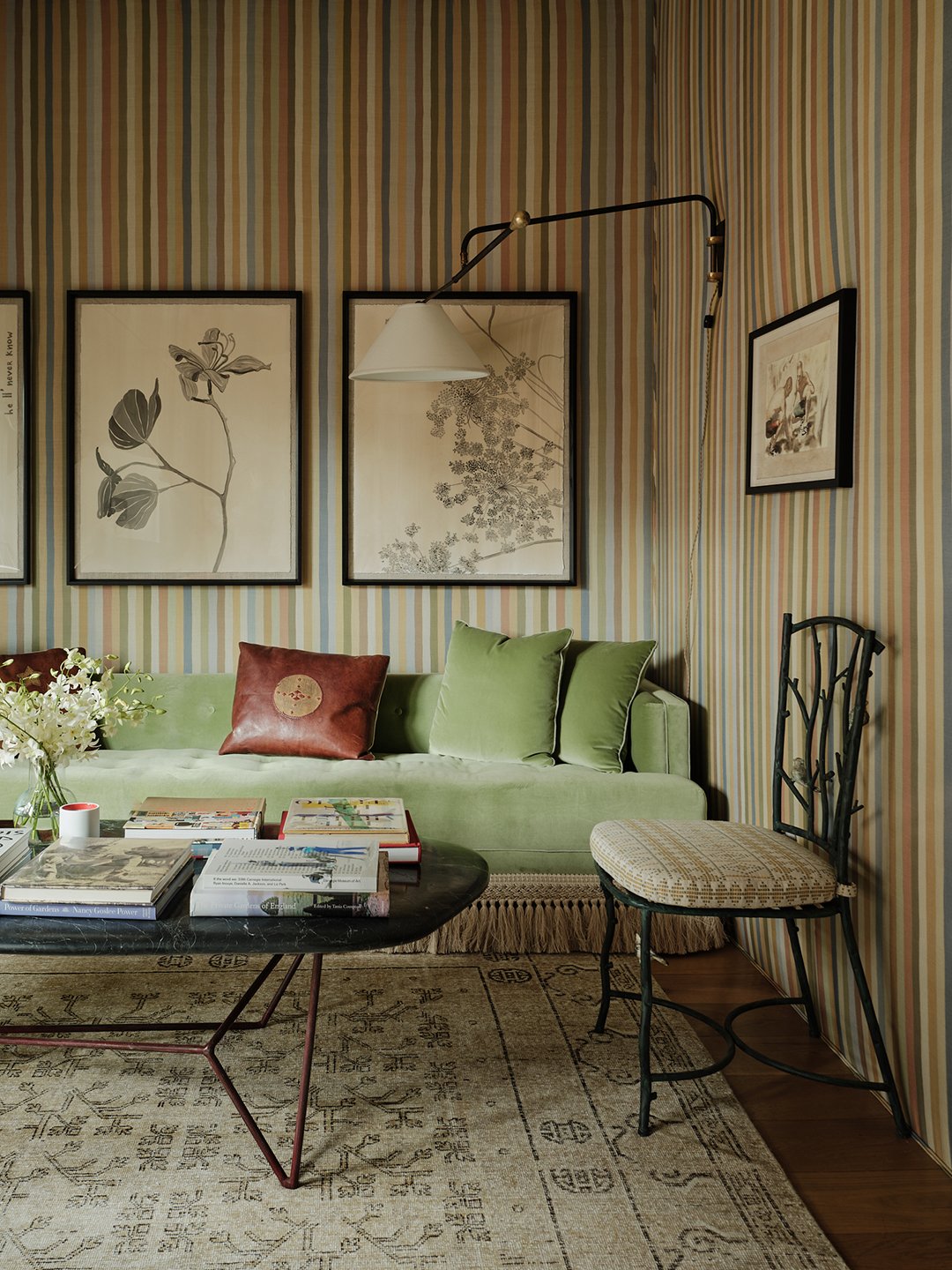
Dunham maintains that successful rooms must achieve a careful equilibrium between what he characterizes as "the pudding-y and the bony." In his design lexicon, the "pudding" represents the substantial, heavily upholstered, or voluptuously sculptural pieces within the space—such as the plush green velvet sofa. Conversely, the "bony" refers to the thinner, more linear, and wiry elements, like a vintage twig chair or a delicate wall-mounted light fixture.
Striking this balance is critical, Dunham explains, because an interior with an overabundance of linear or complex shapes can quickly feel chaotic, with every individual silhouette competing for the viewer’s attention. Ensuring there is enough of the substantial, grounding "pudding" helps anchor the room and provides visual relief.
Laying Down One Giant Rug
When faced with the challenge of flooring a large room, many designers attempt to artificially delineate different functional zones by utilizing multiple smaller floor coverings. Dunham, however, rejected this common impulse. Noting that breaking up the floor would have visually diminished the scale of the space, he opted instead for a single, expansive rug.
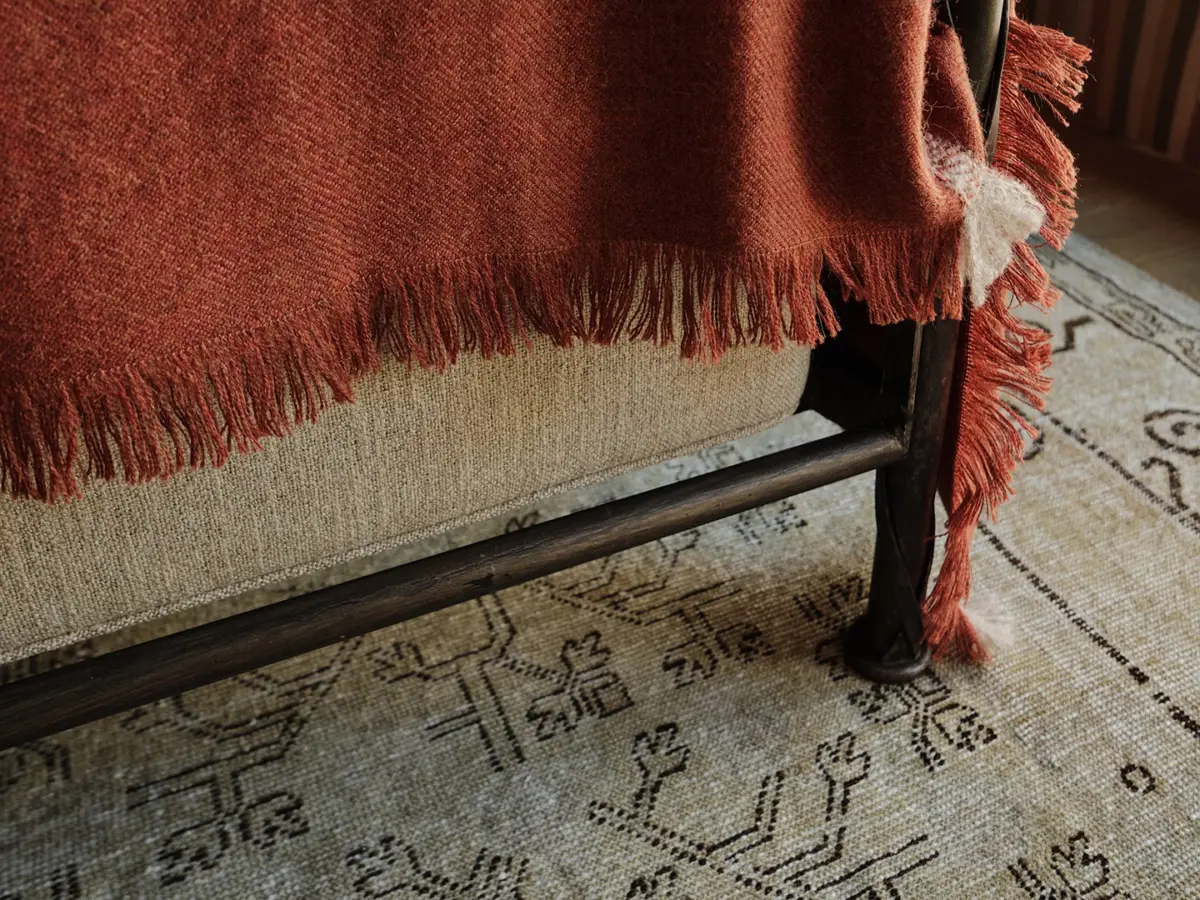
He selected an early Khotan carpet sourced from Marc Phillips to anchor the room. By extending one monumental carpet across the floor plan, Dunham achieved a cohesive foundation that successfully unifies the diverse array of furniture and textures resting upon it.
Saving Precious Inches With Roman Shades
The architecture of the historic home presented spatial limitations, particularly in a room measuring just ten and a half feet wide. When selecting window treatments for the original architectural windows, Dunham required a solution that was both tailored and highly functional.

Rather than opting for traditional drapery, which he notes can consume an extra six to eight inches of precious floor depth on either side of a window, Dunham chose three custom Roman shades. This choice allowed for precise control over natural light while maximizing the usable footprint of the narrow room.
Showcasing a Grand Bed in a Tiny Room
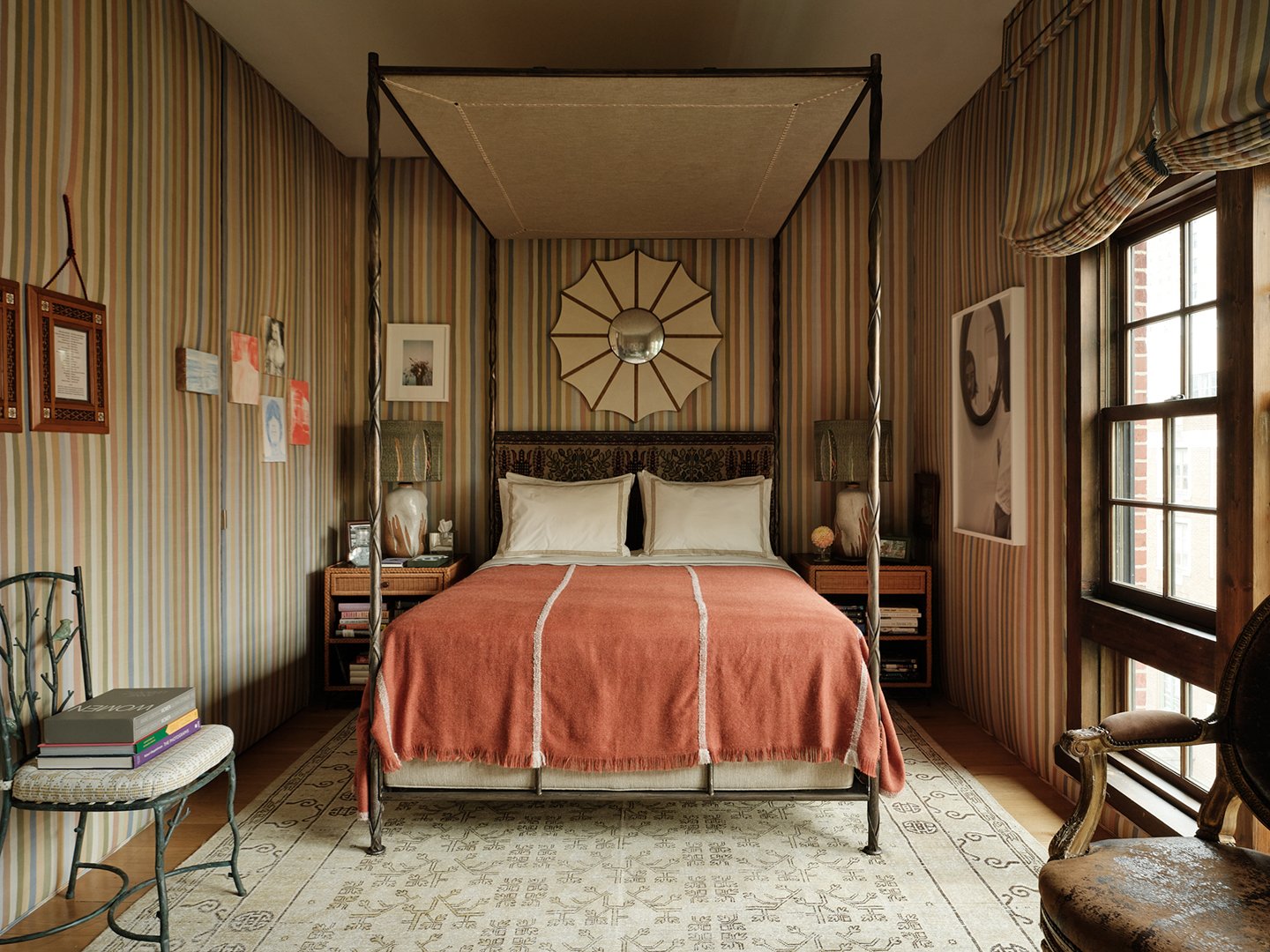
One of the more counterintuitive lessons Dunham applied in the space is the notion that scale should not be restricted by room dimensions. Reflecting on his own past living arrangements, where he placed a chunky Georgian four-poster bed into a remarkably small bedroom, Dunham realized that grand gestures often yield the most dramatic and rewarding transformations.
"I think the smaller the room, the more of a case you have to make for a canopy bed," Dunham says. Putting a substantial canopy bed in a compact space transformed what could have easily felt like a cramped, utilitarian maid’s room into a striking, sophisticated destination. His advice for designers working with tight footprints is straightforward: do not be afraid to go big.
Using Fabric Instead of Wallpaper
To cultivate a cocoon-like sense of intimacy and acoustic comfort, Dunham bypassed traditional wallpaper in favor of fully upholstered walls. He covered the vertical surfaces in Jacob’s Stripe, a multicolor linen print from his own recently launched textile collection with Peter Dunham Textiles.
To create a seamless, 360-degree environment, he coordinated contiguous window treatments and doorway drapes crafted by The Shade Store using the same fabric. While some designers fear that matching walls and window treatments can feel overwhelming, Dunham argues that introducing contrasting elements elsewhere actually serves to heighten the impact of the pattern. For a deeply encompassing and soothing atmosphere, however, wrapping the room in a single textile yields a powerful result.
The Vital Impact of Art
The transformative power of art became undeniably apparent during the final stages of the room’s installation. When Dunham and his installation team initially stepped back after placing the furniture and textiles, he admits he felt a momentary wave of doubt, finding the space pleasant but perhaps a bit lackluster.
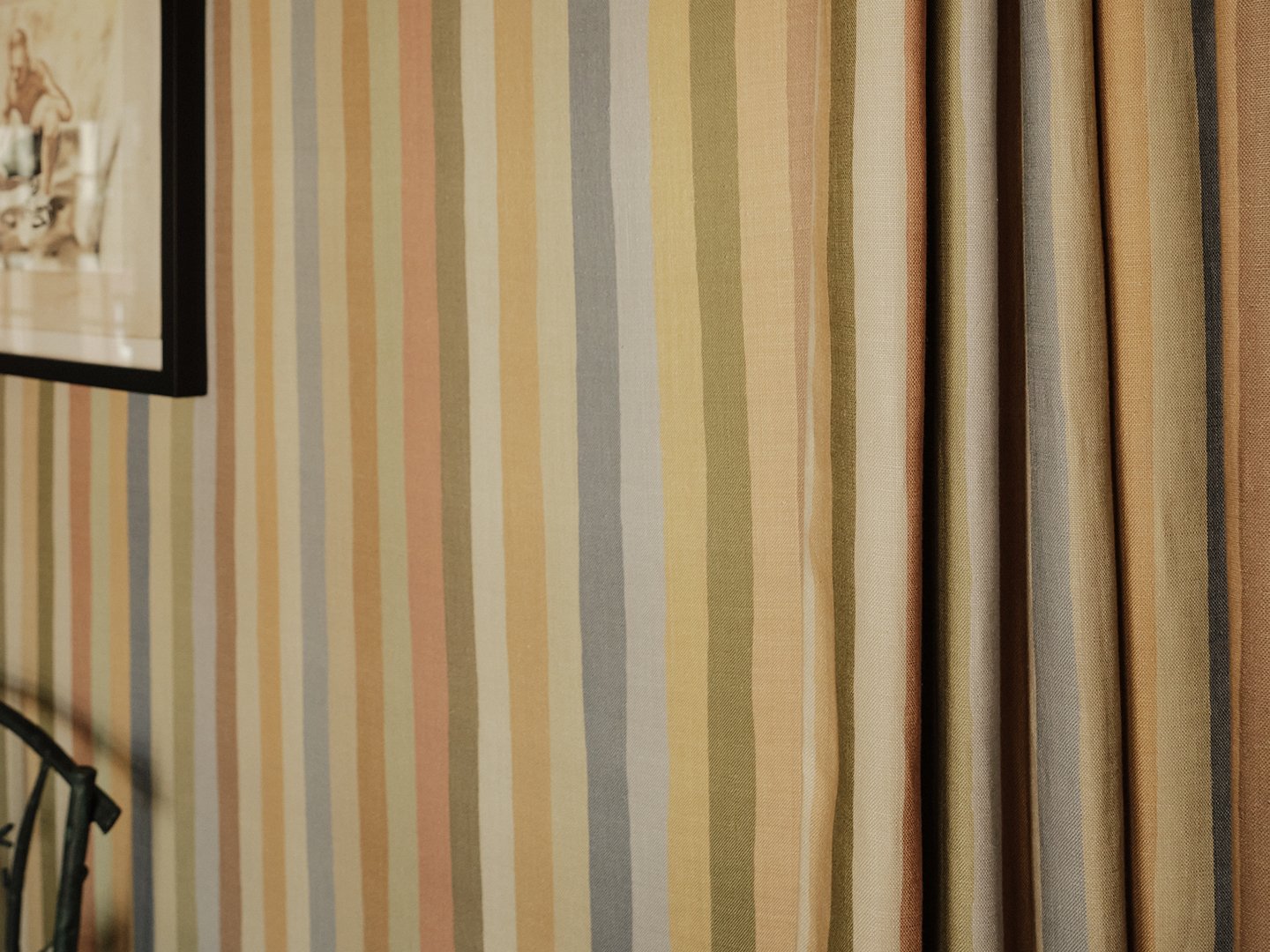
That dynamic shifted entirely once the art collection was hung on the newly upholstered walls. "It lifted everything. Everything popped. Everything was in conversation with each other. It made the room literally come alive," Dunham recalls.
Curating the art selection exclusively from Los Angeles-based talent, Dunham incorporated works by James Cherry, David Hockney, Paul Mpagi Sepuya, Joey Strella, Konstantin Kakanias, and Catherine Opie. He emphasizes that the framing process requires just as much editorial discipline as selecting the pieces themselves, noting the importance of avoiding monotony while ensuring disparate frames do not clash jarringly.
Incorporating Intrigue Through Custom Touches
To achieve a layered atmosphere that resists feeling mass-produced, Dunham relied heavily on bespoke and repurposed elements. He constructed the impressive bed using a vintage frame combined with an antique English textile for the headboard and a newly upholstered panel positioned at the top. Similarly, he designed custom shades fashioned from a vintage Japanese obi to top lamps by Natan Moss.
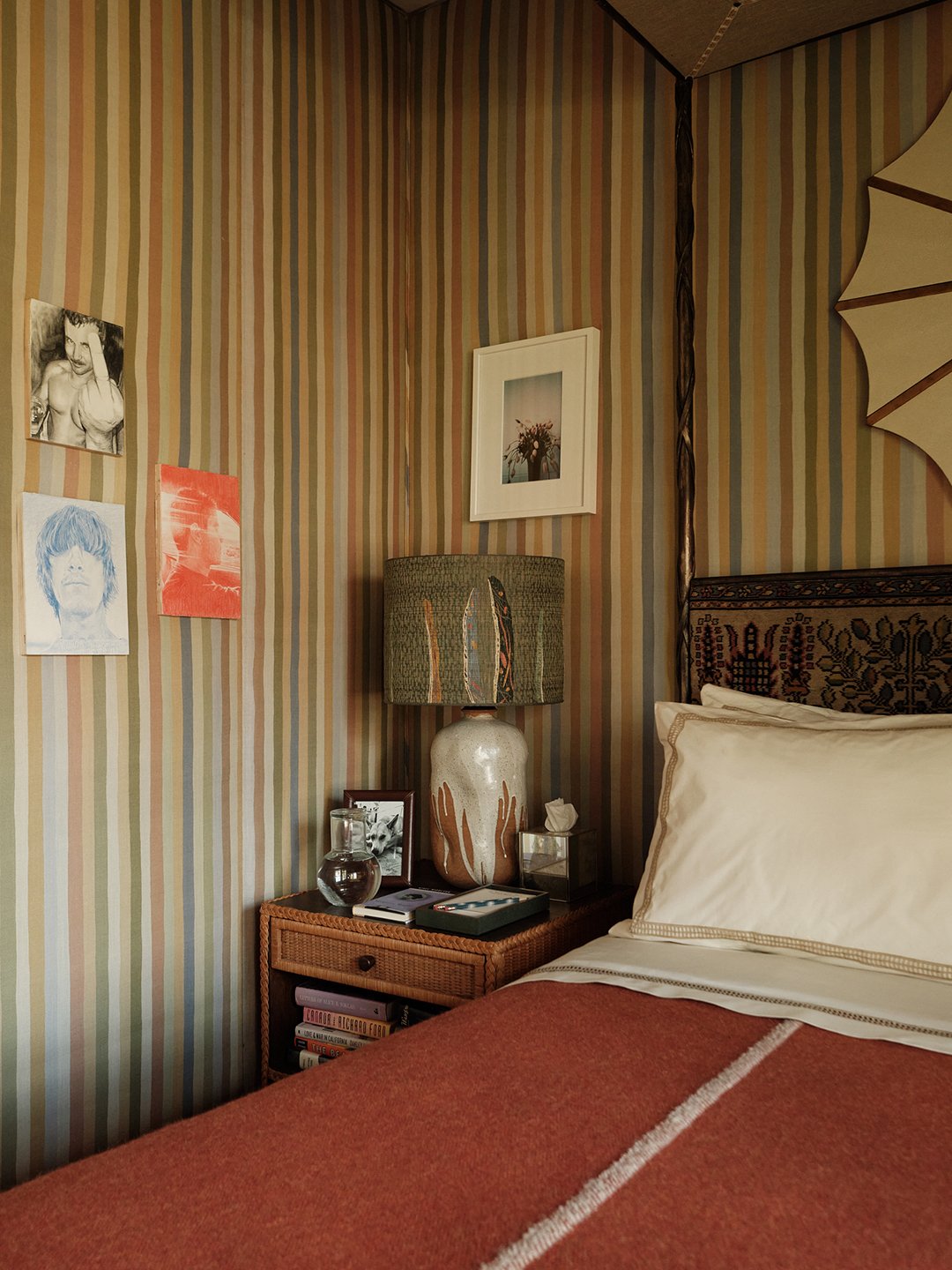
Creating a memorable interior, according to Dunham, requires details that transcend standard retail offerings—pieces that prompt visitors to stop in their tracks and wonder about their origins.
Upholstering the Box Spring
Concluding the tour of his Kips Bay creation, Dunham highlighted a subtle detail that easily escapes casual observation: the meticulous upholstery of the bed’s Saatva box spring. In Dunham’s view, leaving a standard box spring exposed breaks the illusion of custom craftsmanship. By covering the box spring in the exact same fabric used on the underside of the bed’s canopy, he achieved a tailored, highly consistent finish that exemplifies the rigorous attention to detail defining his design philosophy.