For those who have tuned out the daily financial drama to focus on everyday life, the modern AI phenomenon can be distilled into a few core milestones: massive technological leaps, staggering corporate investments, and an intense debate over its long-term impact on the workforce and the global economy. The central fear among nervous investors is that while AI is undeniably a major technological invention, the sheer mania surrounding it mirrors the runaway enthusiasm of the early 2000s dot-com bubble. Many warn that the current cycle is moving too fast and pushing valuations too high, setting the stage for a crash that could dwarf past downturns.

This historical parallel hits close to home for figures like Pete Adeney—better known in the personal finance space as Mr. Money Mustache—whose early career was supercharged by the dot-com boom before the subsequent crash nearly derailed his livelihood and citizenship application. Now celebrating over two decades of retirement, Adeney frequently fields questions from worried investors navigating the current market cycle. Addressing these concerns directly, he recently debuted a presentation at Camp FI Midwest and is slated to deliver an expanded version at the upcoming Bogleheads conference in November, using his platform to dissect whether contemporary market anxieties are genuinely unique or just another iteration of historical panic.
Will the AI Bubble Ruin Our Retirement?
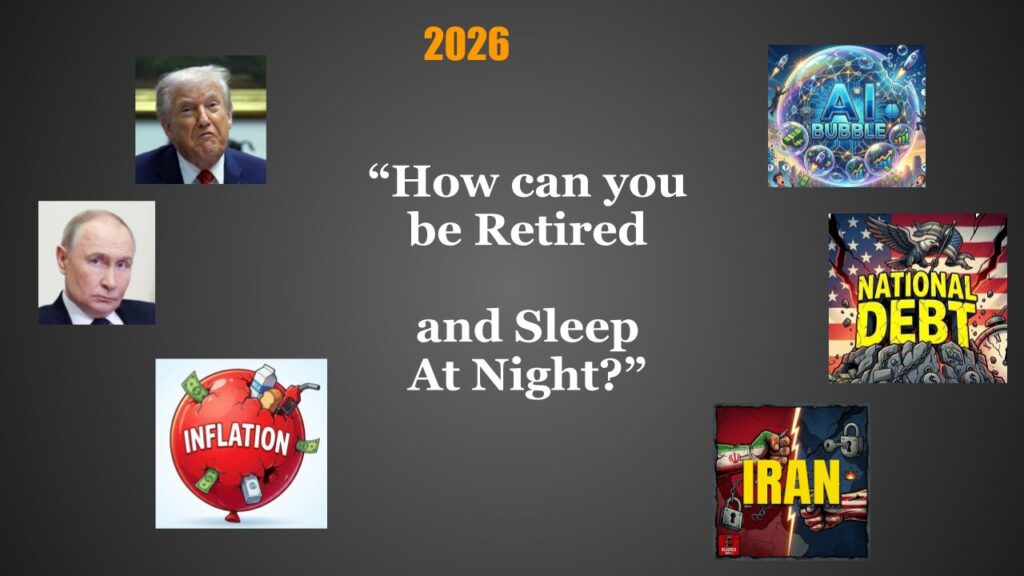
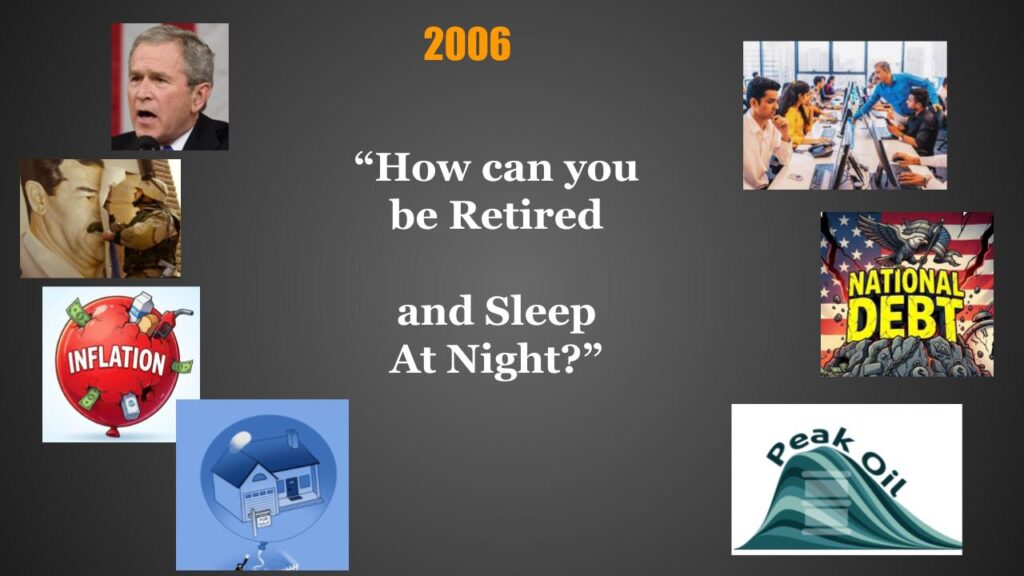
Reflecting on twenty-one years of retirement, Adeney notes that while he has grown entirely comfortable stepping away from traditional work, he is routinely met with questions from friends and followers expressing profound anxiety about the state of the world. In contemporary discussions, people point to a litany of modern crises: dangerous political leadership, relentless inflation, the looming shadow of the AI bubble, mounting national debt, and escalating geopolitical conflicts threatening global stability.
Yet, this brand of existential financial worry is hardly new. Looking back twenty years to 2006, the worries of the day felt just as pressing and catastrophic to those living through them. At the time, observers fretted over volatile geopolitical leaders, ongoing conflicts in the Middle East, surging national debt, inflation, and a severely overvalued stock market driven by a dangerous housing bubble rather than an AI mania. Back then, widespread anxiety centered not on artificial intelligence stealing jobs, but on the mass outsourcing of labor to India and China. There was even a widespread panic over "Peak Oil," with many predicting societal collapse as fossil fuel demand outpaced supply—an outcome that ultimately reversed as technology and production evolved.
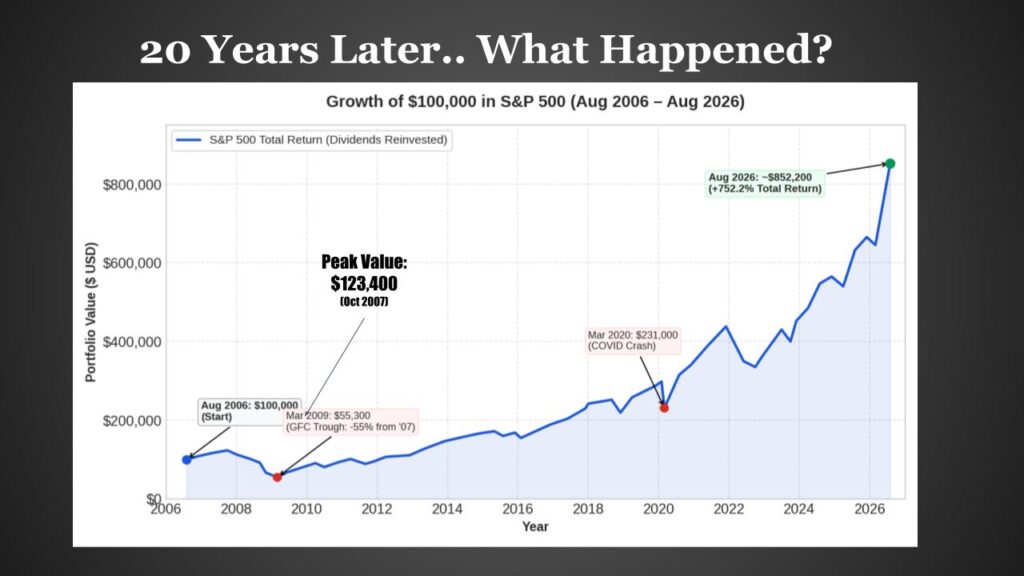
Despite the heavy clouds of anxiety hanging over the global economy in 2006, the subsequent two decades delivered unexpected resilience. Even the Great Financial Crisis—triggered by irrational exuberance over housing prices and reckless financial leverage, resulting in the deepest economic downturn since the Great Depression—proved to be a temporary blip on a much larger upward trajectory. A hypothetical $100,000 investment made during those turbulent years would have grown substantially over the long term, absorbing subsequent shocks like the 2020 pandemic crash along the way.

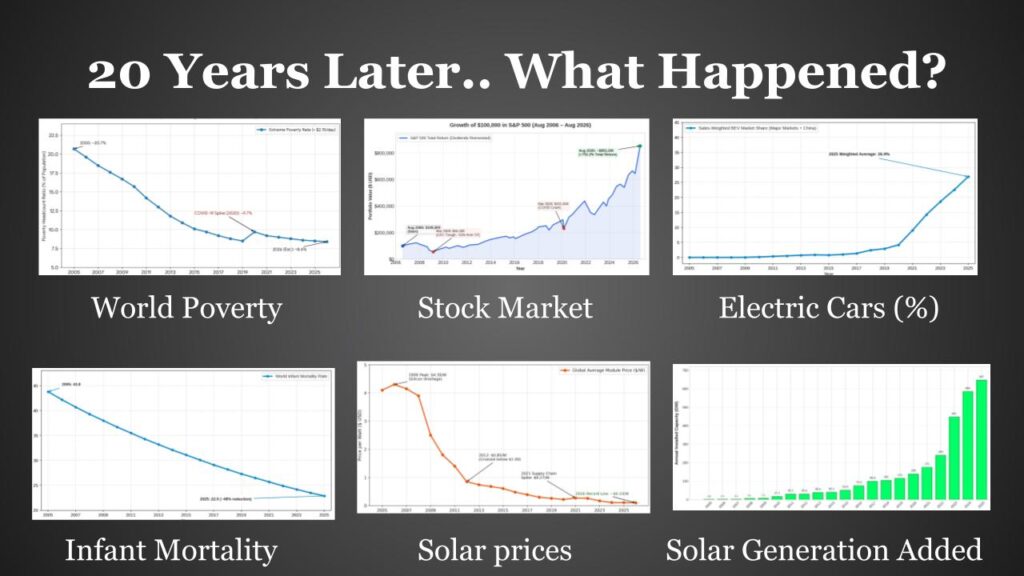
Simultaneously, broader global indicators showed remarkable structural improvements over the same twenty-year span. The proportion of the global population living in extreme poverty dropped significantly, infant mortality rates were cut in half, and clean energy adoption accelerated as solar panel technology became dramatically cheaper. Solar power generation now forms the vast majority of new energy additions globally, while electric vehicle sales have surged from near-zero to a substantial share of the worldwide automotive market.
Productivity Over Predictions
Faced with relentless warnings from the financial media about the U.S. national debt, potential AI overreach, or algorithmic superintelligence, market observers often overlook a fundamental economic reality: true prosperity is not derived from the financial system or the stock market, which ultimately represent numerical abstractions tracked on computers. Instead, prosperity stems directly from human productivity.
The core lesson of long-term economic analysis remains consistent through every market cycle. Capitalism is inherently volatile, characterized by choppy waters and wild swings in sentiment. Beneath the surface turbulence, however, real people continue to perform tangible work and develop genuine technological innovations. The concept of an "economy" is simply a human construct; if financial systems experience severe disruptions, society possesses the capacity to reset metrics and resume productive labor, a mechanism demonstrated repeatedly during past crises.
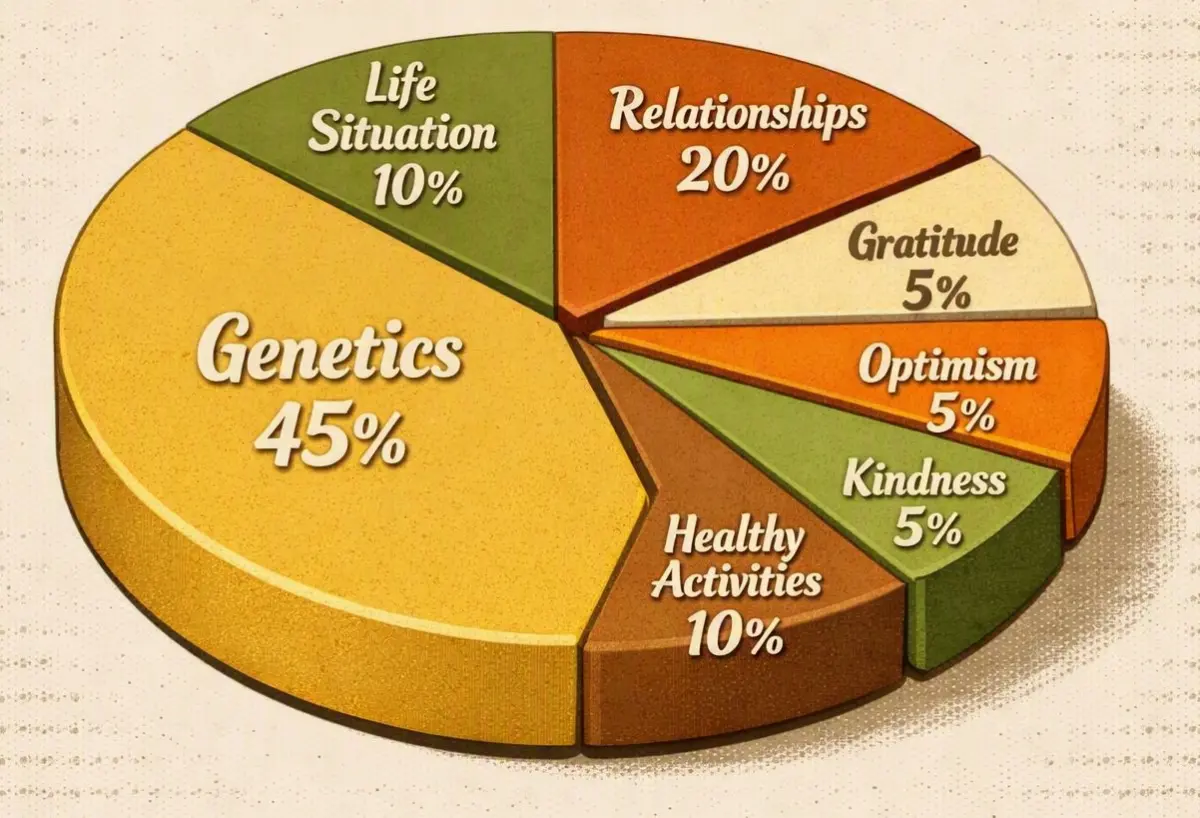
Human standard of living, economic growth, and the viability of long-term financial independence rely fundamentally on high productivity. Once basic material standards of living are met, additional increments of wealth yield diminishing returns regarding overall human happiness. Broader psychological research suggests that non-financial factors—such as genetics, close personal relationships, gratitude, optimism, and an active lifestyle—play a far more dominant role in determining long-term satisfaction than portfolio valuations.
Confronting the Roots of Financial Fear
Persistent anxiety about the future often has less to do with objective economic conditions and more to do with human psychology. As a species, humans evolved as sophisticated danger-detection mechanisms. While this trait successfully protected early humans from physical predators and environmental scarcity, modern society lacks those immediate physical threats, causing the brain to continually shift the goalposts and find new targets for anxiety.
Once basic survival needs are met, people migrate their worries toward social standing, neighborhood aesthetics, complex tax strategies, or managing required minimum distributions later in life. However, recognizing the irrationality of these fears allows individuals to take a more rational approach. Understanding personal history—such as childhood environments shaped by familial scarcity or past trauma—can illuminate why certain financial triggers elicit disproportionate emotional responses.
Taking concrete action remains one of the most effective ways to neutralize fear. Engaging directly with unfamiliar situations builds resilience and confidence, transforming abstract worries into manageable realities. Furthermore, reducing exposure to sensationalized daily news diets helps prevent the constant intake of manufactured crises, allowing individuals to redirect their energy toward positive behaviors, physical health, and constructive community engagement.
The AI Era as a Technological Experiment
Evaluating the current artificial intelligence boom through the lens of historical experiments reframes the phenomenon from a looming catastrophe into a fascinating technological evolution. While technological shifts invariably cause anxiety, understanding the core drivers of AI reveals significant potential for economic efficiency.
Rather than an apocalyptic threat, AI functions essentially as a cognitive productivity tool, capable of amplifying human efficiency much like historical innovations that automated physical labor. While this shift inevitably disrupts specific entry-level roles across administrative, software, and transportation sectors, it simultaneously lowers service costs and catalyzes the creation of entirely new industries, mirroring the long-term trajectory of the internet and mobile computing.
Ultimately, technological revolutions continue to present choices rather than predetermined outcomes. By focusing on continuous learning, rational risk assessment, and constructive adaptation, individuals can navigate market bubbles and economic uncertainties without falling victim to generalized panic. As historical precedent demonstrates, meaningful progress consistently lies on the other side of fear.