
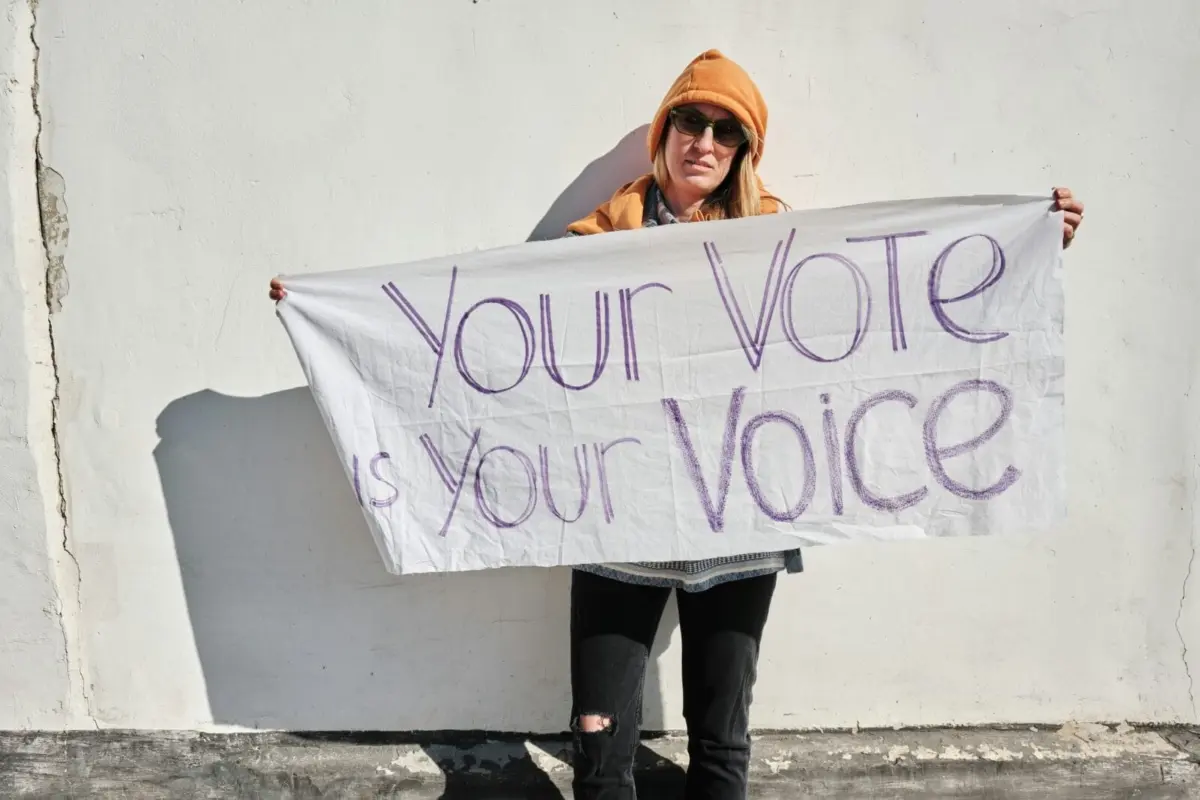

Despite the severity of the crisis, many voters remain unfamiliar with how their individual states perform on maternal health indicators, or how their elected officials influence the policies governing maternal care.

To bridge the gap between public health realities and civic decision-making, a new nonpartisan initiative seeks to place maternal outcomes directly before voters at the ballot box. Advocacy organizations Chamber of Mothers and Healthy Moms, Healthy Babies America (HMHBA) have jointly launched "Vote Like a Mother," a free public platform mapping maternal health outcomes across all 50 states and the District of Columbia. Designed for the 2026 midterm election cycle, the digital resource pairs state-level clinical outcomes with the legislative records, stated platforms, and policy histories of candidates seeking high-profile state offices.

By centralizing state maternal mortality rates against developed-world benchmarks alongside candidate profiles, the tool aims to translate public health data into actionable electoral information, allowing voters to evaluate state leadership through the lens of maternal well-being.

The Preventable Toll of the Postpartum Window
The launch of the platform comes amid heightened scrutiny of the structural gaps within America’s maternal healthcare infrastructure. Federal data from the Centers for Disease Control and Prevention (CDC) indicates that an estimated 87 percent of pregnancy-related deaths across the country are preventable. Rather than occurring strictly in the delivery room, a significant portion of these fatalities emerge long after patients have been discharged from the hospital.

According to federal maternal mortality data, roughly one-third of all pregnancy-related deaths occur between one week and one full year after delivery. This critical window frequently coincides with a sharp drop-off in clinical contact, structured medical oversight, and social support. While standard obstetrical protocols historically centered on a single checkup roughly six weeks after childbirth, comprehensive research cited by the initiative—including findings from the American College of Obstetricians and Gynecologists (ACOG)—demonstrates that approximately 40 percent of new mothers never attend any postpartum visit at all.

Advocates stress that the human and societal costs of this care cliff extend far beyond mortality statistics alone. The period following birth often leaves new parents navigating an array of unmonitored and unaddressed complications that jeopardize their long-term health. Severe postpartum depression and anxiety frequently go unscreened and untreated; pelvic floor trauma sustains little to no rehabilitative physical therapy; lactation complications emerge without clinical intervention; and dangerous cardiovascular warning signs, such as postpartum hypertension, go undetected in the absence of routine vital monitoring.

Public health experts emphasize that while many of these conditions can be effectively managed with consistent postpartum monitoring, they become quietly life-threatening when left unattended in systemic blind spots.

These vulnerabilities fall with disproportionate severity across racial and geographic lines. Longstanding CDC surveillance data confirms that Black women are more than three times as likely to die from pregnancy-related causes as white women, reflecting systemic inequities, diagnostic delays, and differing access to quality healthcare. American Indian and Alaska Native women face a risk roughly twice as high. Simultaneously, geographic barriers continue to widen across the country as rural hospitals shutter their labor and delivery wards, leaving hundreds of thousands of pregnant and postpartum women in expanding maternity care deserts with limited access to emergency obstetrical interventions.

State Governance and the Maternal Healthcare Landscape
Advocates point out that these disparate outcomes are not biological inevitabilities, but rather the cumulative result of healthcare policy choices. In the United States, the majority of healthcare regulations, social safety net structures, and public health investments are determined not at the federal level, but within individual state capitals.

State races will play a decisive role in shaping maternal healthcare systems, with 36 states holding gubernatorial elections in 2026. Governors, working alongside state legislatures, control the primary policy mechanisms that determine maternal access and outcomes. These powers include establishing the duration of Medicaid coverage for new mothers, determining public funding and licensing standards for community hospitals, allocating subsidies to keep rural delivery units viable, and authorizing funding for postpartum home-visiting nurse initiatives.

Among the most immediate policy mechanisms under state purview is the extension of postpartum Medicaid coverage to a full 12 months following birth. Because Medicaid finances more than 40 percent of all births nationwide, the timeline of coverage directly dictates whether low-income mothers retain access to healthcare throughout their most vulnerable months. While many states have enacted measures extending postpartum coverage to a full year, disparities remain. In Arkansas, for instance, Medicaid benefits for new mothers continue to cut off after just 60 days postpartum, leaving many low-income patients uninsured during the exact period when delayed cardiovascular and mental health crises are most prone to emerge.

The "Vote Like a Mother" platform systematically organizes these policy records, linking state-level statutory frameworks directly to the specific officials who introduced, supported, or opposed them. By categorizing candidate votes and public commitments on healthcare access, Medicaid duration, and maternity ward funding, the guide eliminates the need for voters to independently search through dispersed legislative records or sift through conflicting campaign advertisements.

A Growing Coalition for Maternal Policy Reform
The nonpartisan initiative unites two organizations dedicated to reframing maternal welfare as a central public priority. Chamber of Mothers, a 501(c)(3) advocacy organization with more than 50 local chapters nationwide, focuses its civic organizing on paid family leave, accessible and affordable childcare, and comprehensive maternal health services. Healthy Moms, Healthy Babies America was co-founded as a national nonprofit in 2026 by Olivia Walton and Cara Osborne with the ambitious mission of cutting the nation’s maternal mortality rate by 50 percent within a five-year period.

Both organizations have sought to counter partisan political rhetoric by highlighting maternal health as an issue marked by broad public consensus. Research consistently demonstrates that a clear majority of Americans, regardless of political affiliation, support robust state and federal action to protect expectant and new mothers. A national poll conducted by HMHBA revealed that more than 80 percent of voters across party lines support nearly every major policy proposal currently aimed at mitigating the maternal mortality crisis, including extending postpartum care, addressing maternity hospital closures, and investing in maternal mental healthcare.

Despite that public unity, organizational leaders say political inertia has continued to stall essential reforms. Erin Erenberg, chief executive officer of Chamber of Mothers, emphasized that accountability must be placed equally on elected officials of both major political parties.

"The solution to America’s maternal health crisis isn’t hard to conjure, yet too many elected officials, regardless of party, continue to overlook what moms ask for and need: paid leave, affordable, accessible childcare, and robust investments in maternal healthcare," Erenberg said.

Erenberg noted that the voter guide is designed to empower parents to bring their daily lived experiences directly into the voting booth. She described the objective as equipping families "to vote like a mother," which she defined as "voting your values and for candidates and ballot measures that support a safe, healthy, and whole experience for moms and kids alike."

From a public health perspective, the geographical disparities embedded within state-by-state policies remain among the most troubling aspects of the current system. Robin Reck, executive director of Healthy Moms, Healthy Babies America, underscored the ethical imperative of making state-level data widely accessible to the electorate.

"It’s unacceptable that where you live still determines whether you survive having a baby in this country," Reck said, "and unconscionable that most moms have no idea how their own state stacks up."

Reck stressed that the 2026 midterm elections represent an opportunity to leverage civic participation to protect familial health. "This year, no mom should have to choose between her family and her vote," Reck added. "Her vote is how she protects her family."

Transforming Data Into Electoral Accountability
By contextualizing each state’s performance alongside international standards, the "Vote Like a Mother" guide aims to strip away partisan messaging and present maternal welfare strictly through the clarity of public health metrics. Instead of presenting maternal outcomes as broad, national abstractions, the tool focuses on localization: providing voters with their specific state ranking, the performance gaps in their local communities, and the records of the exact candidates asking for their votes.

Advocates behind the project contend that if the nation’s 85 million mothers—and the millions of voters who support them—evaluate candidates based on their substantive contributions to maternal and infant safety, maternal health policy will naturally transition from a neglected talking point into an electoral mandate. With dozens of state executives and legislative bodies preparing to take office, organizers view informed, nonpartisan civic engagement as the most reliable path toward reversing the country’s maternal health crisis and securing consistent, life-saving care for families nationwide.