

To understand how we arrived at this juncture, it helps to look at the mechanisms driving the broader economy. Federal Reserve Chairman Jerome Powell and his central banking colleagues have essentially operated as the drivers of a massive economic vehicle, pressing down on the accelerator with a steady stream of easy money. For the past two decades, near-zero interest rates flooded the system with highly accessible capital. This monetary environment made mortgages remarkably affordable, allowing buyers to stretch their purchasing power and driving unprecedented demand for both existing homes and new construction.

The low-rate environment had a parallel impact on the corporate sector. With borrowed money and venture capital readily available at minimal cost, entrepreneurs launched countless new enterprises, rented office spaces, built factories, and hired workforces. Those employees subsequently participated in the broader consumer economy, purchasing homes, vehicles, appliances, and technology. This extended cycle of growth and prosperity fueled decades of economic expansion.
Eventually, however, the dynamic tipped past equilibrium. Too much money began chasing too few goods, particularly within the housing sector, triggering a wave of unacceptably high inflation. Recognizing the overheating economy, the Federal Reserve eased its foot off the monetary gas pedal. As interest rates were aggressively adjusted upward to combat inflation, the broader economy began to decelerate.
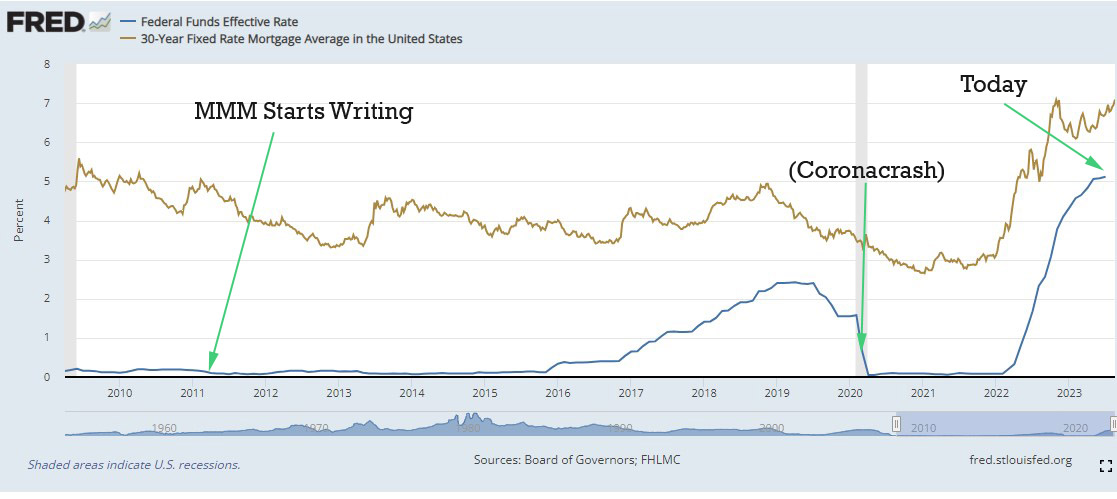
The effects of this monetary tightening are now visible across multiple sectors. Mortgages have become significantly more expensive, prompting many prospective homebuyers to postpone their purchasing plans. Corporations facing higher borrowing costs have scaled back factory construction and decelerated hiring, resulting in high-profile workforce reductions at major tech firms. The financial sector also experienced turbulence, marked by a miniature banking crisis involving several mid-sized institutions that briefly rattled market confidence.
Public discourse surrounding these economic shifts often leans toward pessimism, with various political and ideological groups characterizing the current climate as a period of hardship. Yet, this narrative stands in stark contrast to macroeconomic indicators such as near-historic lows in unemployment and resilient economic output. Rather than a sign of systemic economic failure, the current phase represents a period of monetary cooling designed to allow the economy to digest a prolonged cycle of high liquidity.

For everyday investors, the recurring question is whether to liquidate stock holdings ahead of an anticipated market crash. Historically, the stock market trends upward over the long term, punctuated by unpredictable volatility. Because market timing remains practically impossible, attempting to cycle in and out of equities generally proves counterproductive. Following recent adjustments, the overall U.S. market experienced a modest retreat from its previous peaks, trading relatively flat over a multi-year horizon. For disciplined buyers, lower asset prices effectively translate into a more attractive entry point for regular index fund purchases, aligning with long-term investment principles rather than short-term panic.
A parallel dilemma involves the surging appeal of high-yield savings accounts and money market funds, which now offer yields around 4.5 percent or higher. While conservative cash instruments offer stability and a reliable nominal return, long-term equity returns historically outperform cash equivalents. Furthermore, because the broader stock market is trading at a relative discount, capital deployed into equities now stands to benefit when the market eventually reaches new highs. Rather than abandoning equities entirely, many investors adopt a balanced approach that maintains long-term market exposure while keeping adequate cash reserves for personal liquidity and stability.

The most profound impact of the new interest rate environment is arguably felt within the housing market. The escalation of mortgage rates from roughly 3 percent to over 7 percent has dramatically altered the math of homeownership. Financing a home purchase has become considerably costlier, prospective rental investments yield lower margins, and homeowners with locked-in low-rate mortgages face a strong disincentive to sell.
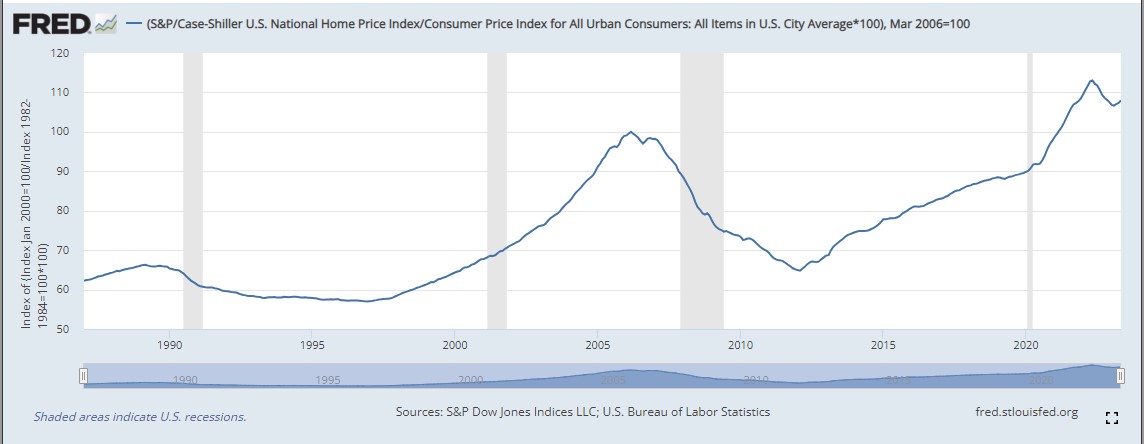
Consider the financial implications for a buyer making a standard 10 percent down payment. The tripling of mortgage rates substantially increases monthly debt service obligations for the same underlying property value. While these escalating costs sound discouraging, they function precisely as intended within monetary policy frameworks. Higher borrowing costs are designed to cool housing demand, curb bidding wars, and alleviate upward pressure on home prices.

The trajectory of future home prices ultimately depends on fundamental supply and demand dynamics, alongside long-term structural factors. Construction costs benefit from technological advancements, global trade efficiencies, and modernized building techniques, such as corded tools and PEX plumbing, which streamline residential construction. Conversely, regulatory hurdles, zoning restrictions, and local approval processes have historically restricted housing supply, keeping upward pressure on prices in many regions. While high-interest rates have temporarily paralyzed portions of the housing market, adjusted home prices may experience gradual corrections or extended periods of flat valuation relative to future wage growth.
Meanwhile, questions persist regarding when interest rates might reverse course. Although current rates feel restrictive compared to the anomalous zero-rate era of the 2010s, a historical perspective reveals that today’s rates align closely with long-term historical averages. Consequently, rates may remain elevated for an extended period unless economic growth slows down significantly enough to warrant monetary easing.
Market indicators, such as the U.S. Treasury yield curve, offer insight into investor expectations regarding future rate trajectories. Currently, the yield curve is inverted, meaning short-term yields surpass long-term yields. Investors are currently rewarded with higher yields on short-term lending compared to ten-year bonds, reflecting a widespread market consensus that interest rates will likely decline in the future. Historically, an inverted yield curve has served as a reliable precursor to economic slowdowns or recessions. Financial analysts generally project that interest rates could begin to moderate within the next 18 to 24 months, potentially coinciding with a broader economic cooling period.
Ultimately, macroeconomic variables such as interest rates and real estate cycles remain largely outside of individual control. Maintaining a disciplined approach to personal finances, sustaining manageable living expenses, and prioritizing sustainable habits offer a foundation of resilience against broader economic shifts. When financial decisions are anchored by solid personal fundamentals, external market volatility tends to diminish from a source of acute anxiety into a manageable background detail of the broader financial landscape.