

Despite constant media coverage dissecting every incremental policy shift by the Federal Reserve, the underlying strategy for everyday people often gets lost in the noise. Headlines frequently frame these developments through a lens of crisis, leaving many to wonder whether they need to panic, overhaul their portfolios, or radically alter their long-term financial plans. To understand the appropriate response, it helps to examine what brought the economy to this juncture and how these higher rates actually function within the broader financial ecosystem.

Why Is This Happening, and What Got Us Here?
Interest rates act as a primary mechanism for steering the economy, functioning much like a heavy foot pressing down on an accelerator. For the better part of two decades, policymakers kept that accelerator pressed firmly to the floor, injecting cheap money into the system through near-zero interest rates. This environment stimulated widespread economic activity by making borrowing remarkably inexpensive. Mortgages became more accessible, fueling a massive wave of demand for both existing homes and new construction.
Simultaneously, cheap capital empowered entrepreneurs and corporations to secure funding, launch new businesses, lease office spaces, build manufacturing facilities, and hire employees. Those workers, in turn, fueled further economic momentum by purchasing homes, vehicles, and consumer goods. This extended period of loose monetary policy underpinned decades of growth, innovation, and general economic prosperity.
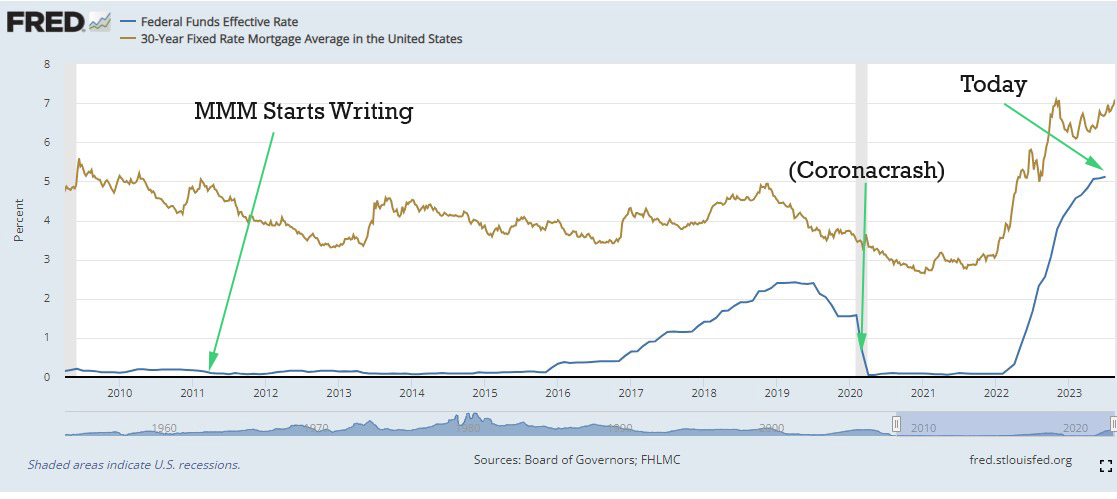
Eventually, however, the dynamic shifted as too much money began chasing too few goods, particularly within the housing sector. This imbalance triggered a significant surge in inflation, prompting the Federal Reserve to ease its foot off the accelerator. As borrowing costs climbed, economic momentum began to moderate. Mortgages grew considerably more expensive, causing many prospective home buyers to postpone their purchasing plans. Corporations faced with higher expenses for debt curtailed expansion initiatives and reduced hiring, a trend reflected in major workforce reductions across prominent technology firms. The financial sector also experienced localized turbulence, including the high-profile collapse of several mid-sized banks that briefly heightened broader systemic concerns.
Public sentiment surveys often capture widespread anxiety, with critics from across the political spectrum arguing that the nation is heading in the wrong direction. Yet these perceptions frequently conflict with broader economic indicators, such as historically low unemployment rates. Rather than signaling a fundamental economic breakdown, the current transition represents a necessary cooling period designed to stabilize an economy that had absorbed an immense amount of stimulus.

Evaluating Investment Strategies Amid Market Shifts
The turbulence in interest rates naturally raises concerns for investors, particularly regarding the safety of equities. Historically, the stock market demonstrates long-term upward trajectories despite inevitable short-term volatility. Because market fluctuations remain inherently unpredictable, attempts to time entry and exit points rarely succeed. Recent market performance reflects this reality, with broad U.S. indexes trading below their previous peaks and experiencing periods of flat returns. For disciplined investors, lower asset prices effectively translate into a more favorable environment for acquiring index funds over time, as cheaper valuations enhance long-term purchasing power.
At the same time, the resurgence of high-yield savings accounts and money market funds offering returns above four percent introduces a new dilemma. When interest rates remained near zero, allocating capital exclusively to equities was an easy decision, as stocks consistently outperformed cash equivalents. With yields on cash instruments rising, savers must weigh the immediate, stable return of fixed-income products against the historically superior long-term growth potential of the stock market. While high-yield savings options provide attractive short-term returns, equity markets currently offer discounted valuations that could yield substantial long-term gains once economic conditions normalize.

The Impact on the Housing Market
Nowhere is the impact of higher interest rates more pronounced than in the residential real estate market. Financing a home with a mortgage has become significantly costlier, rental property investments face compressed profit margins, and homeowners with locked-in low mortgage rates find little incentive to sell.
Consider the financial implications for a typical buyer securing a mortgage with a modest down payment. Over a span of two years, prevailing mortgage rates climbed from roughly three percent to over seven percent. This dramatic increase fundamentally alters the monthly cost of homeownership, pricing many potential buyers out of the market or forcing them to scale down their expectations.

While these dynamics create immediate challenges for buyers, they align with the intended mechanics of monetary tightening. Higher borrowing costs are designed to cool excessive demand, curb rapid price appreciation, and encourage a more sustainable balance between housing supply and consumer purchasing power. Over the long term, these adjustments are expected to stabilize property values and, in some regions, encourage a correction in home prices.
Supply, Demand, and the Future of Housing
The long-term trajectory of home prices depends heavily on fundamental supply and demand dynamics, influenced by factors such as construction costs, labor availability, regulatory hurdles, and local zoning laws. Construction expenses have historically benefited from technological advancements and global trade efficiencies, which help offset rising labor expenses through more efficient building materials and tools.
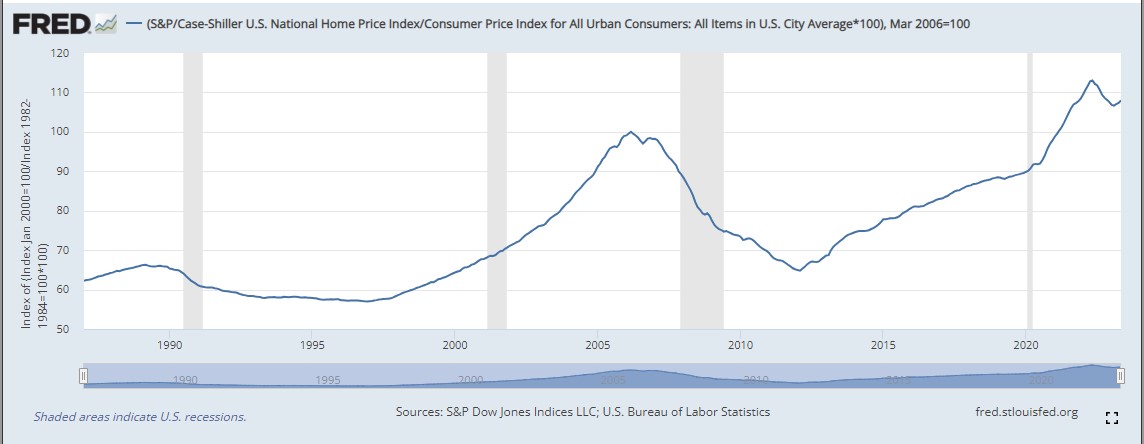
Conversely, regulatory friction and complex zoning approvals have increasingly restricted housing supply in many municipalities. Layers of bureaucratic oversight and restrictive local policies frequently deter residential construction, exacerbating housing shortages and driving up average prices. Conversely, municipalities that embrace flexible zoning laws and transit-oriented development foster environments where affordable housing can be constructed more efficiently.
While inflation-adjusted home prices remain near historic highs, market analysts suggest that prices could eventually ease or experience a prolonged period of flat growth relative to rising future incomes. Rather than a sharp market crash, the adjustment may manifest as a gradual stabilization that gradually restores affordability over time.
When Will Interest Rates and Economic Conditions Shift?
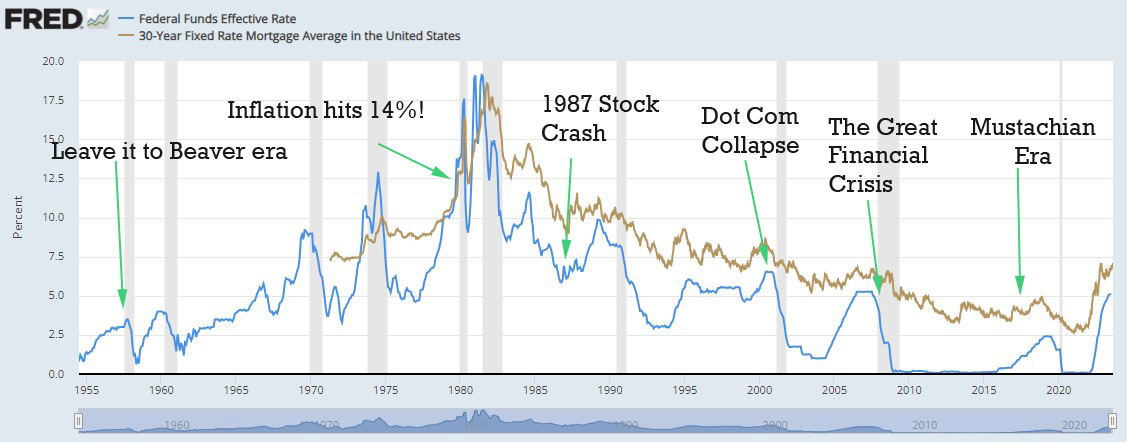
Despite being characterized as high, current interest rates align closely with historical norms when viewed across a multi-decade timeline. Future reductions in borrowing costs will likely depend on clear evidence of a sustained economic cooling, characterized by subdued inflation and rising labor market slack.
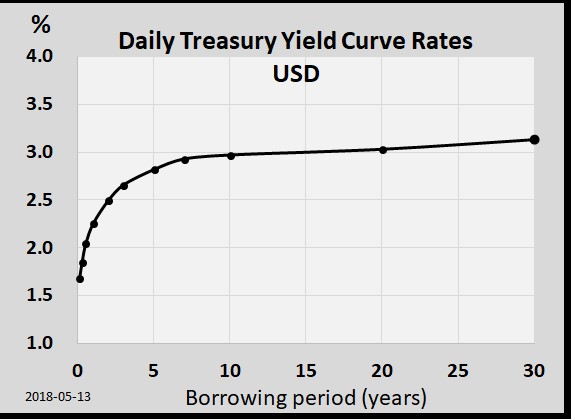
Indicators such as the U.S. Treasury yield curve provide valuable insights into investor expectations. An inverted yield curve, where short-term yields exceed long-term yields, has historically served as a reliable precursor to economic slowdowns and potential recessions. Bond market pricing currently reflects expectations that the central bank may eventually lower rates as economic growth moderates. While precise timelines remain uncertain, financial analysts generally anticipate that interest rate adjustments could materialize within the next couple of years, potentially coinciding with broader macroeconomic shifts.
Ultimately, navigating shifting interest rates requires a focus on personal financial fundamentals rather than short-term market speculation. Maintaining manageable debt levels, building resilient cash reserves, and aligning long-term financial decisions with personal goals remain the most effective ways to weather changing economic cycles.