
For those who have largely tuned out financial market drama to focus on daily life, the narrative surrounding AI centers on three main pillars: its rapid technological evolution, the massive capital expenditure by major tech firms, and the intense speculation driving market valuations upward. Investors worry that while AI represents a genuinely monumental technological shift, the mania surrounding it is moving too fast and reaching unsustainable heights. This sentiment evokes memories of the dot-com bubble of the early 2000s, a period that shaped the early careers of many professionals currently enjoying financial independence, before the subsequent market correction threatened employment stability and economic security.

Financial commentators and early retirement advocates who lived through the turn-the-century tech boom and the 2008 Great Financial Crisis report receiving a steady stream of inquiries regarding the current investment cycle. To address these widespread concerns, financial educators have begun incorporating these themes into speaking engagements at regional gatherings, such as the Camp FI Midwest event, and upcoming national forums like the Bogleheads conference. Rather than viewing the current landscape through a lens of unmitigated panic, these discussions emphasize historical perspective, examining how previous generations of investors navigated similar waves of uncertainty.
Will Market Bubbles Ruin Retirement?
Reflecting on decades of post-work life, financial commentators frequently encounter friends and followers paralyzed by the state of the world. Conversations often center on whether it is possible to sleep soundly at night given the geopolitical climate, persistent inflation concerns, the expanding Artificial Intelligence bubble, towering national debt levels, and ongoing international conflicts that media outlets warn could tip global stability into chaos.

Yet, historical context reveals a striking continuity in human anxiety. Concerns voiced in recent years closely mirror those expressed two decades prior, in 2006. During that era, the public worried about distinct geopolitical leaders, Middle Eastern conflicts, escalating national debt, and inflation. At that time, the primary anxiety regarding overvalued asset markets centered on the housing bubble rather than an AI bubble, while fears of job displacement focused on outsourcing to developing economies rather than automated cognitive systems. Furthermore, economic debates of the mid-2000s were dominated by fears of peak oil and imminent resource scarcity, a crisis that ultimately inverted as energy production methods evolved and clean energy technologies expanded dramatically.
Looking back at the past twenty years of market performance illustrates that even the Great Financial Crisis—triggered by irrational exuberance over housing prices and complex financial leverage—ultimately appeared as a temporary dip within a broader multi-decade growth trend. Long-term market charts demonstrate that capital invested steadily through turbulent periods still achieved significant growth, absorbing subsequent shocks such as the market disruptions of 2020. Simultaneously, global living standards improved across multiple measurable metrics. Extreme poverty rates declined substantially over a twenty-year span, infant mortality rates were drastically reduced, and the cost of solar energy dropped exponentially, transforming clean energy into a dominant sector of global power generation alongside the steady rise of electric vehicle adoption.

The Core of Prosperity Lies in Productivity
Financial media thrives on cultivating dramatic, fear-inducing narratives about impending economic doom, whether driven by technological bubbles or macroeconomic debt figures. However, these cautionary tales often overlook a fundamental economic principle: true societal prosperity is not derived from the abstract numbers of the financial system or short-term stock market fluctuations, but rather from tangible productivity.
The fundamental mechanics of capitalism are inherently volatile, characterized by choppy waters and wild cyclical swings. Beneath these surface waves, however, real people perform real labor and develop genuine technological innovations. Economic and financial systems are human-made constructs; if a financial system experiences a severe correction due to shifting sentiment, society retains the capacity to restructure its financial metrics and resume productive activity, a resilience demonstrated repeatedly during historical recessions.

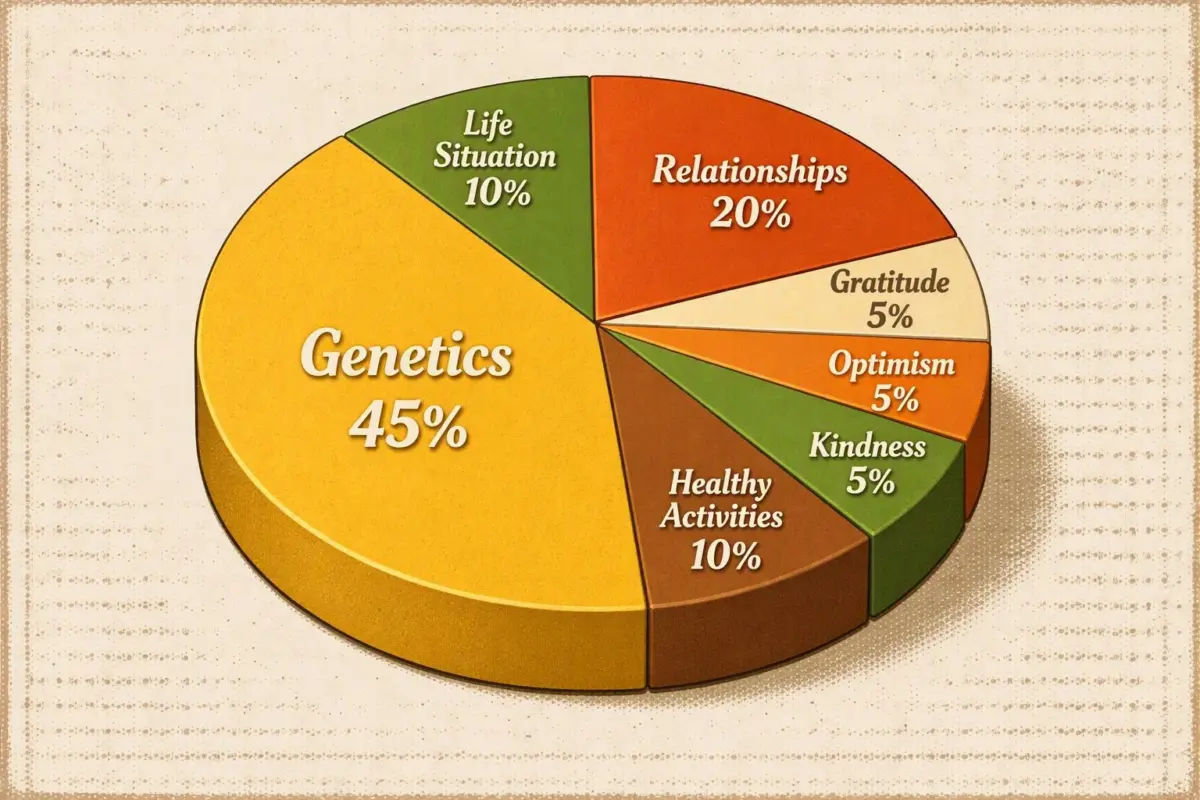
Human standard of living, economic growth, and the feasibility of early retirement are fundamentally tied to productivity-enhancing tools. Furthermore, once a society achieves a certain baseline standard of living, human happiness tends to plateau along financial dimensions, prompting individuals to seek fulfillment through non-financial factors. Psychological research suggests that wealth represents only a minor component of overall life satisfaction, while the most significant determinants of personal happiness involve genetics, strong interpersonal relationships, community engagement, cultivating gratitude, and maintaining physical health through active outdoor pursuits.
Confronting Fear as a Biological Mechanism
Despite historical proof that societies adapt and recover from economic shocks, pervasive background anxiety remains common even among financially secure individuals. This persistence of worry is largely rooted in human evolutionary biology. As a species, humans function effectively as danger-detection systems designed to ensure survival in hostile environments. When immediate physical threats are mitigated, the brain’s detection machinery does not simply deactivate; instead, it shifts goalposts, seeking out new targets for concern, ranging from resource scarcity and social exile to neighborhood compliance and tax strategy optimization.

Overcoming this pervasive background fear requires a combination of self-awareness and rational analysis. Examining personal and familial history often reveals the origins of modern anxieties. For instance, individuals raised in environments marked by economic scarcity—or those influenced by parents who lived through historical economic depressions—frequently internalize a deep-seated fear of running out of money, regardless of their actual financial net worth. Similarly, historical trauma can distort an individual’s perception of present safety.
Identifying the specific nature of a fear through structured introspection and hypothetical worst-case scenario analysis can demystify perceived threats. Taking decisive action against unfamiliar challenges transforms uncertainty into familiarity, fostering resilience and confidence. As the aphorism suggests, action cures fear by building the psychological and emotional capability to adapt to any new circumstance. Furthermore, reducing exposure to sensationalized daily news cycles and surrounding oneself with optimistic, productive peers can fundamentally shift an individual’s mental baseline away from chronic apprehension.

Viewing Technological Shifts as Experiments
Approaching life transitions through the lens of experimentation can reframe how individuals perceive change. Whether applied to minor lifestyle adjustments or major decisions such as changing careers, relocating, or entering early retirement, treating life choices as active experiments diminishes the paralyzing weight of uncertainty.
Applying this experimental framework to the current expansion of Artificial Intelligence neutralizes panic and replaces it with analytical curiosity. Rather than succumbing to doom-scrolling, understanding the mechanics of modern technology reveals its potential upside. AI functions essentially as a cognitive tool designed to amplify efficiency and productivity, ultimately driving broader economic prosperity.

Like previous technological revolutions—such as the advent of personal computing and the internet—AI inevitably causes labor displacement in specific administrative and operational sectors, creating transitional friction for workers. However, historical precedent indicates that such innovations simultaneously reduce service costs, lower consumer prices, and catalyze the growth of entirely new industries and economic sectors. While the financial rewards of these productivity gains frequently concentrate among capital owners and shareholders, individual market participants retain the agency to adapt.
Ultimately, the challenges posed by technological bubbles and shifting economic landscapes serve as opportunities for personal growth. By confronting underlying fears through rational inquiry, focusing on tangible productivity, and adopting an experimental mindset toward the future, individuals can navigate market volatility while prioritizing long-term well-being and life satisfaction.