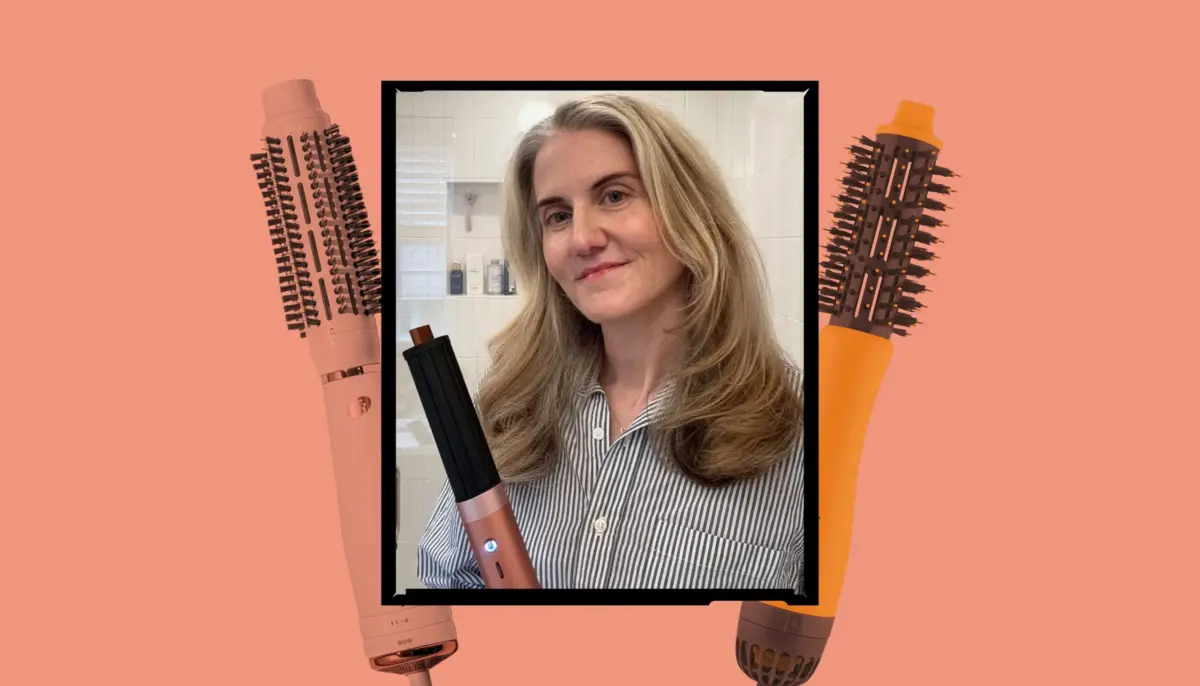
To demystify the art of the at-home blowout, top industry hairstylists and cosmetic chemists have shared their definitive insights on how to get the most out of a hair-dryer brush while safeguarding hair health.
How Do I Get the Most Out of a Hair-Dryer Brush?
Even when investing in the most advanced hot styling tools on the market, achieving a glorious, long-lasting blowout fundamentally relies on proper preparation. According to New York City-based hairstylist Takisha Sturdivant-Drew, the styling process must always begin with clean, thoroughly detangled, and damp hair infused with a quality leave-in conditioner.
"Start at the root and work your way down to the ends without putting too much heat or tension on the hair," Sturdivant-Drew explains, emphasizing a gentle approach that prevents unnecessary mechanical stress on fragile strands. Furthermore, even if a manufacturer’s model claims to incur minimal thermal stress, applying a dedicated heat protectant—or a leave-in treatment formulated with thermal-shielding ingredients—remains a non-negotiable step to preserve both the longevity of the style and the underlying structural integrity of the hair.
Technique plays an equally vital role depending on individual hair textures. For individuals with naturally straight or wavy hair, building enviable volume is remarkably straightforward. Twisting the dryer dynamically in a circular motion as it moves down the hair shaft provides an effortless lift. Conversely, those with curly or coily textures who desire a sleek, straight finish must adopt a slightly different methodology. Sturdivant-Drew recommends following up with a flatiron or utilizing a secondary smoothing brush with the heat turned off. By placing a traditional brush directly underneath the blow-dryer brush, users can successfully guide and smooth out kinky strands all the way from root to tip.
How Do I Minimize Heat Damage from a Hair-Dryer Brush?
With any thermal styling tool, mitigating potential heat damage is a primary concern for consumers and professionals alike. To significantly lower this risk, experts advise selecting a blow-dryer brush equipped with multiple temperature settings. This versatility allows users to closely moderate the thermal exposure tailored to their specific hair density and porosity. Because different hair types respond uniquely to varying temperatures, individuals who are newly acquainted with a device should carefully observe how their strands react during initial styling sessions.
In addition to temperature control, incorporating a reliable heat protectant acts as an essential defense mechanism against high temperatures. Cosmetic chemist Ginger King notes that protective formulations often rely on meadowfoam seed oil, light polymers, or silicones to coat the hair fiber. This microscopic barrier minimizes direct thermal degradation. Ultimately, however, the most effective strategy for preventing heat damage remains moderation, avoiding the overuse of hot tools on a daily basis.
Are Hair-Dryer Brushes Easier to Use Than Traditional Hair-Dryers?
Deciding on a new hair tool ultimately comes down to personal preference, but everyday shoppers and seasoned editorial stylists widely agree that blow-dryer brushes offer an exceptional level of user-friendliness, making them especially accessible to styling novices. Industry professionals point out that these all-in-one instruments drastically simplify the traditional blowout process, cutting down styling time significantly compared to the coordination required when juggling a separate blow-dryer and a round brush in opposite hands.
For individuals experiencing chronic pain, fatigue, or limited mobility in their hands, wrists, or arms, the ergonomic design of a hair-dryer brush presents a highly practical alternative to conventional drying methods. Because these tools are generally lighter and easier to maneuver, users are far less likely to experience upper-body fatigue or require a secondary round of styling with a heavy flatiron or curling wand.
Despite these ergonomic advantages, experts caution against using a blow-dryer brush on soaking-wet hair. Stylists recommend letting hair air-dry to roughly 70 percent capacity, or performing a quick rough-dry with a standard blow-dryer, before picking up the styling brush. Initiating the styling process on damp rather than dripping-wet strands prevents excessive mechanical breakage and ensures a smoother, significantly more frizz-free finish.
How Do I Clean My Hair-Dryer Brush?
Maintaining the cleanliness of a hair-dryer brush is critical not only for hygiene but also for preserving the optimal performance of the device. Because these tools vary widely in barrel construction, bristle materials, and overall shape, maintenance routines can differ slightly depending on the brand.
Devin Toth, a New York City-based hairstylist, highlights the importance of routine filter maintenance. If a model features a removable filter, accumulated dust and lint should be cleared away on a weekly basis. To extract tangled hair trapped within the bristles, Toth suggests using a fine-tooth comb or a dedicated boar-bristle brush cleaner.
Addressing stubborn product buildup—such as residual hairsprays, styling creams, and pomades—requires a targeted approach. A damp cloth is typically sufficient for wiping down the barrel and bristles, but stubborn residue may call for stronger measures. Los Angeles-based hairstylist Cherin Choi utilizes a small amount of rubbing alcohol to dissolve sticky styling product accumulations that resist standard cleaning methods.
Neglecting regular maintenance can lead to a noticeable decline in tool efficiency. Atlanta-based hairstylist Tukia Allen warns that heavy product and hair buildup can prevent hot tools from operating at their full capacity. Nashville-based hairstylist Brian O’Connor echoes this sentiment, noting that a compromised, uncleaned thermal tool can ultimately produce uneven heat distribution across the hair shaft, increasing the risk of localized heat damage.
How Professional Beauty Publications Review and Test Hair Tools
The process of evaluating hair-care products and styling tools differs significantly from reviewing makeup or skincare categories. While certain formulations can be universally applied across broad demographics, hair tools and treatments are frequently developed to address specific consumer needs, such as dandruff, structural brittleness, or distinct curl patterns ranging from loose waves to tight 4C coils. Testing requires a diverse pool of evaluators to ensure comprehensive assessments across varying hair textures, lengths, thicknesses, and color treatments.
In professional product testing environments—such as those conducted by beauty editors, writers, and contributing stylists—performance is systematically measured across core categories: efficacy, versatility, ease of use, and overall value. By assembling diverse panels spanning wide ranges of ages, backgrounds, hair textures, and personal styling goals, beauty publications strive to deliver transparent, reliable guidance that helps consumers make informed purchasing decisions for their individual routines.