What Are the Best Lip Colors for Fall?
The prevailing philosophy among professional makeup artists is that there is no single "best" lip color. Rather, the ideal shade is entirely a matter of individual attraction and what draws a person in. While tradition dictates that autumn calls exclusively for heavy, dramatic tones, contemporary trends embrace a much wider spectrum of possibilities.
For instance, rosewood has emerged as a perennial favorite among professionals for the autumn season. This dusty rose shade bridges the gap between different color families by offering a harmonious blend of rose and brown. It provides warmth and a muted sophistication without leaning too heavily into the starkness of a traditional nude or the intensity of a deep red.
Similarly, brown-reds have captured the attention of beauty editors and artists alike. These shades offer warmth and rich dimension without transforming into a straight, flat brown. For those who prefer a more traditional seasonal mood, classic options within the red family—such as deep burgundy and rich cranberry—continue to steer looks in a moodier, more dramatic direction.
For individuals who lean toward quieter, more subtle lip statements, options like soft cocoa or deeper beige-rose tones provide an understated elegance. Conversely, when the occasion calls for heightened drama, artists frequently gravitate toward wine, plum, or blackberry hues. These deeper berry tones capture the traditional richness of the season while maintaining a fresh, modern appeal.
What Are Some Trending Lip Combos?
While the overarching desire for warmer and richer shades remains a constant every autumn, the way these products are paired and applied has evolved significantly. This season, the emphasis is heavily placed on multi-dimensional application, with brown lip liners playing a foundational role in many of the most sought-after combinations.
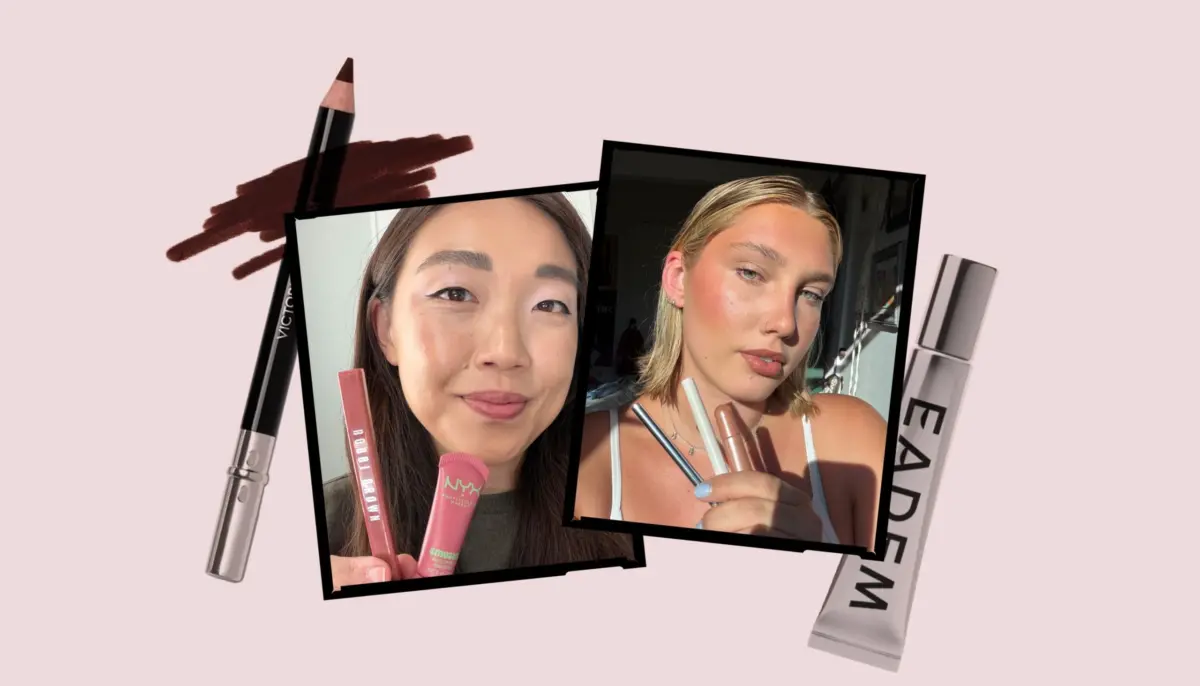
Current trending lip combinations rely on complementary tones that work together to create the optical illusion of naturally sculpted lips. A popular technique involves pairing a deeper brown lip liner with a softer rosewood or nude center. Rather than creating a stark, high-contrast outline that forms a rigid dark ring around the mouth, contemporary styling favors a heavily diffused transition. This softer gradient look appears far more current and approachable.
Another prominent trend features a brown or burgundy liner paired with a vibrant berry, wine, or black-cherry center. In these applications, makeup artists often concentrate a higher concentration of pigment through the middle of the mouth, allowing the color to soften naturally toward the edges. This technique proves that a full, impactful look does not require an equal distribution of heavy pigment across the entire lip surface.
Furthermore, moving away from a strictly monochromatic red lip has become a defining characteristic of modern fall beauty. Introducing a deeper brown or wine pencil underneath a classic red shade can fundamentally shift the undertone, making a traditional color feel unexpected, contemporary, and uniquely dimensional.
How Do I Pick a Lip Combo?
Navigating the vast array of available lip products and learning how to effectively pair a liner with a lipstick, gloss, or balm can initially feel overwhelming, particularly for those experimenting with lip liner for the first time. Beauty experts suggest starting with a fundamental assessment of one’s natural lip pigmentation. Because natural lips often possess inherent pink, mauve, brown, or deeply pigmented tones, that underlying color will inevitably mix with whatever product is applied on top.
Relying solely on a hand swatch can be misleading, as skin on the hand differs significantly in texture and undertone from the lips. Experts advise observing how a product interacts with the natural mouth rather than trusting a quick swipe on the arm.
Skin undertones also serve as a helpful, albeit flexible, guide when selecting shades. For olive complexions, artists frequently advise steering clear of shades heavily saturated with gray or beige pigments, as these can occasionally impart a dull appearance to the skin. Instead, incorporating rose or red tones helps infuse the complexion with necessary warmth. For deeper complexions, the primary consideration is ensuring that the chosen product possesses enough pigment to register clearly on the mouth, allowing soft nudes to maintain their presence without disappearing entirely.
Cool undertones tend to harmonize exceptionally well with blue-reds, cranberry, plum, mauve, and cooler rosewoods. Conversely, warm undertones often look striking when paired with brick, terracotta, cinnamon, caramel, and warm nude shades. Neutral undertones enjoy the versatility of moving between both spectrums, particularly when utilizing balanced reds and rosewoods. Ultimately, while undertones provide a useful framework, experts agree they should be treated as guidelines rather than rigid rules.
For those seeking a straightforward approach, the process can be simplified by choosing a liner designed to define the natural lip color, softening it inward using a fingertip or a brush, and then layering a lipstick, balm, or gloss over the top. Additionally, taking a brief moment to step into natural daylight before finalizing a look is widely recommended, as artificial indoor lighting can drastically alter how makeup colors appear.
Another crucial seasonal consideration is lip health. As the weather cools and humidity drops, lips are increasingly prone to dryness and chapping. Regardless of the chosen color palette, incorporating hydrating lip products infused with nourishing ingredients such as hyaluronic acid, jojoba oil, and shea butter helps protect the delicate skin of the lips and maintains a smooth, healthy appearance regardless of shifting weather conditions.
Meet the Experts
Insights into seasonal makeup trends, application techniques, and shade selection are drawn from leading professionals in the beauty industry who shape contemporary standards in cosmetic artistry, dermatology, and product development. Their collective expertise ensures that beauty recommendations are grounded in both practical application and professional artistry.
How We Test and Review Products
Evaluating beauty products requires a rigorous and multi-faceted approach. Editorial teams analyze items from numerous angles, including ingredient quality, brand claims, packaging, fragrance profiles, texture, and overall wear time. When necessary, reviews are supported by insights from peer-reviewed scientific and medical literature, alongside consultations with board-certified dermatologists and cosmetic chemists to vet formulas thoroughly.
The evaluation process for seasonal beauty roundups focuses on core performance categories to ensure that every recommended product meets high standards of efficacy and user experience.
Our Staff and Testers
Because personal care and beauty purchases are deeply individual experiences, maintaining a diverse team of writers, editors, contributors, and external testers is essential. A diverse staff spanning various ages, skin tones, hair textures, genders, and backgrounds ensures that beauty products can be fairly and accurately assessed for a broad audience, reflecting the diverse needs of consumers navigating the ever-changing landscape of cosmetics.