For those who have tuned out financial media and focused on daily life, the landscape is simple enough. However, the broader financial narrative surrounding AI follows a familiar pattern. Investors worry that while artificial intelligence is undoubtedly a major technological advancement, the commercial mania driving it is moving too fast, setting the stage for a modern parallel to the dot-com crash of the early 2000s. That earlier boom fueled early career paths and financial independence for many before the subsequent correction threatened jobs and economic stability.

Financial commentators and long-term planners continue to receive questions about this investment cycle, echoing inquiries from past booms and busts. Addressing these concerns involves examining not just stock charts, but the underlying mechanics of economic growth, historical market corrections, and the innate human tendency toward financial anxiety.
Will the AI Bubble Ruin Our Retirement?
Achieving decades of retirement brings a certain comfort with market volatility, yet questions from peers often highlight persistent anxieties about the state of the world. Conversations with concerned investors frequently center on a familiar list of global worries: dangerous political leaders, geopolitical conflicts, inflation eroding purchasing power, towering national debt levels, and the potential fallout of an AI-driven market bubble.

Yet, a look back at historical worries reveals that the specific focal points of anxiety change while the underlying emotional response remains remarkably consistent. Twenty years prior, in 2006, investors harbored entirely different concerns. The geopolitical landscape featured different leaders and conflicts in the Middle East. Markets contended with high national debt, inflation, and a notoriously overvalued stock market—though the primary concern then was the housing bubble rather than an AI bubble. Instead of artificial intelligence threatening jobs, the prevailing fear was outsourcing labor to India and China. There were even intense debates over "peak oil," centered on the fear that fossil fuel supplies would inevitably plummet as demand increased, an outcome that ultimately did not materialize in the anticipated manner.
Following the widespread anxiety of 2006, the global economy did experience the Great Financial Crisis, driven by irrational exuberance over rising home prices combined with complex financial leverage. It was the most severe economic downturn since the Great Depression. Yet, viewed through the lens of a multi-decade horizon, even that historic crisis appears as a temporary dip in a broader upward trajectory. Long-term market charts demonstrate that diversified investments through those turbulent decades still experienced substantial overall growth, absorbing subsequent shocks like the economic contraction of 2020.

Beyond financial charts, global living standards advanced significantly over the same twenty-year period. The proportion of the global population living in extreme poverty declined markedly, and infant mortality rates were drastically reduced. Clean energy technologies expanded dramatically, with solar power generation scaling up alongside a substantial rise in electric vehicle adoption worldwide. This historical context raises a fundamental question about whether energy should be channeled into worrying about an uncertain future or maintaining long-term optimism.
Understanding Productivity and Prosperity
Questions naturally arise as to whether current conditions are fundamentally different—whether the mounting national debt will finally destabilize the economy, or whether the artificial intelligence bubble will prove too large to recover from. Financial media routinely amplifies these cautionary narratives. However, these pessimistic outlooks often overlook a core economic principle: true prosperity is not derived from the financial system or stock market tickers, which ultimately represent numerical reflections on digital screens. Instead, prosperity stems directly from productivity.

Economic history demonstrates that capitalism is inherently volatile and prone to sudden shifts. Beneath the surface of market fluctuations, real people perform tangible labor and develop genuine innovations. The concept of an economy is a human construct; if financial systems experience severe corrections, society has historically adapted by recalibrating and returning to productive work.
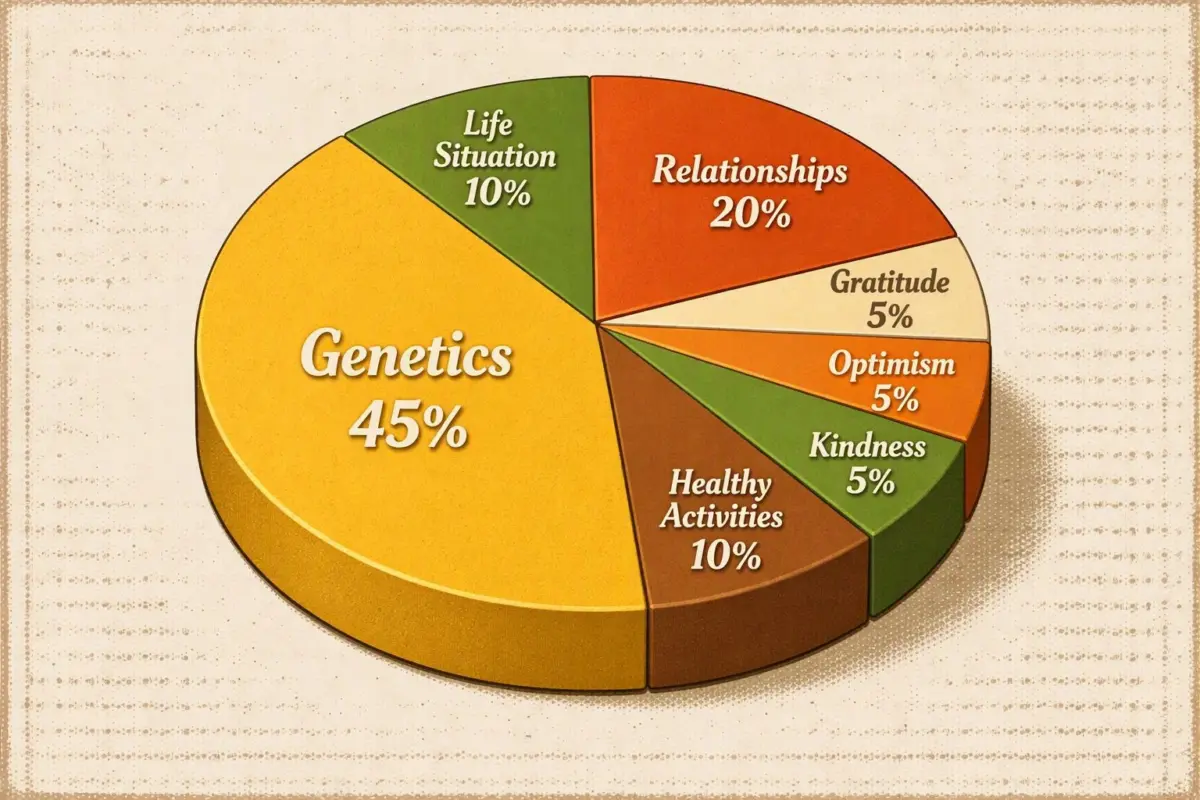
The fundamental drivers of living standards, economic growth, and the feasibility of early retirement are rooted in high productivity. Furthermore, once basic standards of living are met, human well-being relies heavily on non-financial factors. Psychological research and general life experience suggest that wealth forms only a small component of an individual’s overall happiness, which is more reliably influenced by personal relationships, a lifelong philosophy of optimism, engagement in healthy outdoor activities, and personal outlook.

Confronting the Nature of Fear
Despite historical evidence showing that long-term economic trends tend to be positive, fear remains a persistent background hum for many individuals. Human beings evolved as detection machines designed to identify danger and protect against survival threats. However, this psychological machinery can become miscalibrated. When immediate physical dangers are resolved, the mind frequently continues searching for new sources of worry, shifting goalposts from immediate scarcity to social standing, tax strategies, or portfolio management.
Combating this pervasive anxiety requires self-awareness and rational evaluation. Examining personal history often reveals the root causes of financial scarcity mindsets, whether stemming from childhood experiences, family history marked by economic depressions, or past trauma. Identifying the specific contours of a fear—such as analyzing the realistic worst-case scenario of a retirement plan—frequently exposes the irrationality of the anxiety.

Action remains one of the most effective cures for fear. By engaging directly with unfamiliar situations, individuals build resilience and adaptability. Tuning out sensationalized daily news cycles in favor of direct learning, physical activity, and problem-solving helps align daily routines with fundamental human needs. Surrounding oneself with optimistic, productive peers further reinforces a balanced perspective on the future.
Viewing Technological Shifts as Experiments
Approaching major life transitions and technological developments through the lens of experimentation can reframe potential anxieties. Whether considering career changes, lifestyle adjustments, or evaluating the societal impact of artificial intelligence, viewing change as an ongoing experiment transforms fear into curiosity.

The rapid rise of artificial intelligence represents a major technological shift. Rather than yielding to pessimistic media narratives, examining the practical mechanics of AI reveals both disruptive challenges and significant potential. AI functions fundamentally as a cognitive tool capable of enhancing efficiency and productivity across various sectors.
Like previous industrial and digital revolutions, AI will inevitably displace certain entry-level administrative and operational roles while simultaneously reducing service costs and catalysing entirely new industries. Historically, the economic rewards of such technological leaps have tended to concentrate among asset owners and shareholders, contributing to overall market growth. Ultimately, artificial intelligence presents society with choices regarding adaptation, education, and long-term planning. Recognizing that fear is often an internal hurdle rather than an external insurmountable barrier allows individuals to navigate financial and technological evolution with greater clarity and resilience.