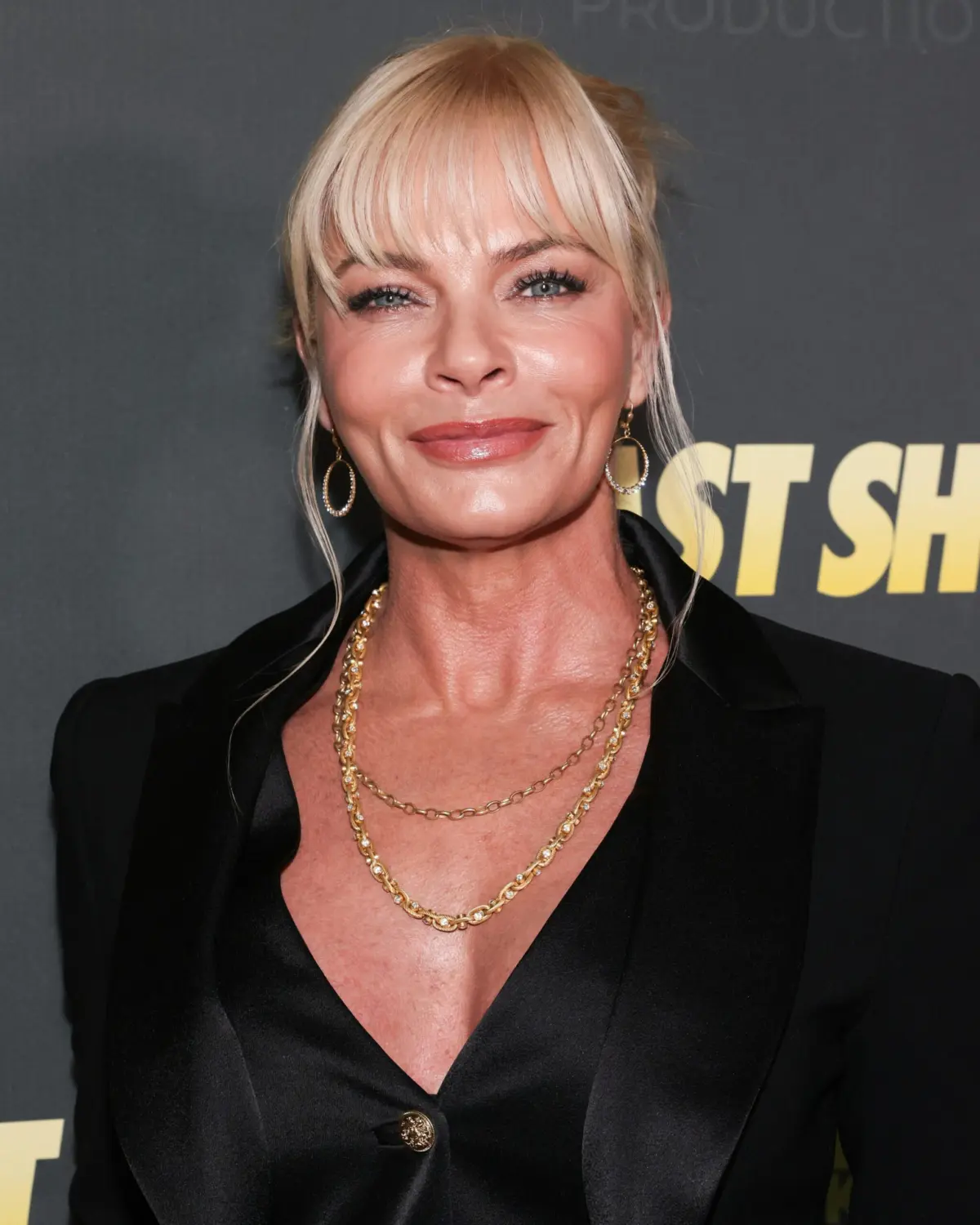
Arriving in limited theaters on October 2, The Last Shot shifts away from the comedic territory where audiences often expect to find Pressly. The film centers on Caden Isaacs, a talented 12-year-old basketball prodigy whose life is completely upended following the sudden and unexpected death of his father. While the father had his own complicated problems, he was an attentive, doting presence in the young boy’s everyday world. In the wake of this devastating loss, Caden is uprooted and forced to relocate to Nashville to live with his estranged mother, Lexi.
Lexi is a fiercely ambitious, driven player in the music industry. On paper, she has fulfilled her maternal obligation by keeping the family financially afloat from afar, footing the bills and securing stability. Beyond the checkbook, however, she has been virtually nonexistent in her son’s day-to-day life. For Caden, she is effectively a stranger; for Lexi, the abrupt arrival of a grieving, preteen son forces a confrontation with an emotional intimacy she has spent years evading.
Inhabiting a character so fundamentally disconnected from her own offspring required Pressly to engage in a delicate psychological calibration. As the real-life mother of three sons—19-year-old Dezi and eight-year-old twins Leo and Lenon—the very concept of remaining absent from her children’s upbringing was foreign to her instincts. To approach the character without judgment, she found herself delineating the crucial difference between empathy and sympathy.
In discussing her entry point into the role, Pressly noted that true empathy relies on shared experience—the intuitive understanding born from having lived through the exact feelings or choices at hand. Lacking any personal frame of reference for walking away from her children’s day-to-day development, she had to construct sympathy from the outside inward. Pressly located that sympathetic understanding in Lexi’s painful backstory. The character was raised under the roof of an emotionally unavailable mother and a workaholic father who offered little tenderness or guidance. Having grown up without the enveloping maternal devotion that Pressly readily pours into her own household, Lexi simply never acquired the language or the tools to nurture. Her absence was not necessarily born of cold malice, but rather the continuation of an unhealed generational pattern.
Where Pressly did locate unmistakable empathy, however, was in the exhausting, nearly impossible equation that defines modern working motherhood. When discussing the character, Pressly was speaking directly from location outside Alabama, where she was hard at work filming another feature project. Being miles away from her children is a reality she describes as an ongoing personal struggle. Like countless working mothers, she remains perpetually locked in a balancing act, wrestling with the logistical and emotional strain of managing a demanding professional life while striving to be actively present for three distinct boys across drastically different stages of childhood. Trying to attend every school event, game, and milestone while maintaining a rigorous creative career remains a formidable challenge.
That shared domestic tension surfaces vividly in The Last Shot during a raw sequence in which the mounting strain between Lexi and Caden boils over. Exhausted and out of her depth, Lexi snaps, delivering a sharp, cutting remark that strikes directly at her vulnerable son. It is a painful, realistic rupture that will feel achingly familiar to any parent who has ever reached the end of their emotional tether.
When considering how parents navigate the aftermath of those inevitable blowups, Pressly emphasizes that repairing the breach requires deliberate honesty and absolute humility. While the precise approach depends heavily on the child’s developmental age, she believes the foundational principle remains universal: stepping back, taking a breath to regain composure, and returning to sit down at the child’s eye level.
In Pressly’s view, an effective apology is not a hurried attempt to smooth over uncomfortable friction, but an intentional lesson in human vulnerability. It means sitting down and explaining plainly that fatigue and frustration sometimes cause adults to say things in anger that do not reflect their true hearts. More broadly, she cautions against the parental instinct to shield children completely from every flaw, bad day, or emotional breakdown. Life inevitably exposes children to their own heartbreaks, mistakes, and exhaustion as they grow older. If they are raised in an environment where parents pretend to exist without error or sorrow, they risk internalizing their own inevitable struggles as personal defects. By allowing children to see their parents cry, falter, acknowledge mistakes, and articulate genuine apologies, parents normalize the realities of the human condition.
That insistence on unvarnished honesty carries over into the narrative structure of The Last Shot. The film intentionally bypasses the sentimental, Hollywood tendency to wrap complex familial fractures in a tidy bow. While the story reaches a hopeful place, it deliberately avoids pretending that years of estrangement and parental neglect can vanish cleanly in an hour and a half.
Pressly staunchly defends this messier, unresolved dynamic as the only truthful way to tell the story. In real life, relationships do not reach definitive, perfectly resolved conclusions; family dynamics remain an ongoing negotiation marked by good days and bad days alike. Presenting Lexi and Caden as a work in progress honors the reality of the healing process, showing that meaningful effort, rather than sudden perfection, is what truly matters.
At 49, Pressly sees the project as an exhilarating creative pivot. The script initially came to her through director Andy Palmer and producers Todd Friedman and Warner Davis, a team she had previously enjoyed working with on the comedy The Re-Education of Molly Singer. Palmer emailed her with an invitation to read the lead role, which immediately seized her attention with a dramatic, raw opening scene featuring Lexi enduring an emotional breakdown in a hospital.
Pressly found herself captivated from the opening pages, largely because the material stood firmly in dramatic territory. Having built a long and successful career in comedy, she has openly expressed an appetite for weightier, dramatic parts at this juncture in her life. While she maintains that comedy remains the most demanding artistic discipline to execute effectively, the sheer volume of comedic work on her resume left her craving an opportunity to explore complex human behavior without the obligation of landing a punchline.
Reaching mid-life has fundamentally altered her perspective on the industry and the roles available to her. Pressly firmly rejects the tired, one-dimensional tropes historically offered to women of a certain age, voicing zero interest in playing superficial decorative characters or stock "hot mom" types. Instead, she finds herself invigorated by the depth that comes with living more life, noting that the accumulation of personal history only broadens the canvas of what an actress can bring to the screen.
She points to her former Mom co-star Allison Janney as the gold standard of an actress whose career expanded exponentially with maturity. During their years on the Chuck Lorre sitcom, the ensemble embraced the chance to portray richly flawed, fully realized women navigating heavy, real-world drama through the clarifying lens of comedy. That experience reinforced Pressly’s belief that the strongest character work emerges directly from life’s inherent complications.
Even as she leans into the dramatic maturity of projects like The Last Shot, Pressly retains an affection for the lighter, nostalgic milestones of her past. With the cult comedy Joe Dirt now passing its 25-year mark and discussions surrounding an animated series reboot taking shape, she enthusiastically noted her willingness to lend her voice to such a project if asked. For an actress who spends weeks on set balancing demanding shoots and maternal duties, the prospect of voiceover work offers a refreshing simplicity: showing up in comfortable pajamas, completely free from the demands of the hair and makeup chair.
Ultimately, The Last Shot marks an exciting chapter for an actress refusing to be confined by the expectations of her past successes. Through Lexi, Jaime Pressly leans directly into the discomfort of parental fallibility, delivering a portrait of motherhood that is complicated, messy, and fundamentally human.