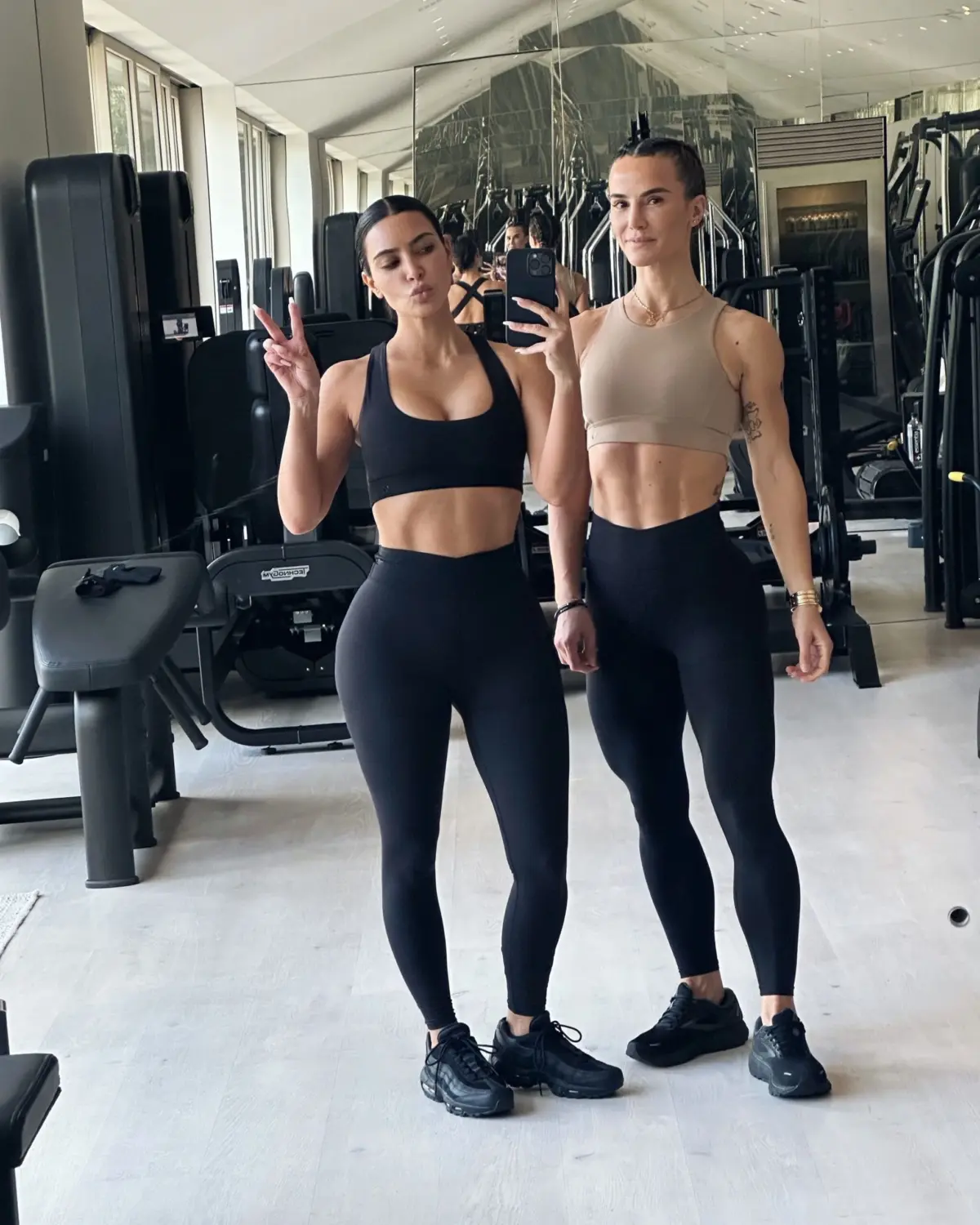
While public fascination often fixates purely on the visual outcomes of celebrity fitness regimes, Greca’s overarching philosophy steers far away from superficial metrics. Her approach centers on building functional strength that lasts a lifetime, viewing aesthetics merely as a natural by-product of physical work rather than the ultimate destination. The core objective, according to Greca, is fostering longevity, physical resilience, and the profound mental confidence that stems directly from dedicated strength training. It is a mindset that the trainer has cultivated over years of personal evolution, having previously cycled through high-volume cardio and rigorous endurance work before discovering the transformative power of lifting weights. Nothing, she notes, has ever provided her with the same level of enduring confidence, resilience, and deep-seated self-belief as strength training.
Greca applies that exact philosophy to her roster of high-profile clients, noting that the foundational method remains fundamentally unchanged regardless of who she is training. At the heart of her coaching philosophy is the encouragement to help clients view their physical bodies not as temporary projects, but as long-term investments. Greca frequently describes the body as a personal home that must be treated with utmost respect and continuous care. Strength training, she emphasizes, is never exclusively about becoming powerful in the immediate moment; rather, it serves as a critical shield for future health, safeguarding the body against age-related vulnerabilities.
Incorporating structured resistance work into a regular routine plays an instrumental role in staving off conditions like bone-density loss and sarcopenia, which is the natural degeneration of muscle mass over time. Beyond preserving the skeletal and muscular systems, consistent strength training supports everything from efficient metabolic health to robust cardiovascular fitness. The motivation is deeply practical and longevity-focused: wanting to inhabit one’s physical home in the best possible condition so that, decades down the road, everyday life remains active, vibrant, and filled with the activities one genuinely enjoys.
The mechanics of Greca’s training method always begin with simplicity and precision: mastering fundamental movement patterns before gradually introducing external loads. The initial phase prioritizes moving with mindfulness, learning proper biomechanical form, and adopting controlled breathing patterns, allowing individuals to progressively grow stronger in a manner that remains safe and sustainable. However, Greca firmly believes that adherence to safety and structure does not mean workouts need to feel rigid, monotonous, or devoid of joy. In fact, she intentionally injects variety and a sense of playfulness into Kardashian’s sessions to keep the engagement high. She notes that the overarching cultural narrative often frames working out as a chore that individuals have to do, whereas her goal is to reframe it into something people get to do.
That delicate balance between rigorous structure and flexible enjoyment proves especially vital when designing a program for someone with Kardashian’s demanding timetable. Despite a calendar packed with media obligations, business ventures, and family responsibilities, Kardashian treats her physical training as an essential appointment. It is firmly integrated into her daily schedule, she consistently shows up, and when it comes to prioritizing her health, there is simply no room for negotiation.
In practical terms, this dedication translates into a thoughtfully organized training split. Kardashian’s weekly workouts are typically divided between lower-body strength days that heavily emphasize the legs and glutes, and dedicated upper-body and core sessions. These targeted routines are occasionally punctuated by dynamic, full-body circuits designed to challenge overall conditioning and keep the body adapting.
Kim Kardashian’s Favorite Strength Moves
Executing a routine that builds sustainable strength and resilience requires intentional equipment choices. To perform the core movements favored in Kardashian’s regimen, practitioners typically utilize a heavy pair of dumbbells, a resistance band, and reliable access to a pull-up bar, allowing for a comprehensive challenge across multiple muscle groups.
Among the foundational staples of the routine is the Dumbbell Romanian Deadlift. Greca highlights this movement as a crucial hinge exercise that effectively strengthens both the glutes and hamstrings. At the same time, it reinforces proper lifting mechanics, helping to build total-body strength and stability by moving through a strictly controlled range of motion.
For upper-body development, assisted pull-ups serve as a cornerstone exercise. This movement targets the back and arms while simultaneously improving grip strength and overall body control. By utilizing assistance while learning to lift and stabilize bodyweight, practitioners build functional upper-body power that translates well beyond the gym.
Core stability is addressed through weighted hollow body crunches, an advanced movement designed to strengthen the deep abdominal muscles. By maintaining constant muscular tension through a hollow body position, the exerciser builds profound core endurance, while the addition of weight increases both the intensity and the level of control required throughout the entire movement.
Unilateral stability and grip strength are further developed through suitcase carry marches. This unique core exercise challenges balance by forcing the body to resist lateral flexion while performing a deliberate marching pattern, simultaneously testing coordination and fortifying grip strength.
Rounding out the lower-body focus are Bulgarian split squats. This demanding single-leg movement builds strength, balance, and stability by isolating each leg individually. By challenging coordination and control through a deep range of motion, the exercise ensures balanced development and addresses any potential asymmetries in the lower extremities.