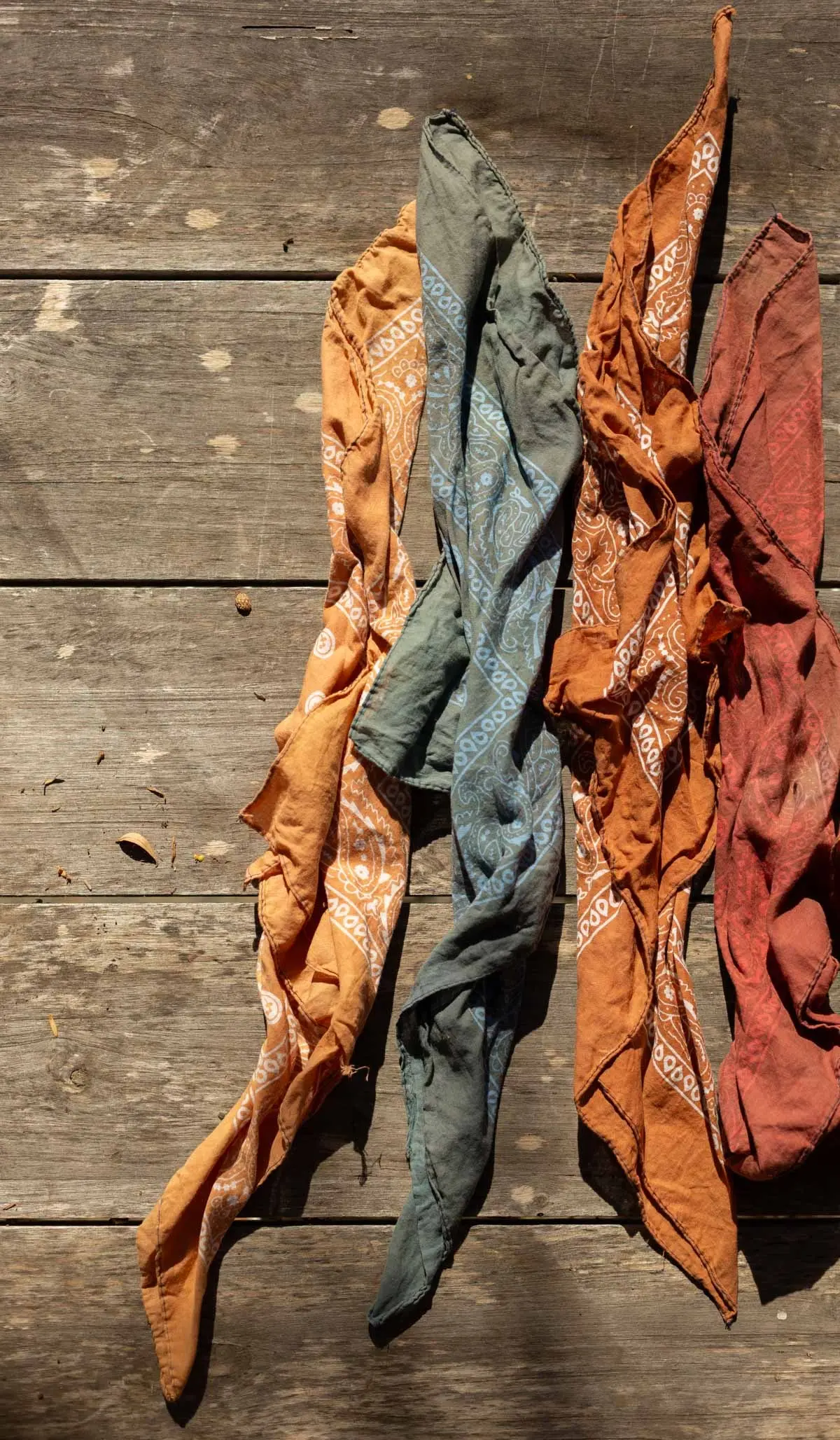
The undertaking began with a simple philosophy of working with what is readily available. Since the initial batch of bandanas came free of charge, there was little hesitation in experimenting with a novel dyeing technique. The primary goal was to shift the stark, uniform black color into softer, more natural hues that would fit seamlessly into a rustic outdoor camp environment being organized for a school event. What started as a low-stakes experiment ultimately yielded striking results, producing muted, organic shades far removed from standard, brightly colored party novelties.
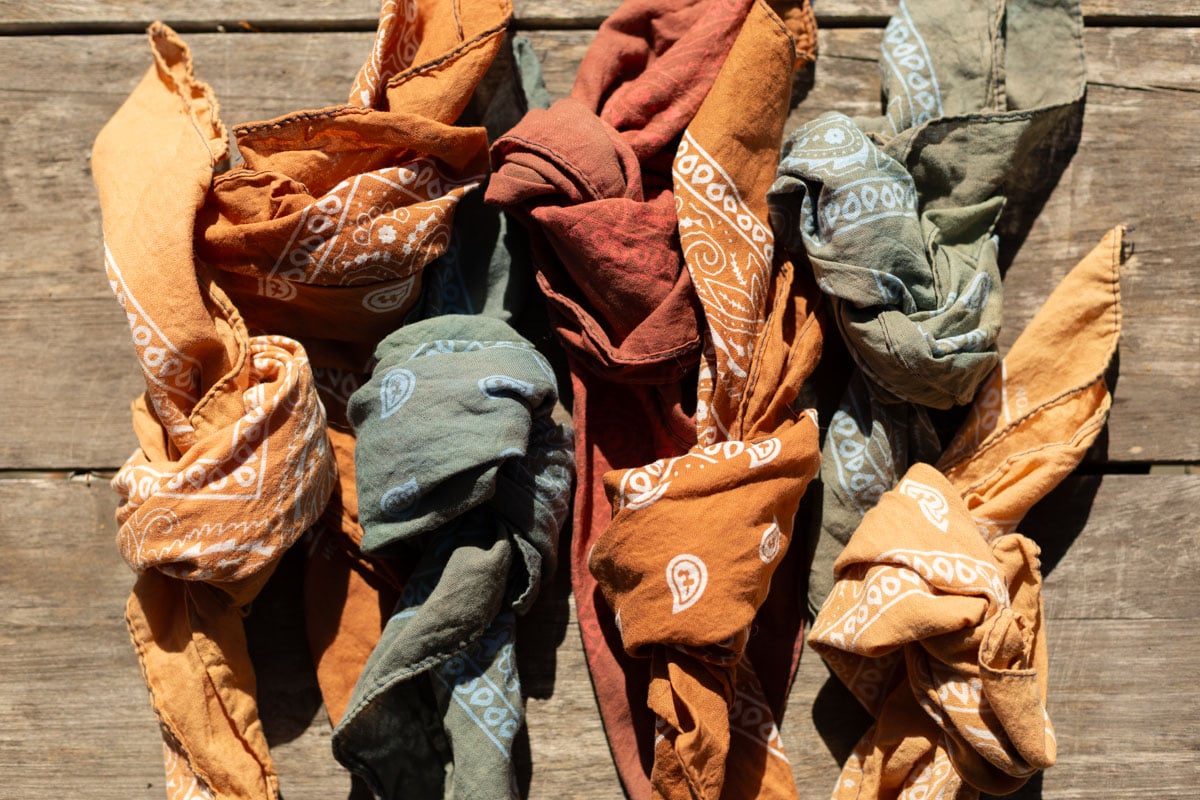
While the technique of altering fabric with bleach is hardly new in the realm of textile crafts, this particular approach departed from traditional methods. Past experiments often relied exclusively on bleach-resist techniques, such as shibori folding, where the areas touched by bleach create patterns against a dark background. In contrast, this new process introduced a crucial secondary step: applying a fresh layer of dye after the initial bleaching phase. This combination allowed for greater control over the final palette, neutralizing the heavy dark tones and replacing them with sophisticated neutral colors.
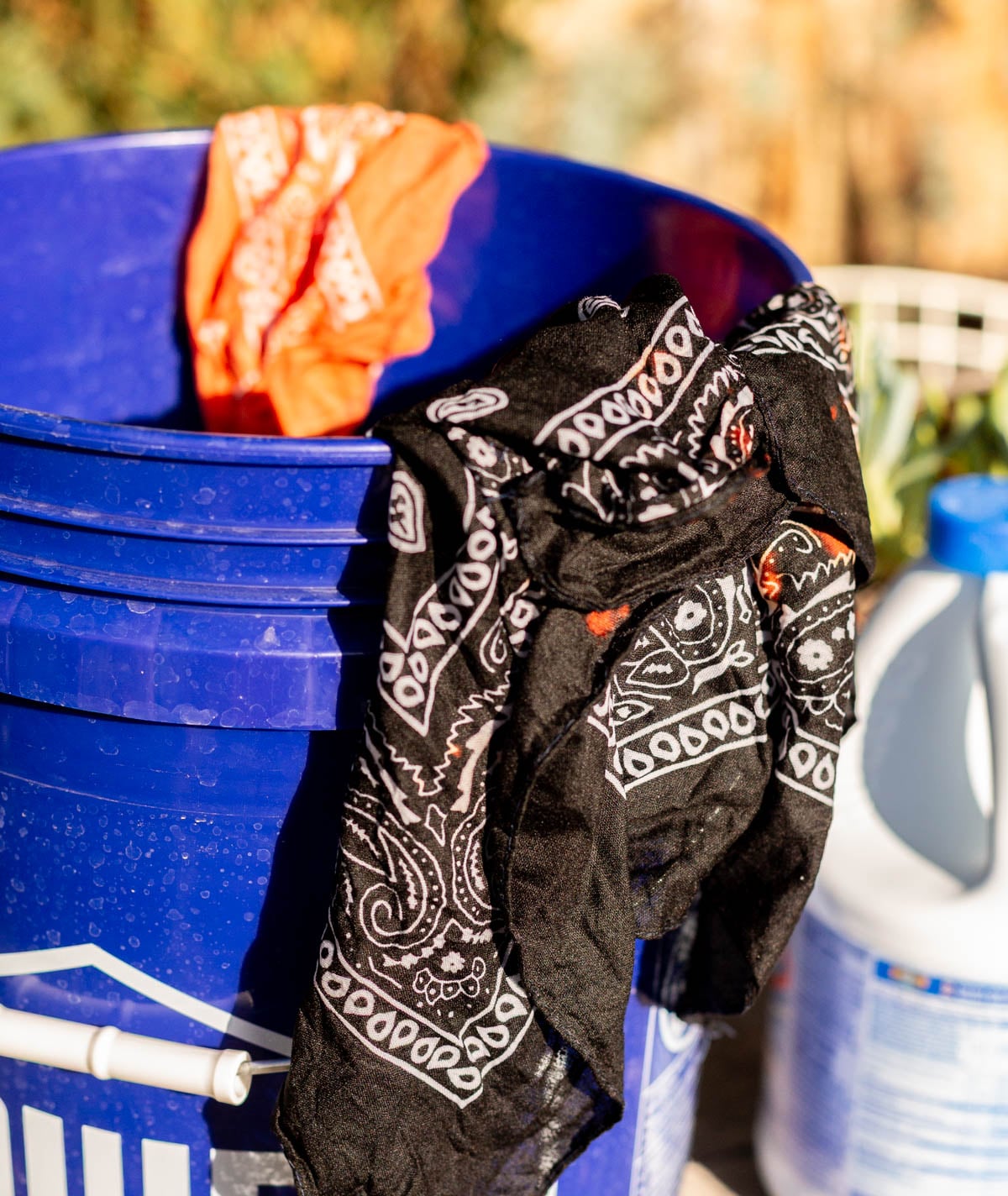
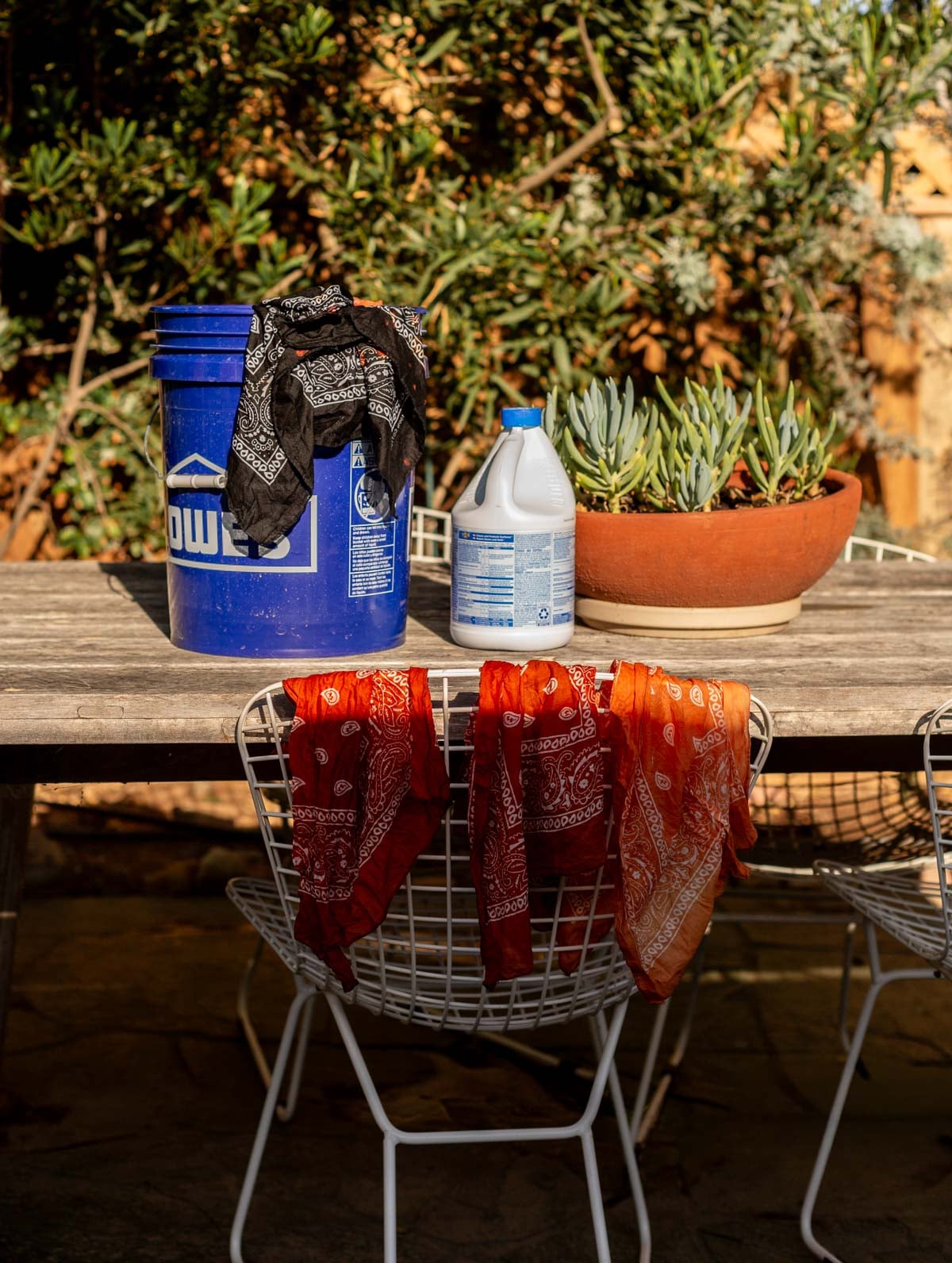
Working with bleach always demands a careful approach, particularly regarding safety and environmental conditions. Because the chemical process releases strong fumes and requires active monitoring, safety protocols dictate performing the work outdoors in a well-ventilated space. Protective gear, such as gloves, is essential when handling concentrated solutions in open containers like large buckets or bins.
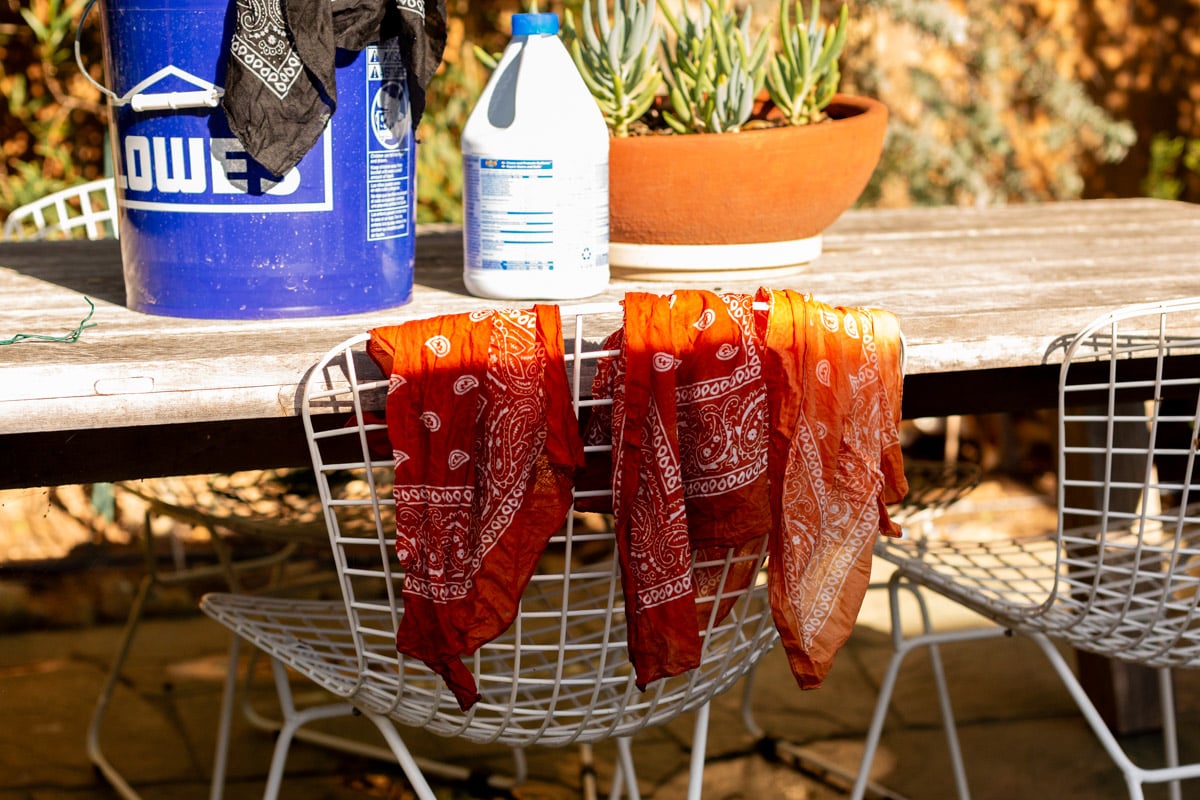
The physical transformation of the fabric is remarkably swift, requiring precision and attentiveness. To begin the process, the cotton bandanas are thoroughly wetted with water and wrung out to remove excess moisture. Pre-wetting the material helps ensure that the bleach absorbs evenly across the fabric fibers rather than creating harsh, uncontrollable spots immediately upon contact. Once prepared, the damp bandanas are submerged in a bucket filled with enough bleach to cover the fabric entirely.
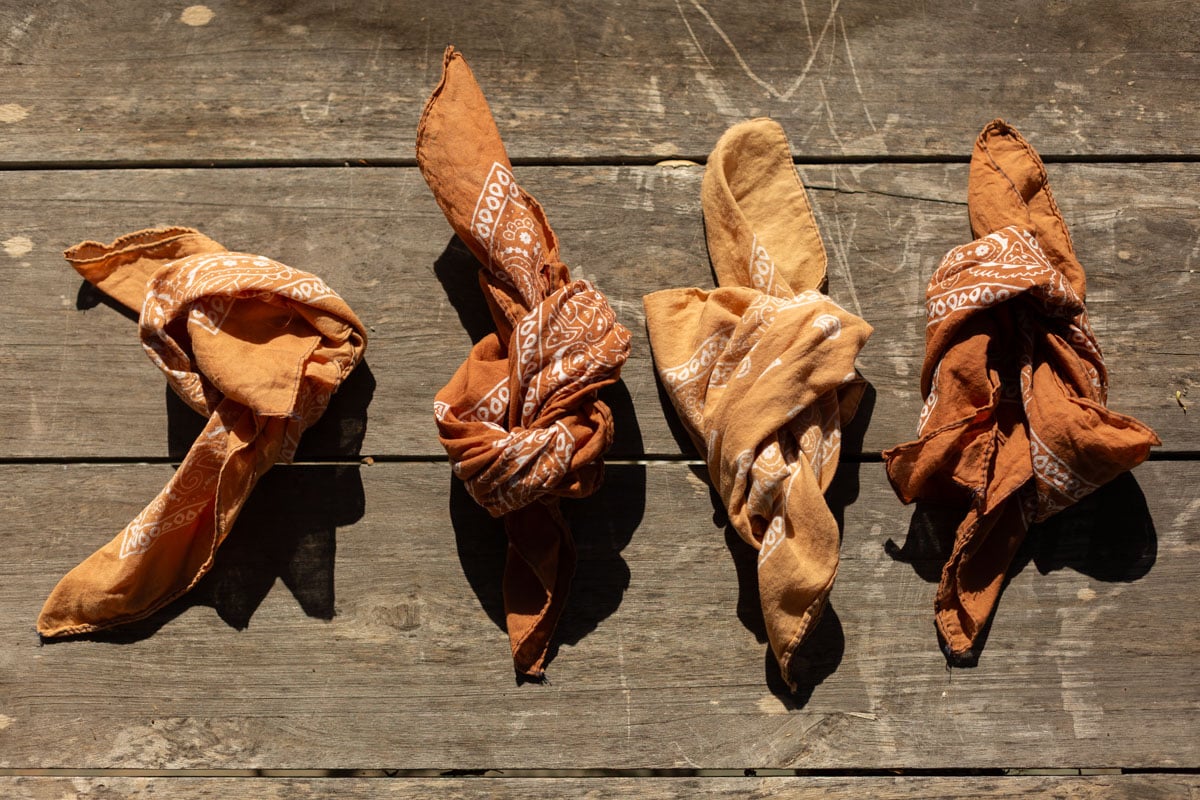
Unlike traditional dyeing methods that require hours of soaking or simmering, the chemical reaction with bleach occurs almost instantaneously. Within a window of thirty seconds to a minute, the stark black dye begins to break down, shifting into various shades of brown, tan, orange, or muted grey depending on the specific dye composition of the original fabric. Removing the bandanas promptly is critical not only for achieving the desired shade but also for preserving the structural integrity of the cotton. Prolonged exposure to bleach weakens natural cellulose fibers rapidly, which can lead to tearing or premature deterioration of the material.

Once the desired color transition occurs, the bandanas are immediately removed from the chemical bath. Excess bleach is wrung out carefully before taking the textiles to a water source, where they are rinsed thoroughly under cold running water for one to two minutes to halt the chemical reaction completely. Following the rinse, the bandanas undergo a standard cycle in a washing machine and dryer to clean away any residual chemical traces and prepare the fibers for the next phase.

With the dark base color successfully lifted and the fabric thoroughly laundered, the bandanas are ready to receive their final coloration. This stage involves standard textile dyeing techniques, introducing warm, earthy tones that adhere evenly to the bleached fibers. Because the underlying black pigment has been neutralized, the new dyes take on a dusty, nuanced quality that gives the finished accessories an aged, vintage aesthetic rather than a flat, manufactured appearance.
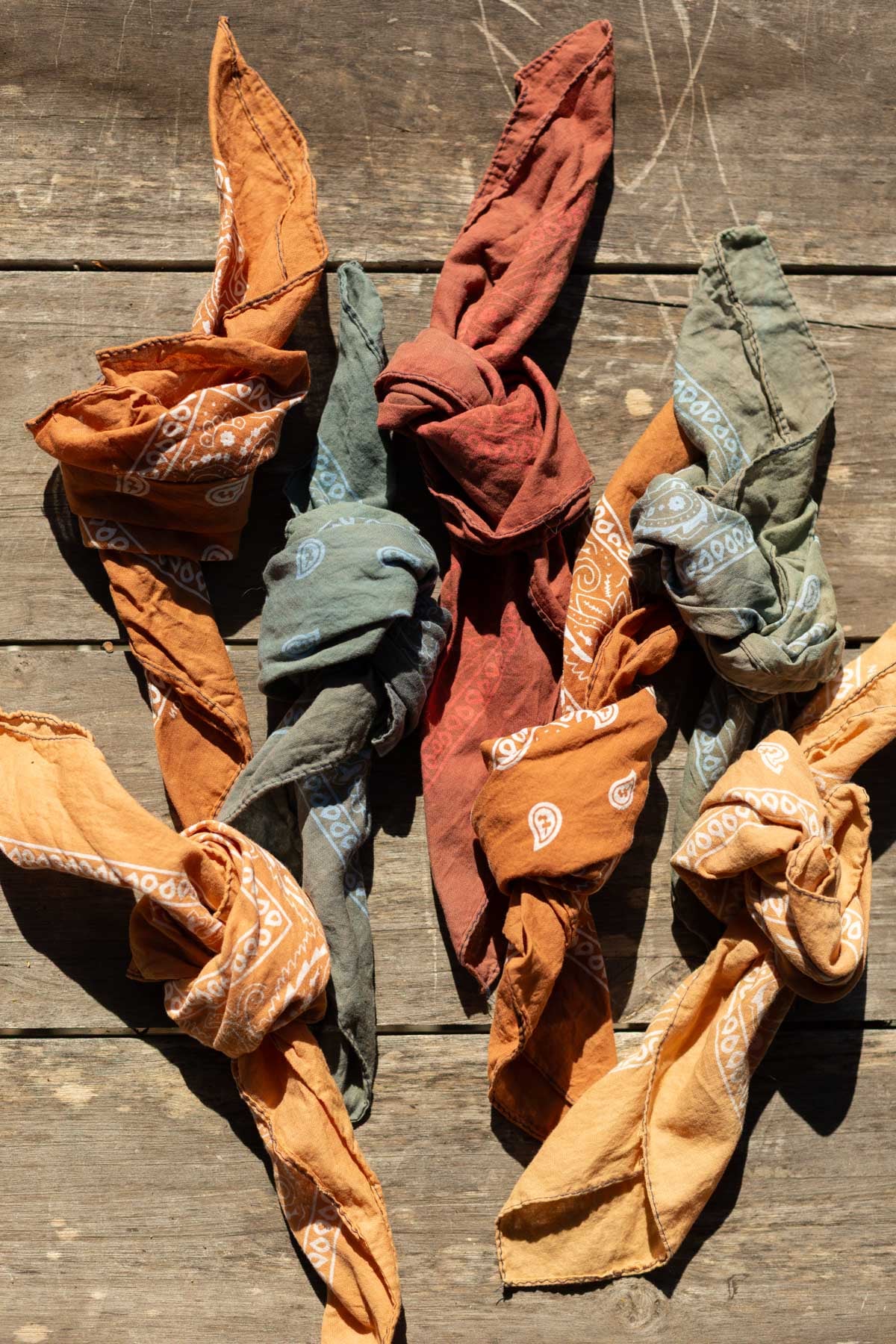
The versatility of this upcycling method extends well beyond simple party decorations. Although the initial batch was created specifically for a school camp function, the underlying techniques can easily be applied to other everyday textiles, including garments, home linens, and pet accessories.
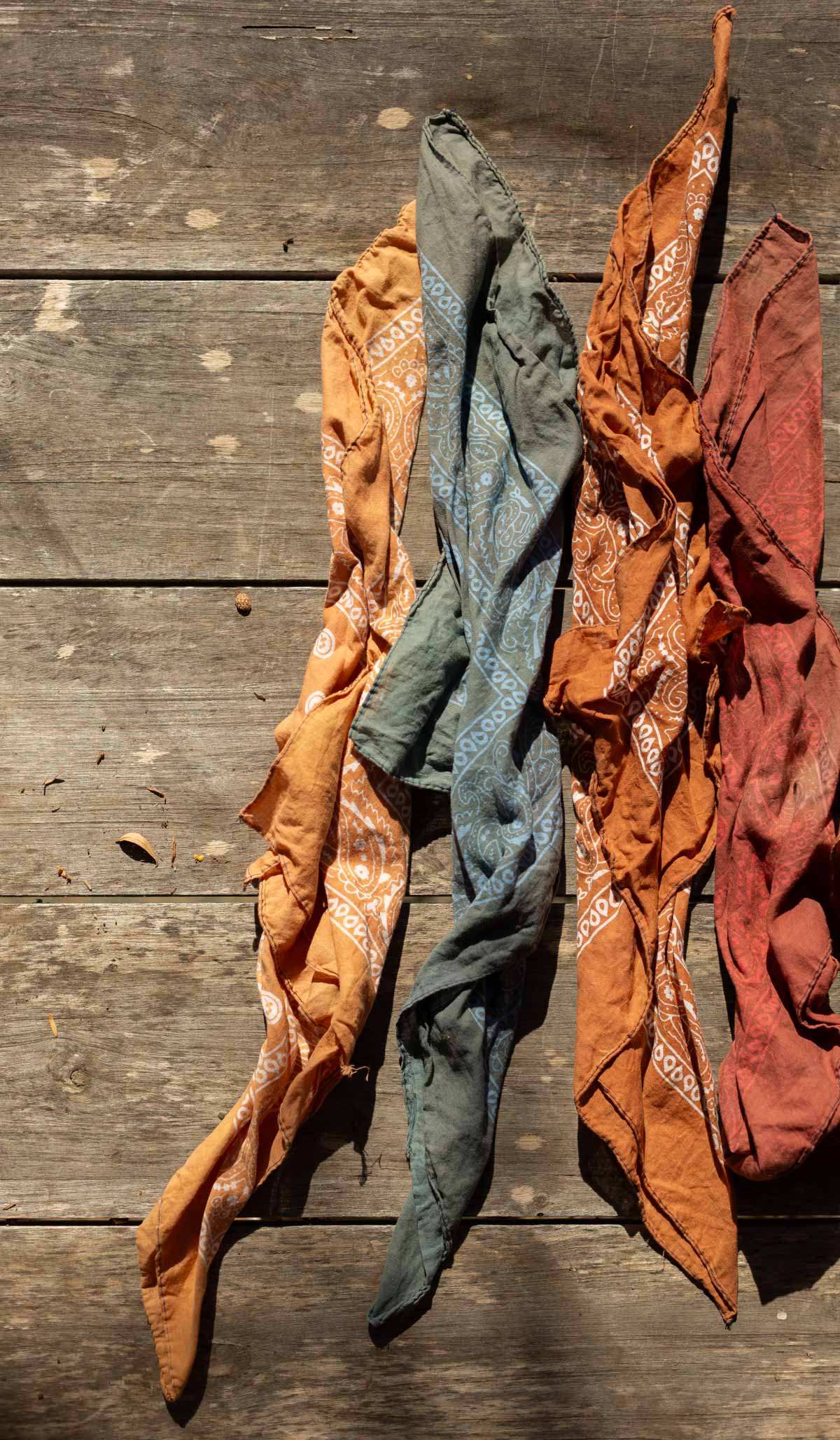
At the school camp event, the newly transformed bandanas found a practical and decorative purpose as place-setting napkins for the children in attendance. Placed alongside standard paper napkins, the fabric accessories served a dual role. While intended primarily to enhance the rustic tablescape, the children gravitated toward the soft, earth-toned cloth items, choosing to wear them or keep them at their spots while using the paper alternatives for actual clean-up duties to preserve the condition of the fabric.
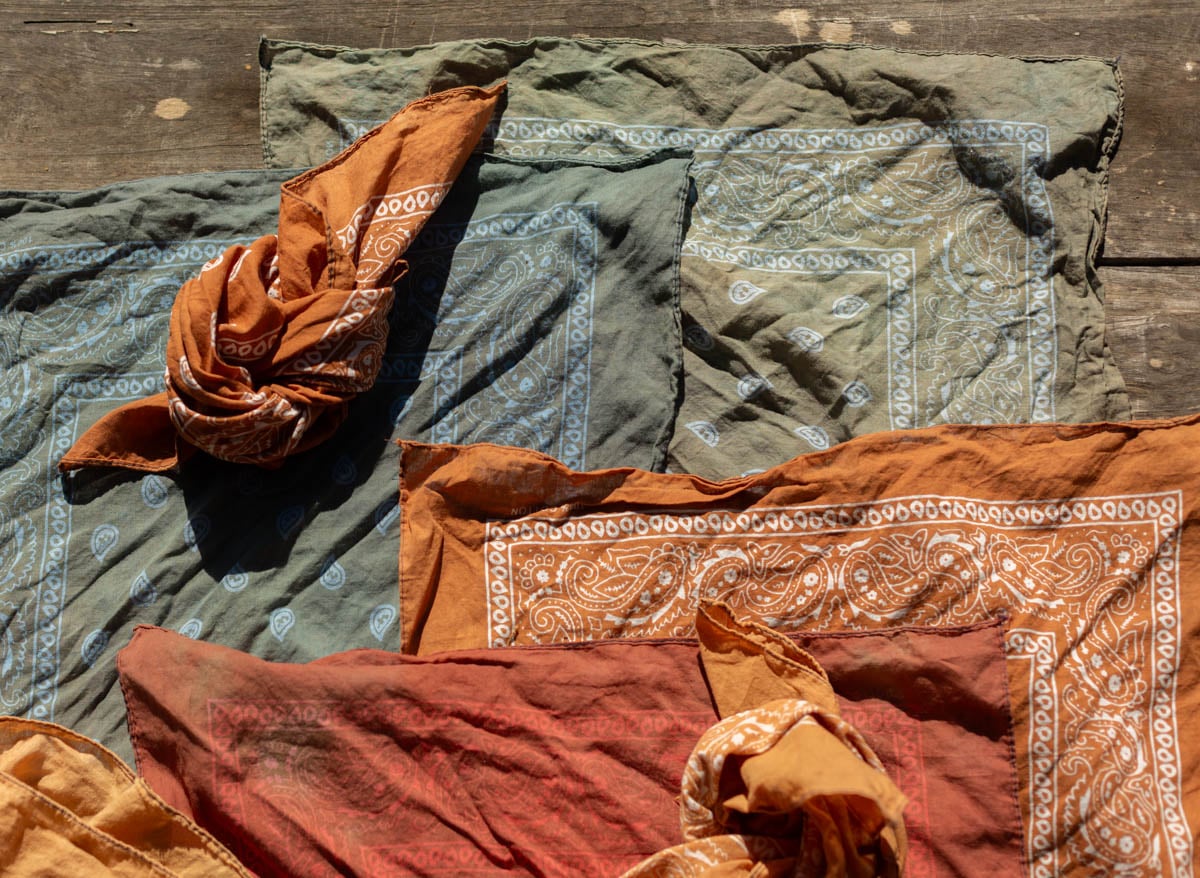
A small number of bandanas remained after the festivities concluded, leading to further creative reuse. One of the leftover pieces was repurposed into a lightweight neck accessory for a family pet. While the animal’s reaction was mixed regarding the comfort of wearing a fashion item, the aesthetic result aligned with the natural, outdoor-inspired theme of the original project.
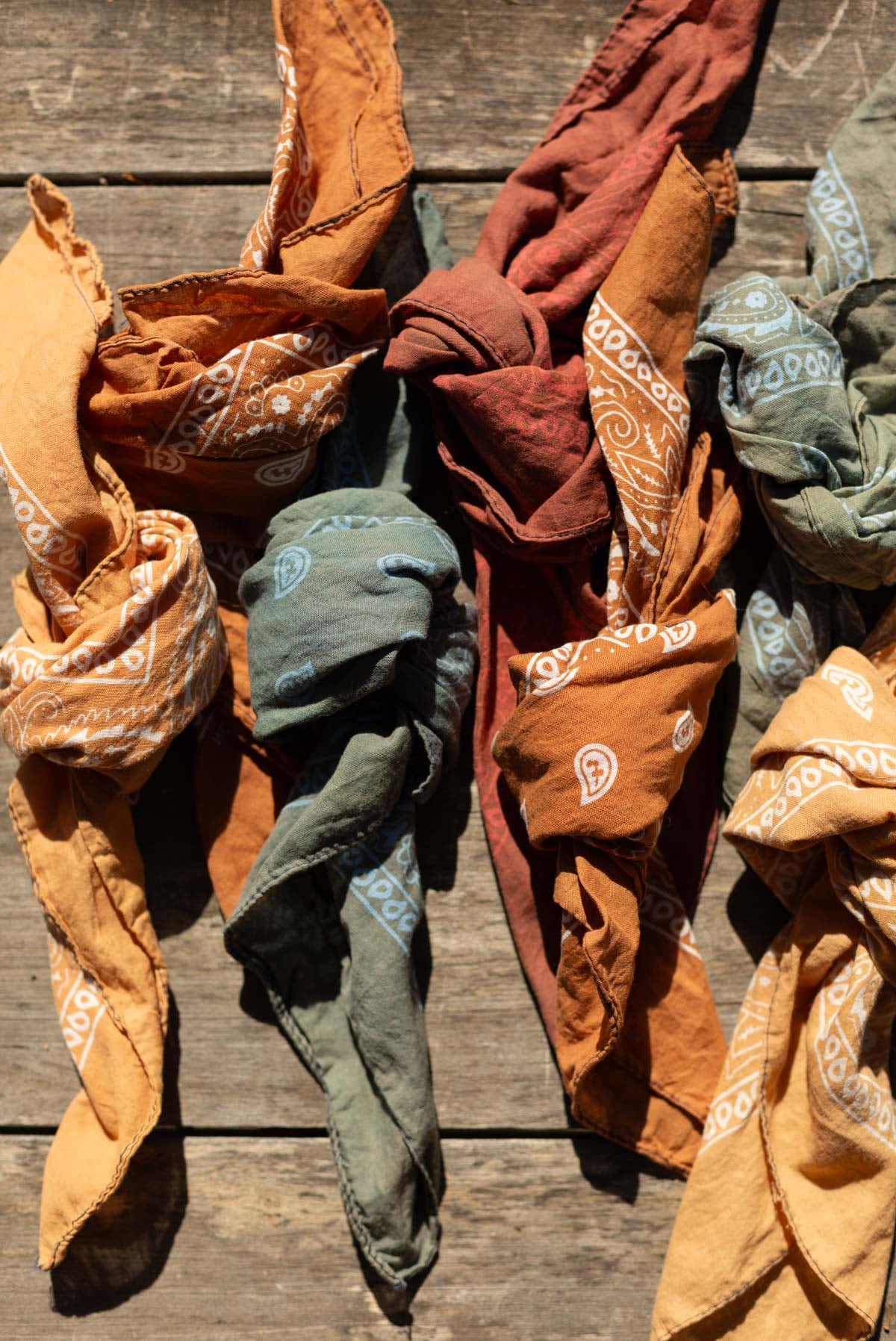
The success of the project highlights the potential of repurposing basic, affordable materials through straightforward chemical and creative processes. By combining a brief exposure to household bleach with a secondary round of traditional dyeing, discarded textiles can be completely reinvented. The resulting earth-toned accessories demonstrate that thoughtful, low-cost crafting can turn utilitarian items into versatile, aesthetically pleasing pieces suitable for group events, personal wear, and everyday life.