
For a significant number of people, the apprehension of losing their long-standing role as the primary family host is enough to put downsizing plans entirely on hold. They may feel thoroughly ready for the physical relief of fewer rooms to clean, lower utility bills, and a drastically reduced house maintenance workload. Yet, they strongly resist the idea that transitioning to a smaller home must mean cutting back on family gatherings. For years, their house has functioned as the gravitational center where everyone comes back together to celebrate, catch up, and maintain family bonds. Letting go of that familiar square footage can emotionally feel very much like letting go of the tradition itself.
This concern is entirely valid and deserves a prominent place in any retirement or relocation planning. Whether an individual is seriously considering a bespoke tiny home, an accessory dwelling unit, or simply a much smaller traditional house or apartment, experts suggest carefully evaluating how one intends to gather with loved ones before making a final moving decision. The challenge lies in balancing the freedom of simplified living with the enduring desire for community and family connection during the most festive times of the year.
Get Creative with the Table
Adapting to a smaller footprint does not mean abandoning holiday dinners altogether; rather, it requires a fresh approach to spatial logistics. The everyday dining table in a compact home rarely needs to match the maximum capacity required for an annual holiday feast. A drop-leaf or extendable table can easily provide extra surface area only when company actually arrives. Folding tables can also serve as a practical temporary solution, particularly if hosts can borrow or rent them for a few days rather than sacrificing precious storage space to keep them on hand year-round.
Furthermore, thinking beyond the traditional concept of one long, continuous dining table can open up entirely new layout possibilities. Two smaller tables placed strategically may fit a compact living space much more comfortably than a single oversized piece of furniture. For instance, a host might seat some family members comfortably at the kitchen table while setting up a smaller, tastefully arranged table in the adjacent living room. Utilizing similar tablecloths, matching dinnerware, and simple decorative centerpieces across both surfaces can effectively tie the distinct areas together, ensuring that everyone still feels included in the shared meal experience.
Let Your Rooms Do a Different Job for the Day
Living in a compact space encourages a high degree of functional versatility, especially on special occasions. On holiday afternoons, the living room can easily transition into an impromptu dining area. Temporarily shifting a coffee table or relocating an accent chair can immediately open up the necessary floor space for a temporary dining setup. Additionally, hosts can free up valuable table space by changing where they serve the meal itself. Placing food platters and side dishes on a kitchen counter, a sideboard, or a credenza leaves the primary eating tables completely clear for plates, glasses, and conversation.
In some cases, making use of sturdy storage bins covered with festive linens or relying on classic TV trays can provide individual guests with convenient surfaces for their meals. The objective is to prioritize flexibility over rigid architectural boundaries, allowing the home to adapt dynamically to the needs of the people inside it rather than forcing the celebration to conform to rigid spatial limits.
Take the Celebration Outside When You Can
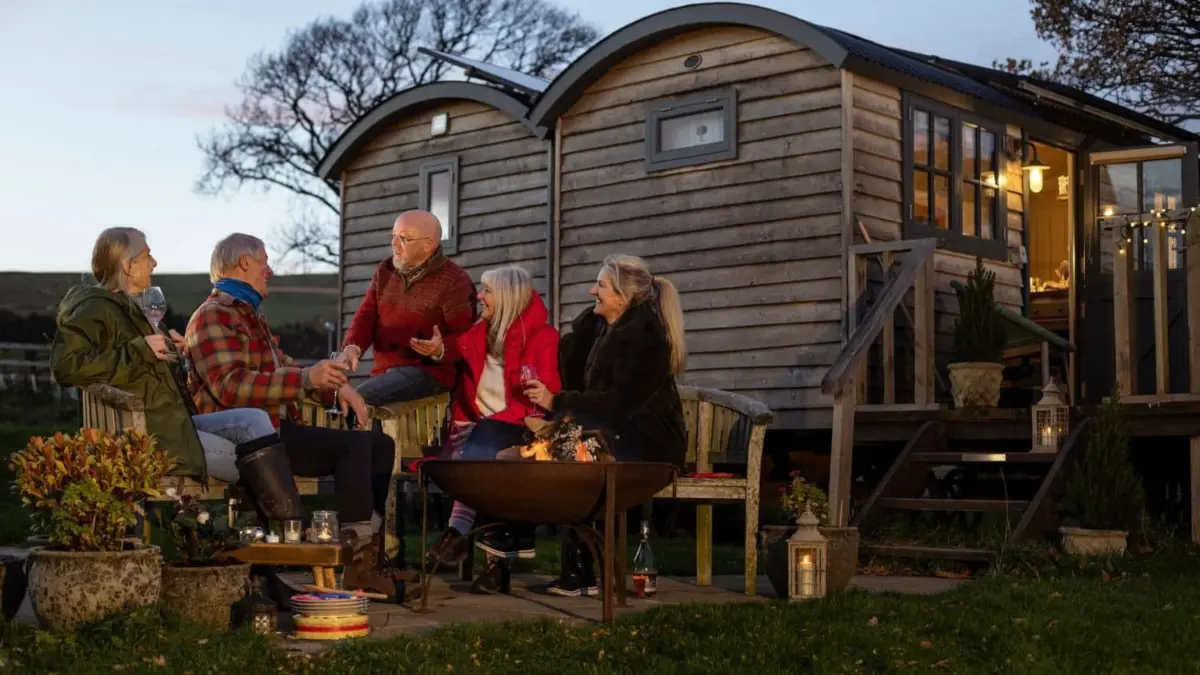
For those who live in regions with mild, pleasant holiday weather, expanding the footprint of the home can be as simple as stepping outdoors. A patio, a wooden deck, a covered porch, or even a small backyard can provide valuable overflow space when the indoor living quarters reach capacity. An outdoor dining table can host the main meal, or alternatively, guests can gather outside for appetizers and drinks before moving indoors for the formal dinner.
Even providing a comfortable, weather-appropriate seating area for just a few people to sit and converse outside can dramatically help spread out a large gathering. However, flexibility remains essential when factoring the outdoors into a holiday plan. Having a reliable backup plan before sending out invitations is crucial. If an entire gathering depends on pleasant sunshine, hosts must decide in advance how they will pivot if the weather forecast suddenly turns inclement. Adjusting the guest count, staggering arrival times, or moving select activities to an alternate location can prevent last-minute stress.
Look Beyond Your Own Front Door
For individuals considering a move into a specialized tiny home community, the surrounding neighborhood infrastructure often provides solutions that individual houses cannot match. Prospective residents are encouraged to ask developers and community managers whether the neighborhood features a shared community room, clubhouse, or multipurpose pavilion that residents can reserve for private family gatherings.
These shared amenities can make hosting a large family holiday entirely feasible, even when an individual tiny home has interior space optimized for only one or two residents. Depending on what the specific community provides, access to a larger dining area, extra tables, chairs, and a fully equipped commercial-style kitchen can bridge the gap between minimalist living and grand family traditions. Asking specific questions about reservation policies, availability during peak holidays, and associated costs before purchasing or renting is an important step for anyone who views hosting as a central part of their lifestyle. Incorporating these shared community spaces into the initial home search ensures that downsizing does not inadvertently restrict social connections.
Plan Around the Gathering You Love
Before making a final decision on how much square footage is truly necessary for a new chapter of life, it is helpful to critically analyze established holiday traditions. Evaluating past gatherings—how many people typically attend, whether everyone sits down for a simultaneous formal dinner, or if guests prefer to drop by casually throughout the afternoon—provides practical data for the downsizing process. It is also worth considering culinary expectations: does the host genuinely enjoy preparing a massive traditional feast single-handedly, or would they gladly embrace a collaborative potluck model where family members contribute favorite dishes?
The answers to these questions can guide homeowners toward choosing a tiny home model with a highly flexible living area, capitalizing on functional outdoor space, or selecting a community with reservable shared rooms. Ultimately, downsizing can serve as a liberating opportunity to evaluate which traditions still bring genuine joy and which ones might be ready for a natural evolution. Giving oneself permission to redesign holiday traditions ensures that celebrations remain meaningful and sustainable. While a holiday gathering may look visually different within the walls of a smaller home, the core spirit remains intact, proving that it is still entirely possible to be the person who brings everyone together under one roof.