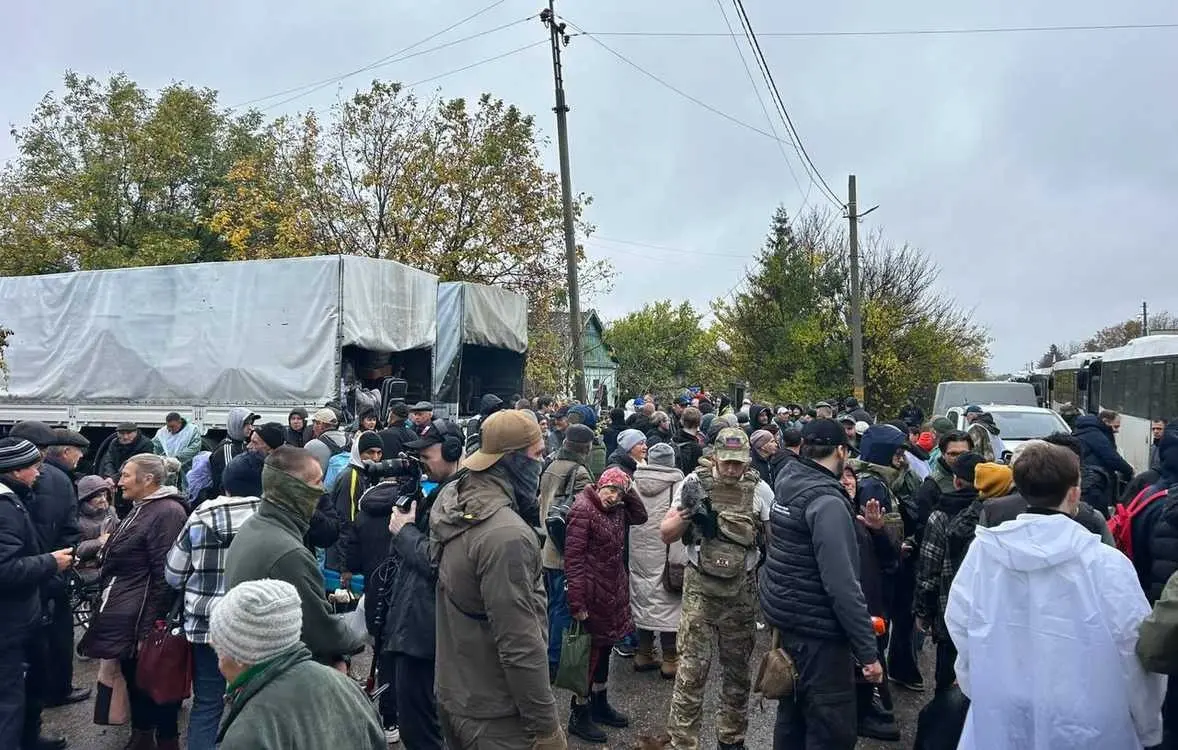
The coordinated effort focused on the city of Oleshky, located in Ukraine’s embattled southern oblast of Kherson. As winter approached, the city and its remaining population had found themselves facing severe famine conditions and a near-total collapse of critical infrastructure following heavy bombardment and urban fighting. Essential services, including gas lines for heating, sewage networks, potable water, and electricity, had been crippled, while landmines and badly damaged roadways presented constant dangers to anyone attempting to remain or leave.
The breakthrough leading to the evacuation came after intense international diplomatic efforts. The Ukrainian Parliament’s Human Rights Commissioner, Dmytro Lubinets, publicly thanked United States First Lady Melania Trump for raising the plight of Oleshky’s population during ongoing dialogues between the United States and Russia. Kremlin spokesman Dmitry Peskov also acknowledged the diplomatic currents that brought attention to the humanitarian crisis.
The First Lady’s call for a humanitarian ceasefire was subsequently amplified by the Vatican. Pope Leo XIV engaged in a telephone conversation with Russian President Vladimir Putin while recovering from treatment for lung cancer, as reported by Vatican News. During the call, the Pontiff stressed the urgent need for a truce to allow essential food and medical aid to reach trapped civilians, while also enabling their safe and voluntary evacuation.
Reflecting on the complex diplomatic maneuvers, Melania Trump noted that all elements of the rescue convoy, including the establishment of safe passages in and out of Oleshky, were achieved through mutual agreement between Russian and Ukrainian leaders.
The logistical execution of the ceasefire and evacuation was executed with surprising precision. A formal ceasefire in and around the Oleshky area was implemented by Russia on October 27 in direct coordination with Ukrainian authorities. Days later, on October 30, Human Rights Commissioner Dmytro Lubinets arrived in Crimea for a personal visit to Oleshky alongside Russian human rights commissioner Yana Lantratova. This diplomatic milestone marked the first time a sitting Ukrainian official had entered the Russian-occupied portions of the country since the conflict escalated.
According to statements provided by Yana Lantratova to the BBC, the entire operation proceeded without incident, with both sides noting the high level of organization and cooperation involved.
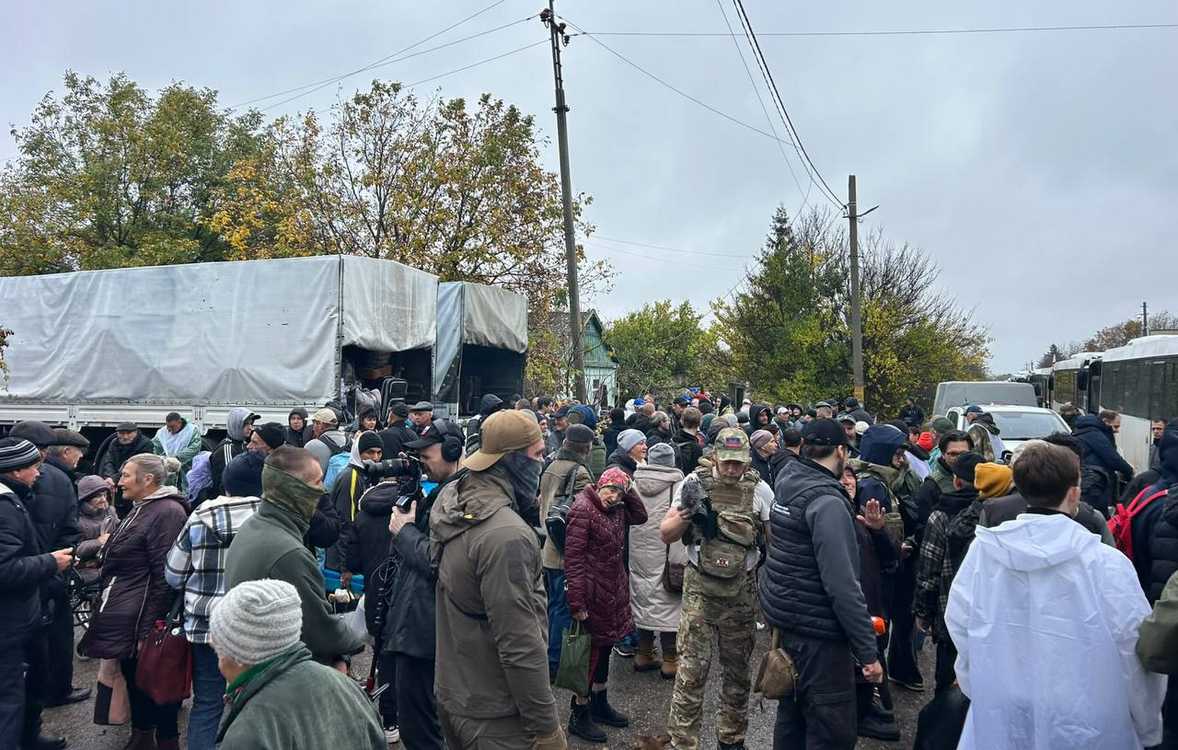
The evacuation process itself was a multi-stage journey designed to ensure the safety of the fleeing citizens. As reported by the BBC, the initial stage involved transporting residents and their pets eastward across the Crimean Peninsula to the Russian city of Anapa, situated on the northeastern point of the Black Sea.
From Anapa, the evacuees boarded aircraft that flew through Russian airspace to Gomel, a city in Belarus located near the border with Ukraine. Upon arriving in Gomel, the weary travelers crossed the border toward Kyiv, where they were greeted with a hero’s welcome. According to The Guardian, the arrivals were met by long lines of villagers waving Ukrainian flags and offering warm coffee, hot food, and snacks.
Major international aid organizations, including the International Committee of the Red Cross, Doctors Without Borders, and World Central Kitchen, were also on hand to welcome the evacuees and provide immediate medical and humanitarian support at the border.
Among those who escaped were approximately 750 people, accompanied by a diverse menagerie of domestic animals, including dogs, cats, parrots, and even a raccoon. Ukrainian officials chose not to release an exact, official count of the total evacuees, citing necessary security protocols.
While hundreds chose to leave, an unreported number of residents elected to stay behind in Oleshky. Eyewitnesses shared with The Guardian that personal ties, property concerns, and the sheer difficulty of abandoning their homes kept many local residents in the city. Yana Lantratova confirmed that those who initially evacuated toward Russian-controlled territory were temporarily housed in hotels across Crimea, while both Lantratova and Lubinets emphasized that ongoing coordination will be required to supply continuous humanitarian aid to the residents who chose to remain.
For those who stayed, surviving in Oleshky remains an immense challenge. The city has sustained profound devastation, leaving its physical infrastructure in ruins and its road networks severely compromised.
Following the conclusion of the initial evacuation phase, Dmytro Lubinets expressed optimism that the successful Oleshky truce could serve as a blueprint for similar operations elsewhere. He stated that he is actively working alongside Yana Lantratova to explore further humanitarian initiatives, emphasizing the importance of maintaining this cooperative mechanism to continue helping people and saving lives.
Vatican News reported that building upon the momentum of the temporary truce, which expired recently, fresh diplomatic negotiations are scheduled to take place in Abu Dhabi.
Expressing his hopes for the future of these talks, Pope Leo XIV shared a message on social media, writing that he hopes the cooperation between the parties, which made this necessary humanitarian act possible, will strengthen the desire for dialogue and lead to new concrete peace initiatives.