In the commune of Ollioules, local grower Dominique Berdin stands inside a specialized greenhouse, tending to a flourishing micro-ecosystem. Speaking to the national broadcasting network France24 during a recent visit to her operation, she offered a lighthearted assessment of her pioneering role in the region.
"I’m probably the only papaya grower in France!" Berdin said, laughing as she surveyed her crops.
Tucked safely inside her greenhouse structures, roughly 20 different tropical fruit varieties thrive entirely free of synthetic pesticides throughout the entire year. For Berdin and a growing number of her peers, this unorthodox agricultural shift is not merely an experiment in novelty, but a pragmatic response to a changing environment.
"Our climate is now suitable for these crops," Berdin explained, pointing to how decades of gradual warming in the south of France have paved the way for this horticultural breakthrough. She emphasizes that agriculture has always required adaptation, suggesting that if local farmers are willing to pivot, this environmental shift could ultimately transform into a significant economic opportunity. Instead of relying heavily on complex supply chains that ship delicate tropical fruits from across the globe, the region could theoretically supply its own markets with zero-emission, locally grown produce.
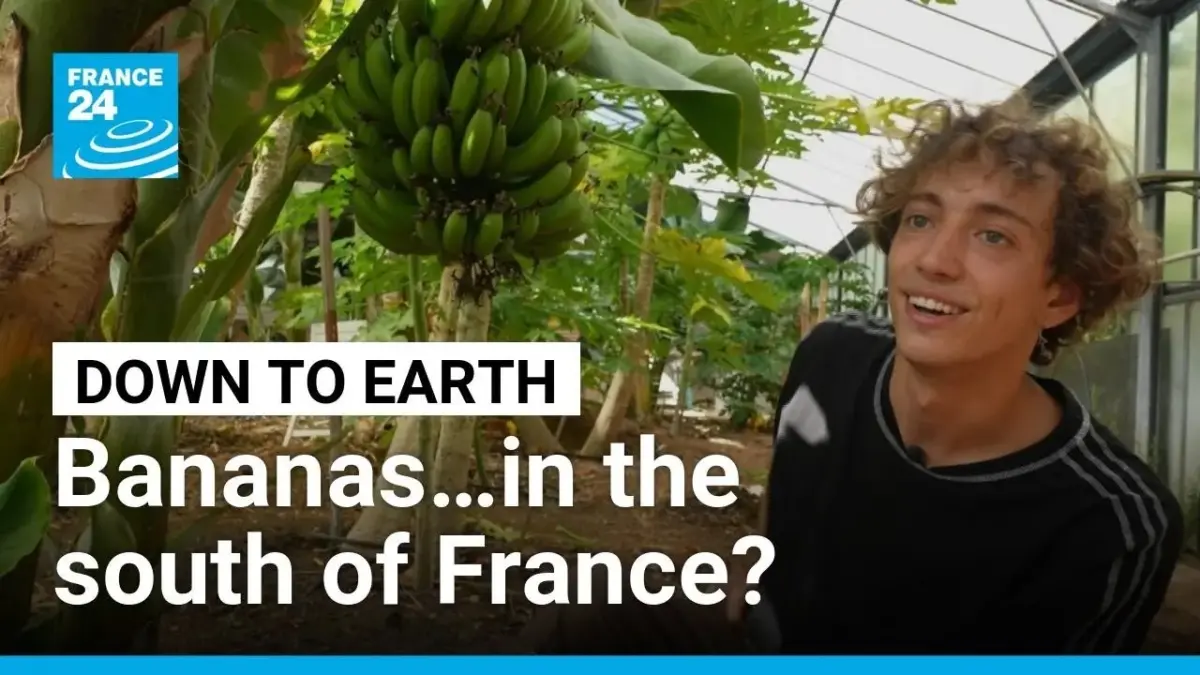
This sentiment is shared by a new generation of agricultural specialists working across the region. Among them is Johan Bultel, a young agronomist who collaborates closely with Berdin while carving out his own specialized niche in banana cultivation. Bultel’s work bridges the gap between controlled greenhouse environments and the harsher realities of the local landscape. While some of his cultivation takes place under protective glass, his operations also extend to the exposed, windswept slopes of his farmland.
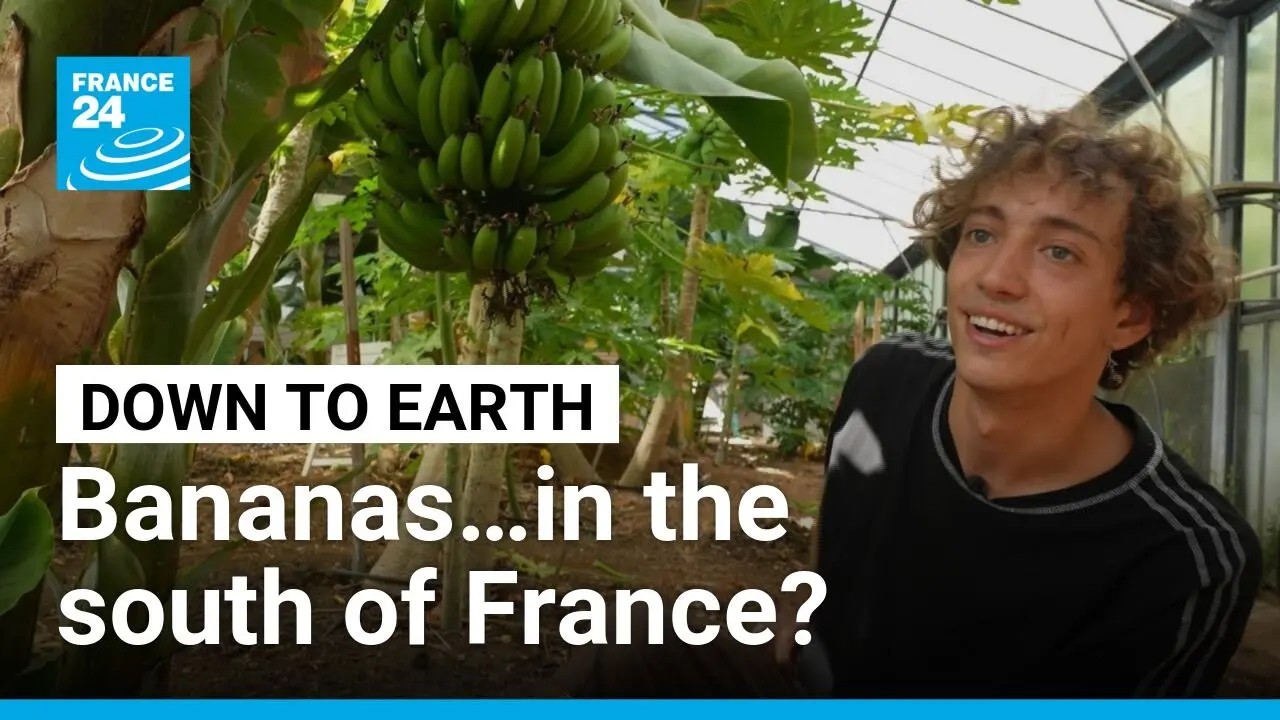
On these challenging terrains, Bultel is actively cultivating 26 distinct varieties of banana plants sourced from tropical climes as diverse as Honduras and the distant French overseas department of Réunion Island. Rather than assuming a one-size-fits-all approach, Bultel is systematically testing a broad genetic pool. He operates with the firm belief that at least one of these carefully selected varieties will prove hardy enough to not only survive the local climate, but genuinely flourish—even through the chill of wintertime.
The urgency driving these experiments is grounded in the lived experiences of seasoned regional producers. Local farmer Isabelle Pertois found herself compelled to rethink her entire agricultural model after confronting the punishing realities of Europe’s recent, increasingly intense heatwaves. For years, Pertois focused her efforts on cultivating a wide array of organic vegetables. However, as scorching summer temperatures transitioned from rare anomalies into predictable annual occurrences, maintaining traditional crop yields became an uphill battle.
Faced with these mounting environmental pressures, Pertois looked southward and westward for inspiration, drawing tactical cues from agricultural practices observed in parts of Spain and North Africa. In response to the relentless sun, she restructured her fields, planting her traditional crops—such as tomatoes and squash—beneath the protective, dappled shade of newly established citrus trees.
Looking to the future, Pertois anticipates an even more dramatic transformation across her land. It will not be long, she notes, before rapidly growing banana trees cast a widespread partial shade over her entire agricultural plot. Walking through her operational spaces, she marvels at the sheer vigor of the plants, noting with a mix of surprise and amusement how the robust banana leaves have forcefully pushed their way right through the structural roof of her greenhouse.
Surrounded by lush foliage and thriving exotic flora under the Mediterranean sun, Pertois captures the surreal nature of the transformation. "It’s like I’m in the Caribbean!" she remarks, reflecting on how radically her familiar French farmland has evolved.
Other agriculturalists in the area are experiencing similar breakthroughs by embracing unconventional diversification. Another local grower, specializing in dragon fruit, has successfully doubled his total crop yields with the guidance of regional agronomists who are actively mapping out new cropping strategies suited for the changing environment.
Berdin, Pertois, and this anonymous dragon fruit grower are far from isolated actors on this strange new agricultural journey. Across the south of France, a growing community of farmers is quietly experimenting with tropical and subtropical fruit production. Together, their collective efforts demonstrate a resilient underlying message: even as global climate patterns shift and reshape traditional landscapes, the exceptional standard and high quality of French agricultural produce do not have to be left behind. Through innovation, experimentation, and a willingness to embrace the unconventional, these farmers are ensuring that the south of France remains at the forefront of European agriculture, writing a brand-new chapter for the region’s storied farming traditions.