
Historical novels usually offer an engaging, entertaining route where readers absorb knowledge while being absorbed by narrative pacing. Creative non-fiction introduces a compelling twist, allowing authors to fill in the historical blanks regarding dialogue, personal motives, and emotional landscapes. Traditional non-fiction strictly adheres to documented facts without unnecessary stylistic elaboration, whereas academic literature couples rigorous factual reporting with expansive theses, dense footnotes, exhaustive bibliographies, and meticulously granular details.
A cross-section of these varying approaches highlights how contemporary authors continue to reinterpret the past, ranging from royal courts and the Australian frontier to the economics of global conflict, maritime bravery, and interwar journalism in Paris.

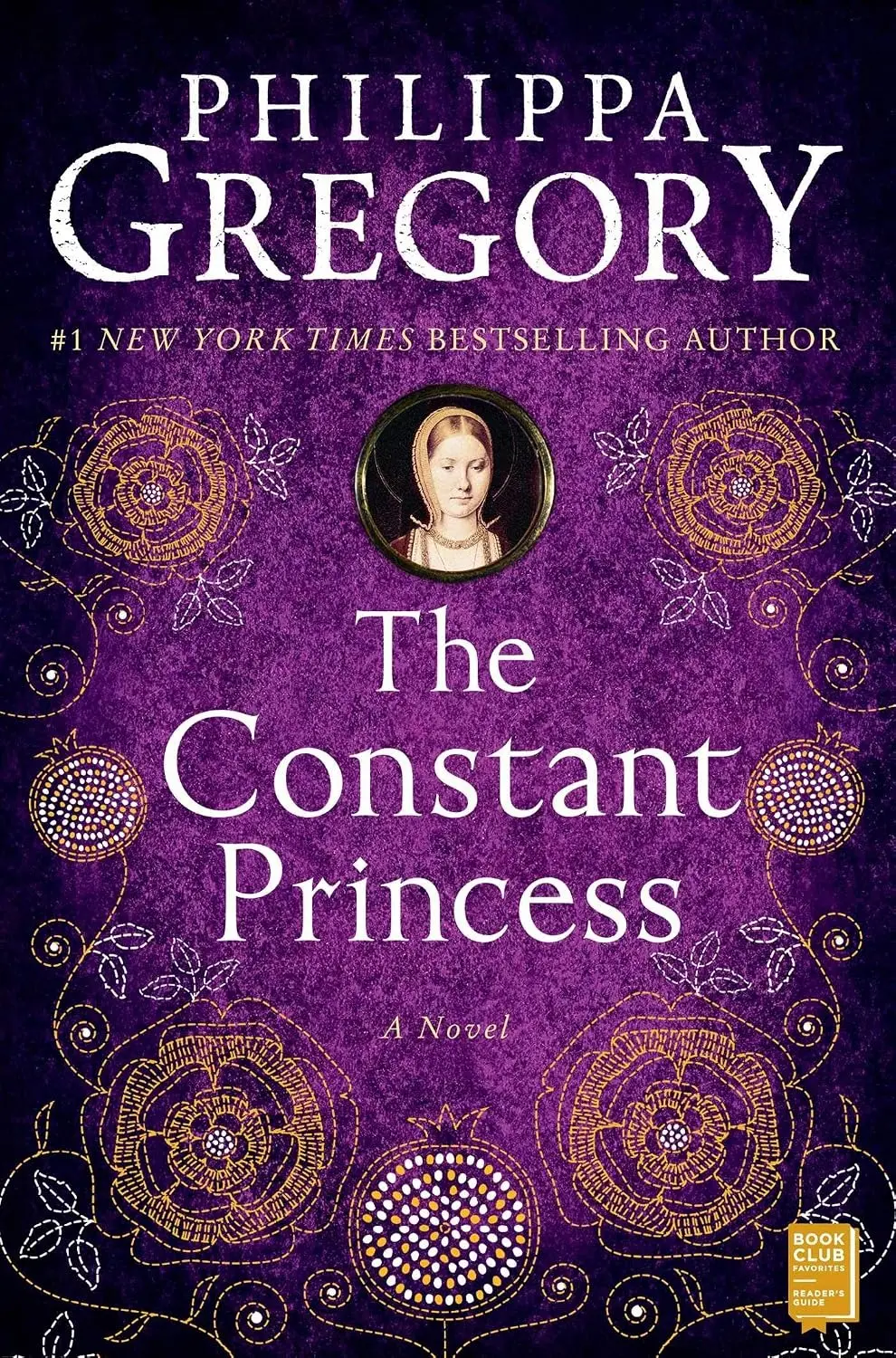
The Constant Princess by Philippa Gregory (Atria Books, 2006)
Historical fiction has long relied on the ability to unearth lesser-known narrative angles within famous dynasties, and Philippa Gregory’s novel achieves precisely that by training its lens on Katherine of Aragon. Often remembered by casual history readers solely as the first, discarded wife of the notoriously volatile Henry VIII—or viewed as a peripheral adult figure standing in the shadow of Anne Boleyn and Queen Elizabeth I—Katherine receives a deeply intimate reimagining here.
Gregory traces Katherine’s journey from her formative childhood as the daughter of the Spanish monarchs Ferdinand and Isabella. Betrothed as a young child to Arthur, Prince of Wales and son of Henry VII, she was raised from her earliest days with the absolute expectation of becoming the Queen of England. Consequently, she acts and thinks with the unyielding composure of the highest European royalty. The cultural shock of relocating from the luxurious, warm palaces of Spain to the primitive, cold, and damp conditions of Tudor England forms a stark backdrop to her early married life.
Following the untimely death of Prince Arthur, Katherine navigates a prolonged period of political limbo as a young Henry VIII matures into a monarch who ultimately covets his late brother’s widow. While this union initially held the potential to save Henry from his own political and personal trajectory, it was ultimately doomed by the desperate Tudor quest for a male heir.
It is sometimes difficult to draw a sharp line between documented history and romantic fiction within Gregory’s narrative, but the emotional tension and dramatic pacing effectively accelerate the plot. The narrative momentum slows only when Katherine fails to produce a surviving son, leaving her sidelined by Henry VIII’s relentless succession of wives. Ultimately, the book serves as an accessible and fast-paced read for those looking to explore the human elements of the Tudor court.
The Sun Walks Down by Fiona McFarlane (Farrar, Straus, Giroux, 2022)
Shifting from the royal courts of Europe to the expansive and unforgiving terrain of the Southern Hemisphere, Fiona McFarlane’s novel captures the distinct flavor of nineteenth-century colonial expansion. Reviewer Zachary Houle has described the work as both a minor masterpiece and an acquired taste. It is a narrative that readers may find simultaneously sprawling and demanding, largely due to its broad and intricate cast of characters. Yet, this cacophony of perspectives mirrors the chaotic reality of frontier life, a feature shared by many historical accounts of the American frontier.
Set on the Australian frontier in the late nineteenth century, the novel benefits significantly when readers map the geography alongside the text. The setting is notably isolated yet situated close enough to more established civil settlements to project a constant sense of threat and oppression. Within this landscape, the natural environment—specifically the sun—acts almost as a distinct character: unrelenting, torrid, and punishingly harsh. McFarlane builds this tension toward a startling and satisfying conclusion, supported by vivid descriptions of land and climate that leave a lasting impression long after the final page.

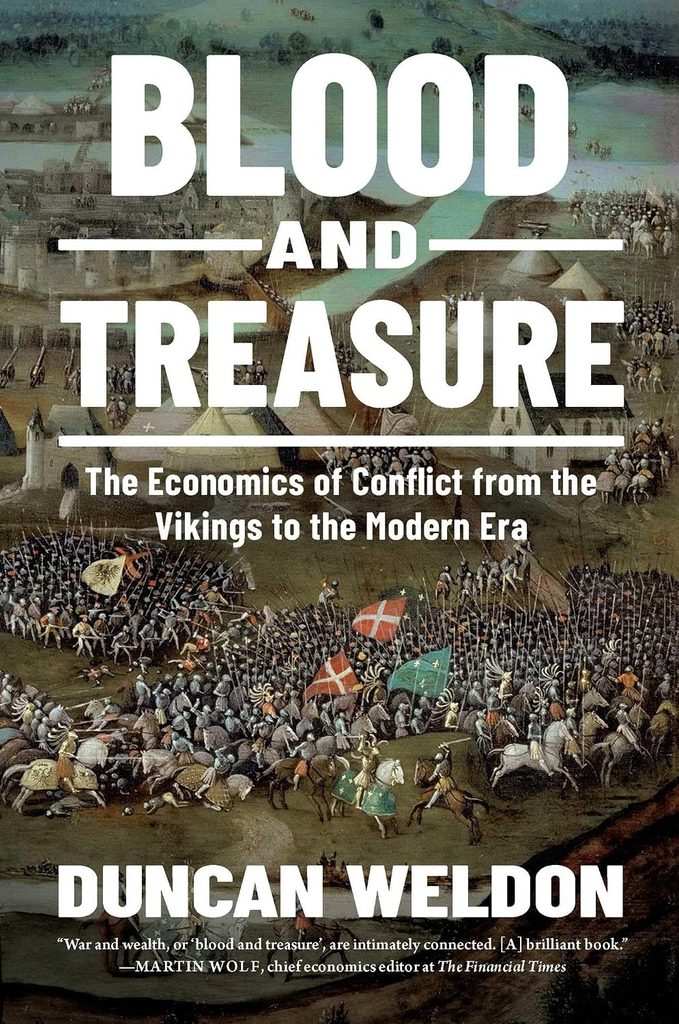
Blood and Treasure: The Economics of Conflict from the Vikings to the Modern Era by Duncan Weldon (Pegasus Books, 2026)
Moving away from narrative fiction and regional settings, macroeconomic history offers a sweeping, structural view of human conflict. Duncan Weldon adopts a high-altitude perspective on world history, examining centuries of warfare through the lens of economics. His central premise is that war has historically been foundational to the institutional development of nations.
While that thesis may initially give pause, Weldon illustrates his argument by demonstrating that the nations emerging victorious from major conflicts are consistently those that achieve long-term prosperity. Crucially, however, the book explores why certain nations secure victory: factors such as higher per capita income among citizens, abundant access to raw materials, more sophisticated domestic economies, and superior organizational capabilities.
Weldon adopts a more nuanced tone when assessing the realities of modern total warfare, arguing that the nuclear and conventional deterrent power of national armaments plays a much larger role in maintaining contemporary peace than it does in sparking outright conflict. Because the book draws on recent history, Weldon extends his economic analysis to the Russia-Ukraine conflict, utilizing it as a contemporary case study of contained warfare unfolding under the overarching threat of total annihilation.
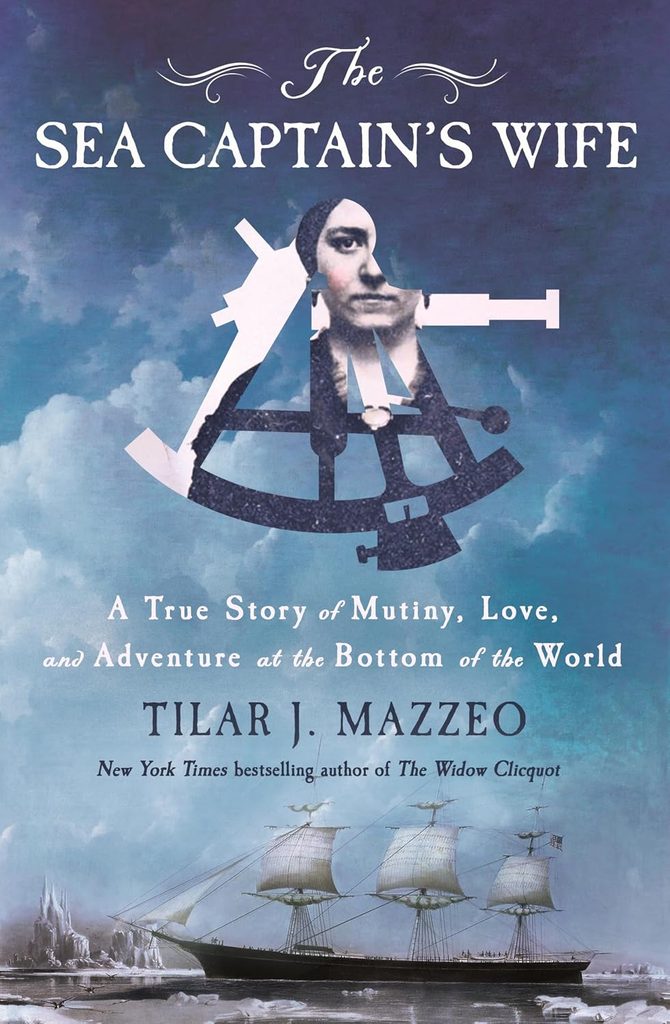
The Captain’s Wife: A True Story of Mutiny, Love, and Adventure at the Bottom of the World by Tilar J. Mazzeo (St. Martin’s Press, 2025)
Biographical non-fiction often uncovers extraordinary personal accounts hidden within the margins of maritime history. Tilar J. Mazzeo’s work offers an engrossing look at Mary Ann Patton, the wife of Nantucket sea captain Joshua Patton. Hailing from a deeply rooted seafaring family, Mary Ann was as familiar with maritime life as any young woman could reasonably be in the 1850s. At just nineteen years of age, she married Joshua and accompanied him on his inaugural voyage as a clipper ship captain, charting a course from the East Coast, around Cape Horn in South America, and onward to the Far East.
Faced with the profound isolation and monotony of life aboard the ship, Mary Ann cultivated relationships with the crew through small acts of kindness while concurrently mastering celestial navigation using the stars and a sextant. When Captain Patton began a slow, debilitating decline from tuberculosis and the First Mate was subsequently placed in chains following mutinous behavior, Mary Ann stepped into the leadership vacuum. Backed by the loyalty and support of the crew, she assumed command and successfully navigated the vessel through the treacherous waters of the Drake Passage and safely into the Pacific Ocean.
While the account details a remarkable historical episode, the surviving documentation regarding Mary Ann Patton’s life is inherently limited. Consequently, the biography occasionally stretches its narrative bounds, leading some readers to skim the final portions while fully engaging with the dramatic core of the voyage.
The Typewriter and the Guillotine: An American Journalist, a German Serial Killer, and Paris on the Eve of WWII by Mark Braude (GCP Grand Central, 2026)
Concluding the spectrum of historical styles, biographical journalism captures the cultural and political anxieties of the interwar period. Mark Braude’s biography centers on Janet Flanner, the brilliant and observant correspondent for The New Yorker magazine whose iconic column ran under the heading "Letters from Paris" throughout the 1920s and 1930s. Through her dispatches, readers gain an intimate window into the expatriate community inhabiting the French capital, alongside the rising tide of fear and political extremism as fascism and communism tightened their grip across Europe.
Flanner’s background forms a compelling trajectory: born in Indiana as the daughter of a funeral director, she initially launched her journalism career in Indianapolis by reviewing films for a local newspaper. Her personal life as an openly lesbian woman eventually drew her toward the more cosmopolitan and tolerant environment of Europe. While Flanner’s colorful European circles provide a vibrant narrative core, the book also delves into her investigation of a German serial killer operating during the same era—a parallel storyline that occasionally shifts focus away from her broader journalistic contributions.
As readers continue to navigate these diverse historical genres—whether through the emotional lens of historical romance, the atmospheric grit of frontier fiction, the structural analytics of economic history, or the personal triumphs of maritime biography—the enduring appeal of the past remains rooted in the multiplicity of ways it can be told.