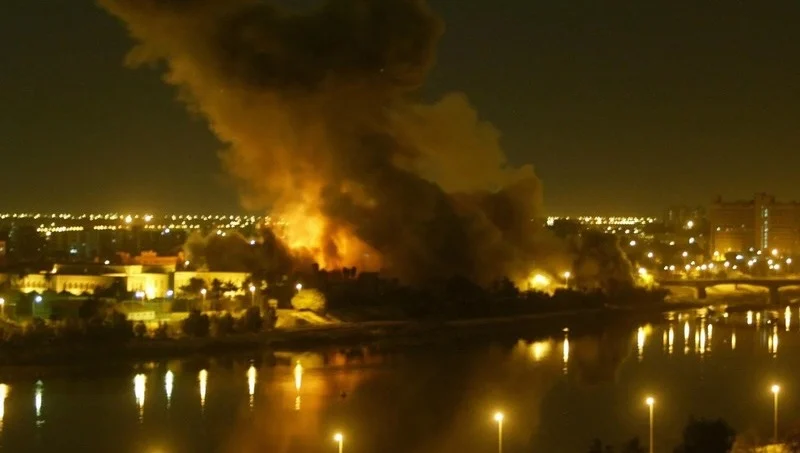
It is often observed that hindsight is twenty-twenty—a colloquialism suggesting humanity is better equipped to judge past events accurately once their full consequences have materialized. This truism is vividly illustrated by the 2003 U.S.-led invasion of Iraq. More than two decades after an incursion that claimed countless Iraqi lives, wreaked profound havoc across the Middle East, and sowed the seeds of enduring geopolitical instability, a broad consensus has emerged among foreign policy analysts and the general public that the war was a catastrophic strategic mistake. Launched under the banner of national security and framed as a righteous mission to eliminate weapons of mass destruction (WMDs) while liberating the Iraqi people from Saddam Hussein—whom the United States had strategically supported as early as the 1950s and later during his 1980s war of aggression against Iran—the invasion stands today as a textbook case of how deceit, institutional racism, and imperial ambition were packaged for popular consumption, with the Western media acting as willing accomplices.
Rather than fulfilling their democratic mandate of holding power to account, prominent media figures and foundational institutions were deeply complicit in shaping public opinion to rally behind the war effort.
Yet, while retrospective clarity reveals the extent of the deception, the warnings were present from the very beginning. Independent experts, academic scholars, and millions of anti-war protesters around the world actively questioned the Bush administration’s aggressive push for conflict in Iraq and the rapidly expanding apparatus of the global "war on terror." These critical voices demanded tangible evidence for the dubious WMD claims, called out the anti-Arab and anti-Muslim fearmongering deployed to demonize the Iraqi population, and highlighted the predictable humanitarian and geopolitical fallout of launching a preemptive war of aggression. These warnings, however, were largely marginalized or outright drowned out, while the most prominent media platforms were unreservedly handed to government officials and partisan pundits aggressively making the case for war.
In September 2002, former Israeli Prime Minister Benjamin Netanyahu testified before the U.S. Congress, asserting that Saddam Hussein was actively and aggressively developing weapons of mass destruction. He advocated for preemptive U.S. military strikes against Iraq and delivered his now-infamous assurance: “If you take out Saddam, Saddam’s regime, I guarantee you that it will have enormous positive reverberations on the region.” Just a few months later, in February 2003—merely weeks before the invasion commenced—U.S. Secretary of State Colin Powell presented a dramatic, heavily choreographed case before the United Nations Security Council, citing alleged mobile weapons laboratories and hidden stockpiles of WMDs as irrefutable justification for military action. Despite profound internal dissent within the intelligence community and a glaring absence of verifiable hard evidence, the mainstream media did little to critically interrogate or challenge these assertions.
Even after the invasion was already underway, British Prime Minister Tony Blair insisted in July 2003 that there was “absolutely no doubt at all that we will find evidence of weapons of mass destruction programmes.” The dramatic testimonies of Powell, Netanyahu, and Blair were ultimately exposed as completely false—a reality Powell himself would later acknowledge publicly years afterward—but the irreversible damage had already been inflicted. Iraq was invaded, the lives of ordinary citizens were shattered, and no unconventional weapons were ever recovered. Nearly 4,500 U.S. service members lost their lives in Iraq, alongside 179 British military personnel, while hundreds of thousands of Iraqi civilians perished either directly or indirectly as a consequence of the hostilities, and millions more were displaced from their homes. The resulting vacuum severely destabilized the region, directly paved the way for the rise of extremist groups like ISIS, and unleashed a cascade of sectarian violence that persists to this day. According to estimates from the Costs of War project at Brown University, up to 4.7 million people have died across post-9/11 war zones in the Middle East, with Iraqis bearing an immense share of that devastating toll. Despite this staggering human cost, no one was held structurally accountable—neither the high-ranking political architects who orchestrated a war based on fabrications, nor the editors and journalists who failed in their fundamental professional duties.
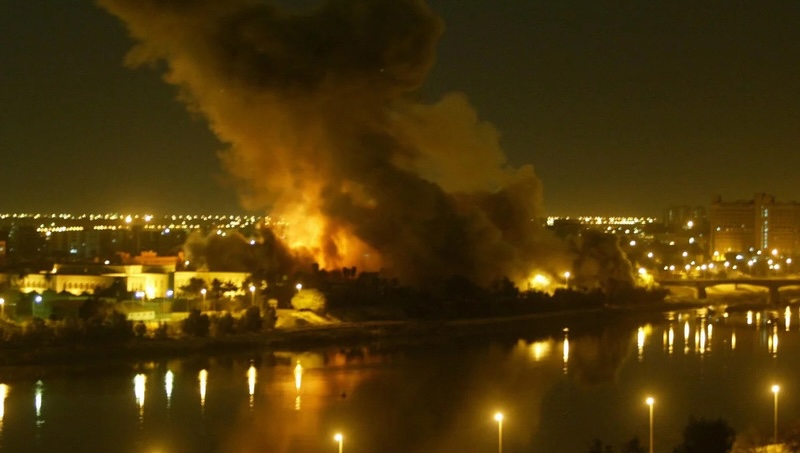
Indeed, rather than scrutinizing authority, media figures and powerful news institutions actively shaped public consciousness to foster widespread support for the conflict. Public polling from early 2003 indicated that more than two-thirds of Americans erroneously believed Iraq possessed weapons of mass destruction, while a clear majority remained convinced that Saddam Hussein had been directly involved in the September 11 terrorist attacks. This stark divergence between public perception and factual reality was not accidental; it was carefully constructed through constant repetition, strategic messaging, and, above all, media coverage that consistently echoed the administration’s talking points rather than investigating them.
The role of the media in manufacturing consent for military aggression is not merely an isolated tale of journalistic malpractice; it serves as clear evidence of how deeply embedded mainstream media can be within existing structures of political and economic power. As renowned intellectuals like Noam Chomsky and Edward Said have extensively documented, corporate media in the West have historically functioned not simply to inform the citizenry, but to reaffirm the legitimacy of imperial ambitions, particularly when those ambitions are draped in the rhetoric of liberal democracy. The Iraq War remains a premier case study in this phenomenon, wherein the U.S. media packaged an illegal intervention as a humanitarian necessity.
The profound absence of accountability following the Iraq War also sheds light on the broader health of modern democratic institutions. No meaningful structural reforms were undertaken within major newsrooms, no editors were dismissed for their complicity, and no prominent anchors faced professional repercussions. On the contrary, many of the media figures who most aggressively championed the war subsequently ascended to prestigious positions within academia, elite think tanks, and major broadcasting networks. Some of these same individuals have resurfaced to recycle familiar tropes, this time to defend state violence and military campaigns abroad. This systemic pattern is anchored in deeply ingrained imperial power dynamics and a racialized hierarchy that dictates whose suffering is deemed worthy of empathy. Iraqis in 2003, much like Palestinians today, were not viewed as full human beings deserving of inherent rights, security, or justice; instead, they were rendered invisible within the dominant narrative, their lives treated as acceptable collateral damage in the pursuit of geopolitical dominance.
The sins of 2003 extended far beyond the initial decision to launch a war, residing equally in how the narrative was communicated, masked, and ultimately trivialized. In 2004, a year after the invasion began, then-President George W. Bush infamously joked at the White House Correspondents’ Association dinner about the persistent failure to locate any weapons of mass destruction. Accompanied by humorous slideshow images of himself looking under furniture in the Oval Office, he quipped, “Those weapons of mass destruction have got to be somewhere.” The gathered audience of elite journalists responded with uproarious laughter at an explicit acknowledgment of a war launched on fabrications—fabrications they themselves had spent months amplifying. It was a surreal moment that underscored the profound disconnect between the political ruling class and the catastrophic human cost of its decisions, reflecting a deep-seated culture of impunity that now finds an eerie echo in contemporary reporting on Gaza.
The parallels between the 2003 invasion of Iraq and Israel’s military assault on Gaza are stark and disturbing. In both instances, state-sanctioned violence was repackaged for domestic audiences as a moral imperative and a defense of civilization itself. In both cases, the lives of Arabs and Muslims were systematically devalued to the point of erasure. Furthermore, in both conflicts, the mainstream media played a pivotal role in molding public opinion through selective framing, deliberate omissions, the uncritical repetition of official talking points, and a persistent refusal to incorporate dissenting perspectives or center the voices of those most directly impacted by the violence.
Just as the term “shock and awe” was used in Iraq to describe a massive aerial bombardment campaign designed to terrorize a civilian population, contemporary reporting on Gaza frequently relies on sanitized terminology such as “precision strikes,” “military targets,” and “human shields” to legitimize the widespread destruction of refugee camps, hospitals, and urban infrastructure. Language and words are never neutral tools; the vocabulary deployed by Western media guides public perception, reinforcing a hierarchy of human worth that facilitates the ongoing dehumanization of targeted populations and perpetuates systemic biases in international affairs.