
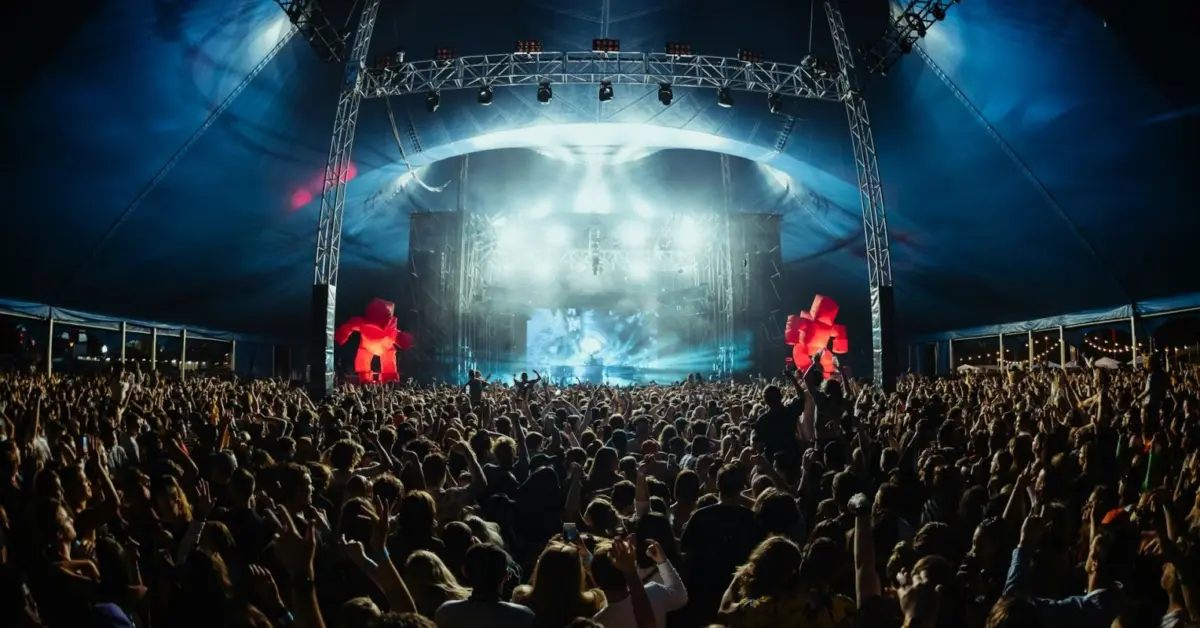
This reality became starkly apparent during a recent first-time experience at an outdoor venue, where preparation meant bringing specialized noise-canceling headphones right alongside tickets and transit passes. As patrons circled the perimeter of the sprawling facility, the opening act could be heard playing in the distance at what registered as a remarkably reasonable, conversational volume. But that auditory illusion vanished the moment the crowd rounded a final concrete corner toward the assigned seating sections.
Without warning, a wall of sound hit the senses—a sudden, violent blast that forced attendees to physically recoil as if struck by a tangible force. Ducking instinctively behind a protective stadium wall, concertgoers quickly fitted their noise-canceling headphones snugly into place, keeping them securely positioned for the remainder of the evening’s performances.
Yet, looking around the packed amphitheater revealed a startling social landscape: virtually no one else in the surrounding rows was wearing any form of hearing protection. This glaring absence raises a persistent and troubling public health question: why do so many music lovers routinely bypass basic protective measures when the risks associated with amplified live sound are so blatantly obvious?
The Risk Is Real and Measurable
During the course of the live show, digital decibel monitoring tools, such as wrist-worn smartwatches, tracked the ambient noise levels, which hovered consistently between 90 and 100 decibels. In many contemporary concert settings, acoustic output pushes even higher into dangerous thresholds. According to data compiled by the National Institute on Deafness and Other Communication Disorders (NIDCD), exposure to sound levels reaching 100 decibels can begin to cause measurable inner ear damage in as little as 14 minutes.
Once this delicate auditory system sustains damage, medical science has yet to discover a reliable method for reversal or repair. The human inner ear relies on thousands of microscopic sensory structures known as hair cells to translate physical sound vibrations into electrical signals that the brain interprets as music and speech. When battered by excessively loud acoustic energy, these fragile hair cells are permanently sheared, bent, or destroyed, resulting in irreversible hearing loss and often chronic tinnitus, a persistent ringing or buzzing in the ears.
Fortunately, modern audiological research confirms that simple interventions can dramatically alter these outcomes. Evidence from a randomized clinical trial conducted at an Amsterdam music festival, where ambient sound levels averaged a punishing 100 decibels (dBA), demonstrated a profound disparity between protected and unprotected ears. Following the festival, 42 percent of unprotected ears exhibited signs of temporary threshold shifts—indicating acute, temporary hearing loss—compared to only eight percent of ears safeguarded by specialized earplugs. Furthermore, post-concert ringing in the ears proved significantly less common among individuals who wore protective gear during the performances.
Why We Skip the Earplugs
Given that various forms of hearing protection are readily accessible, inexpensive, and scientifically proven to preserve auditory function, public adoption rates remain stubbornly low. Analysts suggest that the reasons behind this widespread reluctance extend far beyond simple ignorance or a lack of public awareness regarding acoustic safety.
Chief among these psychological barriers is the pervasive influence of denial, particularly among younger audiences. For individuals in their teens and twenties, the cumulative effects of noise-induced hearing damage can feel like an abstract, distant problem reserved for old age. When the music thumps rhythmically, the bass feels exciting in the chest, and the immediate physical sensation involves no sharp pain, it is easy to assume that the body is handling the stress without consequence. The true toll of high-volume exposure often remains hidden for years, manifesting only when age-related hearing degradation accelerates prematurely.
Compounding this psychological denial is the immense power of social conformity. In densely packed social environments like a concert venue, human behavior is heavily influenced by the actions of the surrounding crowd. When an individual looks around and observes that not a single peer, stranger, or companion is wearing earplugs, donning protective gear can feel socially awkward or self-conscious. Going along with the crowd feels like the path of least resistance in an environment defined by shared, communal celebration.
Compounding these social pressures are persistent aesthetic and functional anxieties. Many concertgoers harbor a lingering worry that inserting earplugs will fundamentally distort or muffle the audio quality, robbing them of the rich, high-fidelity experience they paid substantial ticket prices to enjoy. Others contend with self-consciousness regarding appearance, fearing that visible hearing protection might make them look out of place or feel physically uncomfortable over several hours of dancing and socializing.
Enjoy the Music Without Paying for It Later
Live music remains one of humanity’s most enduring and universal cultural joys, offering communal connection, emotional release, and artistic expression. Integrating basic hearing protection into the routine of attending live events is not about diminishing that experience; rather, it is a necessary measure to ensure that this enjoyment can be sustained across a lifetime without paying an exorbitant biological price down the road.
For those attending upcoming concerts, the path forward involves recognizing that individual choices can ripple outward. If no one else in a particular section is wearing earplugs, choosing to be the first can help dismantle the stigma associated with auditory safety. By openly prioritizing hearing health, concertgoers might just make it a little easier for the person sitting in the next row to protect theirs as well.