
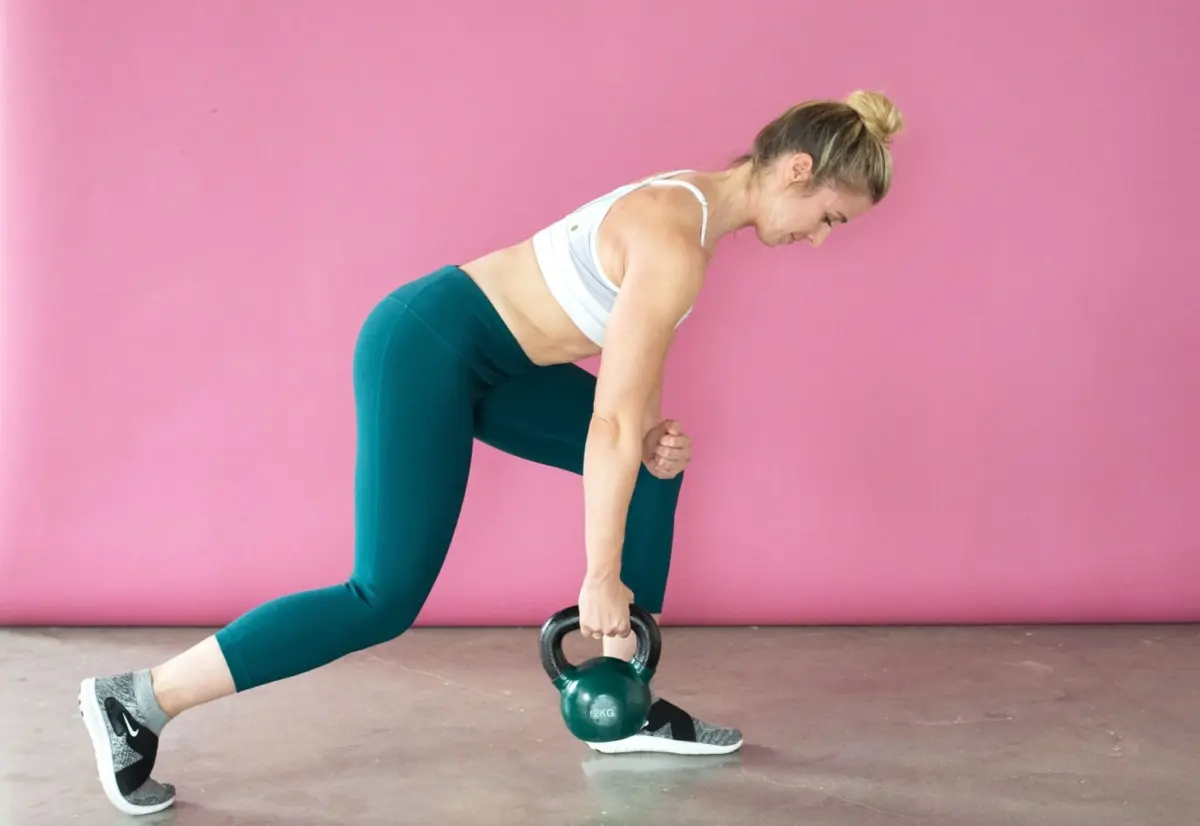

The appeal of this approach lies in its simplicity and minimal equipment requirements. For anyone working out at home or looking to keep their fitness routine straightforward, a single kettlebell can go a long way. While kettlebells and dumbbells are often used interchangeably in casual settings, the kettlebell features a unique design—a handle attached to a weighted ball—that allows for swinging and flowing movements that traditional dumbbells simply cannot replicate. Furthermore, when holding a kettlebell with the weighted ball facing upward, exercisers experience an added stability challenge. Because the weight naturally tends to tip in one direction, the body is forced to engage multiple muscle groups to resist that movement and maintain balance.
Lacee Lazoff, a prominent trainer at the Fhitting Room in New York City, notes the distinct advantages of incorporating this piece of equipment into a regular fitness regime. Kettlebells are versatile, highly portable, and remarkably taxing on the entire body during most movements and movement patterns. According to Lazoff, simply holding a heavy bell at the chest serves as an exceptionally effective way to strengthen the core, back, arms, and shoulders simultaneously.

To help fitness enthusiasts take full advantage of these benefits, Lazoff designed a quick and effective workout routine executable with just one bell. The entire workout takes approximately 20 minutes to complete, though participants may extend that duration if they choose to incorporate longer rest periods between circuits. Designed to work the entire body, the routine emphasizes proper form and cautious progression, especially for beginners. Lazoff strongly suggests that anyone who has never used a kettlebell before should start light and slow, making form the primary focus before attempting heavier weights or faster paces.
The philosophy behind the routine centers on total-body movements executed in functional patterns, mimicking the ways humans move in everyday life. By creating short intervals featuring various movements sequenced strategically, the workout keeps the body moving continuously, increases the heart rate, and maintains a healthy balance between upper- and lower-body work. Moving continuously with a kettlebell for a few consecutive minutes requires a high degree of both cardiovascular endurance and muscular strength. By stringing these kettlebell movements together into a cohesive interval workout, participants can keep their heart rates elevated and maximize the physiological return on a relatively short investment of time.

Observant participants will notice that certain bodyweight-only movements are strategically mixed into the routine. This deliberate programming is designed to provide the grip, forearms, core, and shoulders with a brief respite from the constant strain of holding a heavy weight—a feature that most exercisers greatly appreciate after navigating the demanding circuits.
Unlike traditional weightlifting regimens that dictate rigid repetition counts, this kettlebell workout is structured primarily by time intervals. Lazoff, who demonstrates the correct execution of each movement, points out that time-based structuring helps practitioners focus on movement quality rather than rushing through quantity.

To prepare for the routine, participants are advised to secure a single kettlebell that feels medium-to-hard for their current fitness level. It is also recommended to have a lighter kettlebell nearby in case the primary weight proves too heavy or causes form to deteriorate during the session. The workout utilizes a kettlebell for each of the four designated circuits, while relying exclusively on bodyweight movements for the initial preparatory warmup.
The warmup phase begins with the World’s Greatest Stretch, a dynamic movement designed to mobilize multiple joints and prepare the body for the physical demands ahead. This is followed by alternating lateral lunges to target the lower body and open up the hips in the frontal plane. Next, the body is guided through cat-cow stretches to mobilize the spine and relieve tension in the back. The warmup concludes with hip switches, which enhance hip mobility and stability before the core components of the session begin.

Following the warmup, participants transition into the four main circuits of the routine. The structure guides exercisers through alternating phases of weighted kettlebell movements and bodyweight recovery exercises. To ensure adequate muscular recovery and cardiovascular regulation between the heavier segments, participants are advised to take anywhere from 30 seconds to two minutes of rest in between each circuit.
Throughout the progression of the four circuits, the routine emphasizes continuous movement, functional strength, and joint stability. By adhering to the time-based intervals and maintaining rigorous attention to form, participants can experience the full spectrum of benefits associated with single-kettlebell training, all within the span of a standard 20-minute window.