
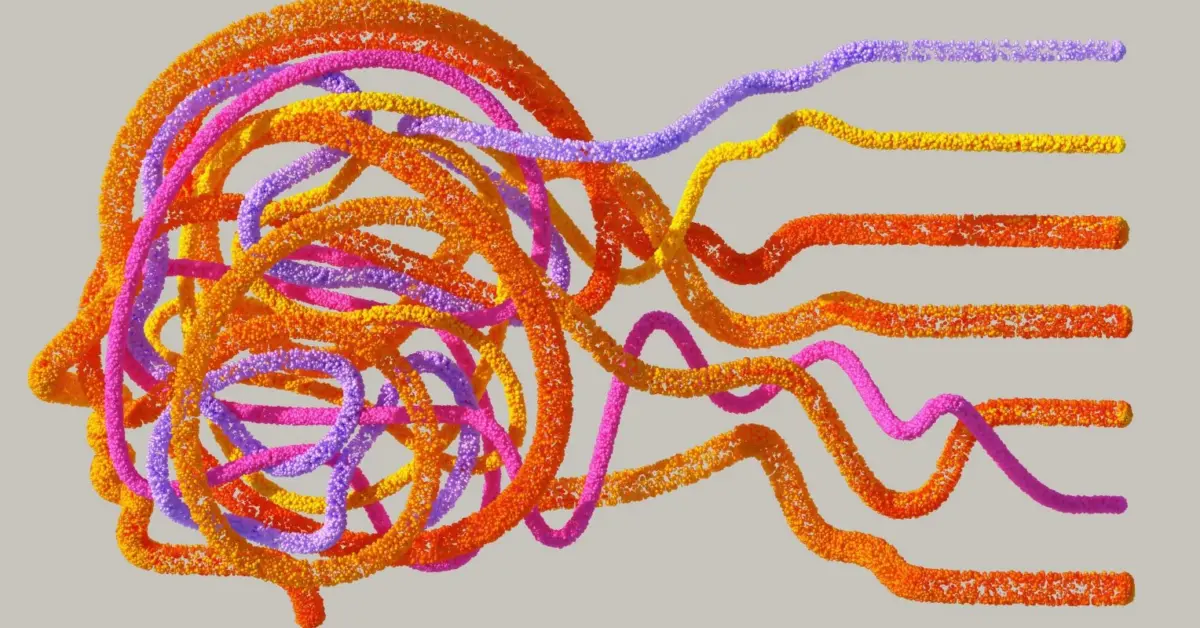
For individuals seeking healing through Internal Family Systems (IFS) therapy, the journey typically begins with a deceptively simple directive: turn your attention inward and observe. Whatever arises in that internal landscape—whether it manifests as a voice offering commentary, an image flashing across the mind’s eye, a debate between competing impulses, or a distinct physical sensation—is designated as a "part."
Once an individual notices this internal phenomenon, a process of psychological differentiation takes place. The person realizes that they are not the part, and the part is not them. Often, however, a person might immediately experience a wave of fear, judgment, or a wish to tune the sensation out entirely. According to IFS framework, these defensive reactions simply represent another part, which can likewise be asked to differentiate, or "unblend."
The model defines core centered states—such as curiosity, clarity, confidence, and compassion—as expressions of the "self" or "self-energy," which naturally emerge once various parts unblend. Yet, this internal ecosystem can fluctuate rapidly. Sometimes, the moment one part unblends, another immediately blends in to take its place. When this happens, the process is repeated, guiding the individual back to a state of neutral curiosity.
As a therapeutic modality, IFS has historically prioritized direct engagement over abstract intellectual explanation. It invites participants to actively interact with and inhabit their inner experiences rather than resorting to distraction or dissociation. However, this experiential emphasis does not satisfy every participant. Some individuals find the unblending process genuinely frustrating and confusing, particularly when they feel alarmed or overwhelmed by parts that seem to talk back.
When the primary focus shifts from experiential engagement to a desperate need for intellectual understanding, the standard IFS inquiry—such as asking a client how they feel toward a specific part—can inadvertently heighten their frustration. In those moments, clients are often left grappling with internal friction, wondering how they are supposed to perform the exercise or questioning what a "part" actually is in a tangible sense.
The Role of Storytelling and Curiosity in IFS
While the standard IFS framework does not rely on a rigid, neuro-based explanation for these phenomena, the human mind is naturally inclined to formulate hypotheses and construct narratives. When an individual feels a strong, positive resonance from connecting with their parts and crafts a satisfying narrative around the experience, they generally have little need for alternative explanations. Conversely, when confusion or pure curiosity takes over, individuals frequently seek out deeper context—such as a neuroscience-informed perspective—to make sense of their inner multiplicity.
To understand this through a neuroscientific lens, one must look closely at how the human brain functions. Navigating a relentless tsunami of environmental data requires enormous metabolic and cognitive energy. To conserve resources, the brain constructs a comprehensive world model during childhood and subsequently predicts that this established model will continue to repeat itself indefinitely.
These predictive models are represented within the mind—which neuroscientists view as a functional product of the brain—through visual, auditory, or somatic sensations. When individuals pay attention to these internal representations and ask questions, they routinely receive answers rooted in past conditioning: warnings such as the need to conform because survival once depended on it, or the persistent dread that stopping a behavior will lead to punishment. These internal communications essentially preserve stories of past dangers, reinforcing old predictions and directly shaping current behavior.
The fundamental biological mandate of the brain is survival. Consequently, conservative behavioral patterns and defense mechanisms that once kept a person safe in a hazardous environment often persist long after circumstances have fundamentally changed. When the brain becomes entrenched in these rigid patterns, individuals need effective ways to influence it. The human mind demonstrates how to accomplish this through storytelling.
When people conceptualize patterned behaviors as distinct entities or parts—subjectively represented by specific feelings, opinions, and underlying goals—they naturally engage their innate relational skills. They begin to offer empathy and compassion to themselves. By leaning into the complexity of subjective experience, individuals can embrace a state where they feel older and younger, wiser and more vulnerable all at once, accepting all facets of their history without judgment.
Understanding the Inner Community of Parts in IFS
Internal Family Systems describes this dynamic, multi-age self-experience as an "inner community of parts." Within this internal community, vulnerable parts are typically guarded by other distinct parts. These protector parts, charged with the conservative duty of maintaining safety, tend to preserve the exact expectations they learned long ago. They maintain this vigilance despite what neuroscientists refer to as "prediction errors"—incoming information that directly contradicts past expectations and that should, theoretically, be used to update an outdated predictive model.
By combining the clinical language of IFS with contemporary neuroscience, protective parts can be understood as alarm predictions that activate predictably in familiar contexts. Unlike non-threat predictions, however, these protective alarm systems fail to update their programming in response to contradictory evidence.
Through the framework of modern neuroscience, suffering parts and their enacting counterparts can be understood as pattern-based predictions. These are deeply ingrained, learned expectations about what is likely to happen next, invariably paired with a familiar emotional and behavioral repertoire designed to meet those expected outcomes.
A common psychological trajectory illustrates this dynamic: an adverse event occurs, and the brain immediately predicts that more of the same hardship is on the horizon. This anticipation triggers two parallel narratives that continue to run in tandem. The first is a negative identity story, echoing internal beliefs such as the conviction that one is unlovable or destined to be perpetually exploited. The second is a survival story, featuring frantic protective efforts—ranging from dissociation, denial, and self-attack to self-sacrifice, deflected rage, and addiction—designed to manage the perceived threat swiftly and effectively.
Over time, these protective strategies can wreak havoc on an individual’s relationships and sense of identity. Yet, in the short term, they serve a vital, functional purpose as attempted solutions to overwhelming distress.
Revising Negative Identity and Survival Stories
In a therapeutic context, the ultimate objective is to allow the core problem—the original assault on personal value that calcified into a negative identity and the lingering experience of those terrible truths—to emerge safely so it can be revised and integrated. Accordingly, IFS therapy typically begins by examining the strategic aftermath of an identity insult, referred to here as the survival story. From there, therapy gradually traces the path back to the precipitating events.
This process facilitates a psychological do-over. Rather than attempting to rewrite historical reality, the work involves an active reclaiming of personal credibility, inherent worth, and innate goodness. To liberate the brain from fear-based rigidity, therapy actively engages the mind and its internal narratives. Through this careful exploration, the primal question of identity—asking who one truly is, an exploration that was abruptly interrupted when trauma occurred—can finally resume in a positive, generative direction.
Expressed in the terminology of neuroscience, effective therapy aims to establish a sufficiently safe internal and interpersonal context. Within this secure environment, the brain is finally able to update the rigid expectations that were long ago paired with negative, pattern-based predictions.