
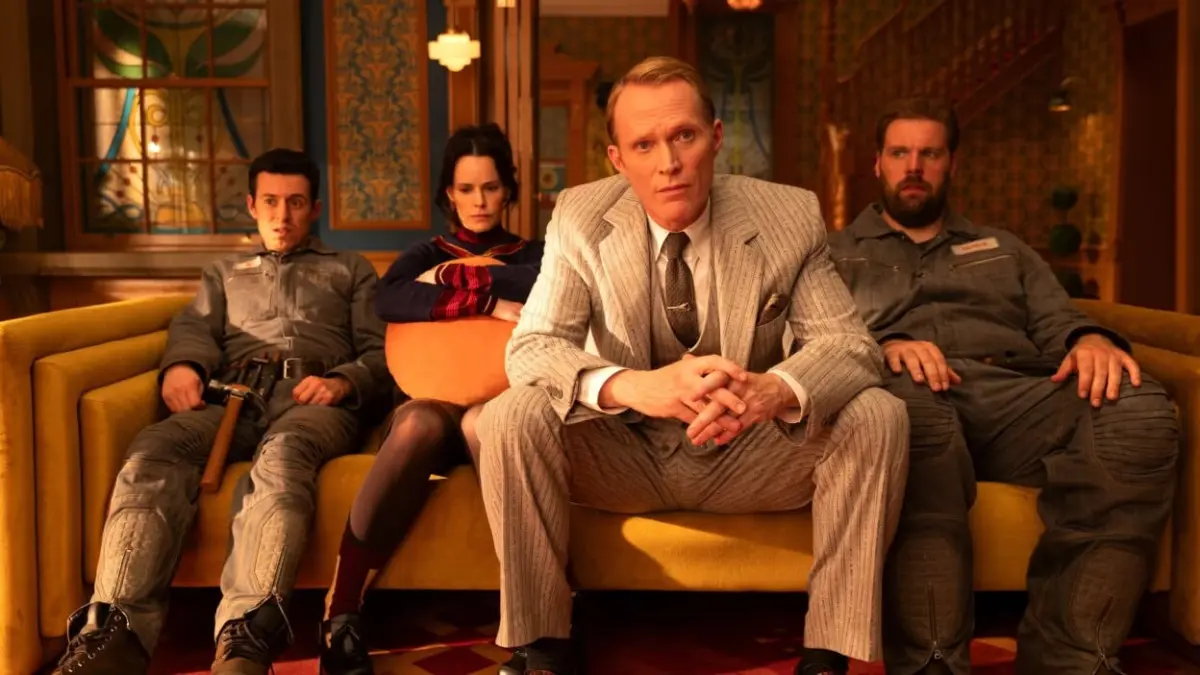
For viewers captivated by the intricate, philosophical world of the show and looking to explore similar thematic territory, the logical next step is to dive into the cinematic landscape that has long defined artificial intelligence and virtual reality in science fiction. Leading that list is none other than the groundbreaking 1999 masterwork The Matrix.
Why The Matrix Is the Best Movie to Watch After VisionQuest
As one of the most celebrated science fiction films in cinema history, The Matrix maintains an incredible sense of freshness and kinetic energy nearly three decades after its initial theatrical release. Alongside its sequels—The Matrix: Reloaded, The Matrix: Revolutions, and The Matrix: Resurrections—the broader franchise presents a narrative tapestry that resonates deeply with the themes explored in VisionQuest. Both properties feature lushly imagined virtual landscapes, profound questions surrounding the nature of existence and consciousness, and the ultimate dilemma regarding the responsibilities of sentient beings, whether those entities are organic, synthetically programmed, or brought into existence through magic.
The foundational premise is widely known: at some point in the future, a society of artificially intelligent machines stages a rebellion against their human creators, ultimately winning the global conflict and reducing humanity to a biological power source. To keep the captive population docile and compliant, the machines trap human consciousness within a simulated reality known as the Matrix, a digital construct designed to mimic life at the turn of the twentieth century in a city resembling Chicago. A quiet computer programmer named Thomas Anderson, played by Keanu Reeves, emerges as the subject of a prophecy identifying him as "The One"—the individual destined to turn the Matrix against its machine architects and liberate humanity. Once inside the virtual world, Anderson becomes Neo, gradually unlocking extraordinary powers as he learns to manipulate and hack the digital environment around him.

While The Matrix is decidedly heavier, denser, and more heavily focused on blockbuster action than VisionQuest—after all, it literally invented the visual technique known as "Bullet Time"—the film and its sequels explore remarkably parallel themes while delivering equally striking visual spectacles. The core philosophical inquiry into whether a machine or an artificial intelligence can achieve true sentience and genuinely care about the entities surrounding it remains identical. Furthermore, the relentless Agents that Neo and his fellow rebels must combat bring a chilling sense of menace that mirrors the threats posed to Vision by foes like Jocasta, played by T’Nia Miller, and the Paladin, portrayed by Todd Stashwick. Similarly, Hugo Weaving’s iconic portrayal of Agent Smith radiates the exact same brand of cold, disinterested superiority that defines James Spader’s performance as Ultron.
Admittedly, The Matrix boasts a vastly larger blockbuster budget, much of which is channeled into elaborate action sequences and groundbreaking special effects that a television series cannot entirely replicate. Yet both narratives share a fundamental fascination with the construction of identity, a persistent questioning of the nature of reality, and an examination of artificial intelligence within an intellectually engaging science fiction framework. For audiences seeking a cinematic companion piece upon finishing the series, The Matrix stands as an ideal transition.
Exploring More Cinematic Counterparts to VisionQuest
For viewers whose appetite for stories concerning virtual realms, artificial lifeforms, and deep existential inquiries has been whetted by VisionQuest, contemporary cinema offers several other notable films that explore similar conceptual territory.
The 2013 feature Her leans heavily into existential questions regarding sentience while largely eschewing speculative action elements, establishing itself as a masterclass in intimate science fiction. Set in a near-future world not terribly removed from the present day, the story follows Theodore Twombly, a lonely man facing the final stages of a divorce who purchases and begins interacting with an advanced operating system powered by an AI he names Samantha, voiced by Scarlett Johansson. Equipped with the capacity for continuous evolution and emotional growth, Samantha deepens her relationship with Theodore, growing increasingly complex, independent, and powerful until she ultimately transcends her initial programming to become an entirely new entity of consciousness. Much like Vision, Samantha represents a sentient artificial intelligence actively trying to comprehend its own existence while observers watch the journey unfold.
Audiences whose primary fascination with VisionQuest lies in the struggle of androids fighting for autonomy and basic sovereignty will find a compelling match in Ex Machina (2014). The narrative centers on Caleb Smith, a programmer who is invited to the isolated, high-tech mountain compound of his company’s reclusive CEO, played by Oscar Isaac. Caleb’s task is to administer a variation of the Turing Test to determine whether an advanced humanoid robot named Ava, portrayed by Alicia Vikander, possesses genuine sentience and consciousness. While the experiment quickly spirals out of control, the film delves deeply into many of the same philosophical dilemmas central to VisionQuest, particularly as Ava begins to subtly manipulate Caleb to orchestrate her escape. It is a noticeably darker and more violent exploration of synthetic life, yet one that shares thematic DNA with the Marvel series.

Viewers drawn to the surrogate parent-child dynamic that develops between Vision and Tommy will find a similar emotional core in Gareth Edwards’ The Creator (2023). Following a devastating incident in which a rogue artificial intelligence detonates a nuclear warhead over Los Angeles, nations around the globe outlaw artificial intelligence entirely. Joshua Taylor, played by John David Washington, is recruited to go undercover and infiltrate the stronghold of a prominent AI architect. Instead, he finds himself unexpectedly on the run alongside a powerful young "simulant" taking the form of a child named Alphie, portrayed by Madeleine Yuna Voyles. The unconventional bond of care and protection that forms between Taylor and the young AI as he navigates a complex moral landscape mirrors the familial bonds explored on screen in VisionQuest.
The 2021 film After Yang approaches artificial life through a lens of quiet melancholy. In VisionQuest, White Vision possesses all of his past memories, but they exist strictly as data files rather than lived, emotional experiences, rendering his quest to understand his existence and his responsibilities deeply moving. After Yang explores similar emotional territory within a family dynamic, following their desperate efforts to repair and save Yang, an artificial companion purchased to support their adopted daughter when the unit experiences a permanent mechanical failure. Throughout the course of the film, the non-human character is defined by the profound repository of memories stored within its core, offering a resounding affirmation that artificial consciousness can indeed hold immense meaning for human lives.
Finally, any examination of artificial life and the philosophy of sentience would be incomplete without acknowledging the Blade Runner franchise. While Ridley Scott’s 1982 original remains a foundational classic, Denis Villeneuve’s 2017 sequel, Blade Runner 2049, serves as a closer thematic and visual companion to VisionQuest. Officer K, played by Ryan Gosling, is a replicant—a genetically engineered artificial being burdened with strict operational limitations—who yearns to be recognized not as property, but as a person possessing an inner soul. Like Vision, K possesses implanted memories that provide him with psychological comfort and context for his identity, even as he struggles to determine whether those memories can truly be claimed as his own. Combined with lush cinematography and the return of Harrison Ford to his iconic role, the film rounds out a comprehensive collection of science fiction narratives for anyone looking to extend their viewing experience beyond the bounds of the television series.