
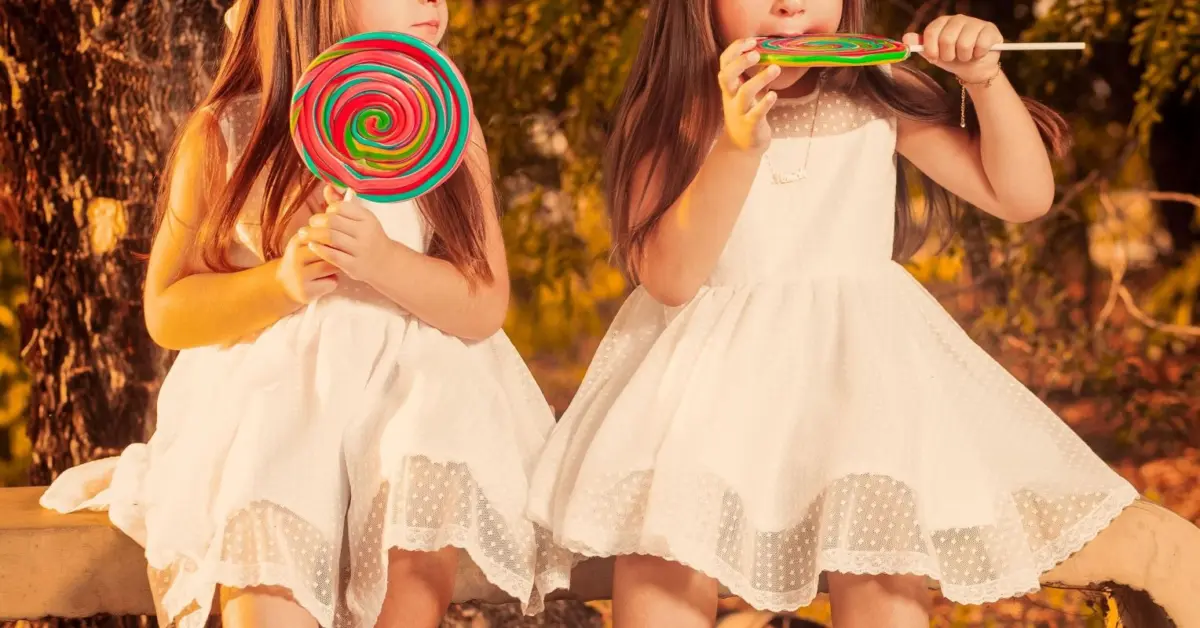
Aside from common observations about "twin language," developmental milestones and mental health considerations were treated much the same as those for single-born children. Furthermore, the ripple effects that raising twins could have on older or younger siblings were rarely considered deeply, if at all, by educators or medical professionals.
The inherent closeness of twinship, however, presents a complex identity challenge that requires systematic understanding and active parental management. At the core of many early behavioral hurdles is intense separation anxiety, which surfaces acutely whenever twins are apart. For instance, young twins separated during a dispute over a shared toy will often cry inconsolably for the duration of their separation. Caregivers are frequently pushed to their wits’ end, finding little relief until the conflict is resolved and the siblings are safely reunited.
As time progressed and academic and psychological studies caught up with the realities of multi-birth families, the approach to twin development shifted dramatically. Fortunately, researchers uncovered more effective methods for raising twins by emphasizing individual development. Fostering authentic, personal relationships between family members and each twin—relationships completely detached from comparisons of how the siblings were alike—became recognized as essential for healthy psychological growth.
Despite these modern insights, historical experiences highlight the sheer weight of the "look-alike" phenomenon. Twins have traditionally received an overwhelming amount of public attention regarding their identical appearances, a practice that can prove damaging if overdone. Decades ago, observers would constantly stop families in public to ask the inevitable question. The author recalls how an older brother famously taped a sign to their double stroller reading, "Yes, they are twins," simply to stave off the constant barrage of identical inquiries. While parents today often manage public curiosity more directly to protect their children’s privacy, the intrusive nature of these questions has long-term psychological impacts.
Interest in twin development during the mid-20th century was remarkably limited. Reflecting on her own childhood, the author noted that the only advice her mother received from a hospital nurse was to keep the infant twins separated. While well-intentioned, this advice proved nearly impossible to follow. Infants, babies, toddlers, and young twins naturally gravitate toward one another, desiring to remain side by side just as they had in the womb.
Consequently, mothers needed far more comprehensive support to handle two children moving through developmental milestones in tandem. The risks were very real; at three years old, the author and her twin sister explored the family kitchen cupboards and ingested red furniture polish under the mistaken impression that it was a delicious fruit punch. Quick discovery by the family led to an emergency ambulance ride and stomach-pumping at the hospital—a dramatic adventure that the sisters would frequently recount with amusement in later years.
A significant amount of time has passed since those early struggles with public curiosity and limited parenting resources. Today, contemporary child psychology acknowledges that brothers and sisters are profoundly affected by the presence of twins in the household. Professionals now understand the risks of allowing twins, or their siblings, to self-manage domestic conflicts without parental guidance. Gone are the days when mothers were expected to navigate the immense challenges of multi-birth parenting entirely on their own; today, the methodology of parenting twins is approached with professional rigor and seriousness.
Competition, Comparison, and the Quest for Equality
For better or worse, relentless questioning about which twin is superior or who possesses more remains an inescapable part of the twin experience. This intense societal pressure often bleeds into the home environment, where the insistence on matching a twin’s every possession can manifest in extreme ways. In the author’s family, this dynamic prompted their older brother to meticulously measure food portions on a scale to ensure absolute parity. Who received more food or a larger share of attention was treated as a matter of supreme importance.
This "equality insanity" frequently erupts when parents lack the tools to effectively manage natural competition and comparison, ultimately resulting in frequent fighting and generalized unhappiness for the entire household.
Property management and the assertion of personal boundaries represent perhaps the most persistent hurdles for families raising multiples. The emotional intensity displayed when one twin receives one less toy or a slightly smaller cookie from a parent can be staggering. Even as children grow older, a fierce determination regarding the strictly equal distribution of goods remains a defining characteristic of many twin relationships.
This friction can persist well into adulthood, where twins may still struggle if one acquires a house, a car, or a vacation that the other does not possess. Twins who maintain an overly enmeshed relationship often experience profound distress at the prospect of missing out on whatever their sibling has achieved. Conversely, more fortunate twins develop a secure understanding that they are distinct individuals with unique needs, trajectories, and desires, thereby avoiding the pitfalls of possessiveness, conflict, and unhappiness.
Navigating Sibling Dynamics and Public Identity
Brothers and sisters in families with twins often experience initial confusion, navigating a household dynamic marked by frequent sibling rivalry and heightened jealousy among the multi-birth children. Paradoxically, these same twins often display an inability to tolerate separation, crying outrageously until their sibling is returned to their immediate vicinity. Furthermore, young twins frequently take whatever they desire from their non-twin siblings without a trace of remorse. Teaching young twins that their brother or sister possesses a separate identity, or instilling the concept of patience and waiting, proves virtually impossible during early childhood.
The sheer volume of attention lavished on twins can inadvertently diminish a non-twin sibling’s sense of self-worth. Meanwhile, internal anger and resentment between the twins themselves are remarkably common. Many twins eventually harbor secret wishes that they had been born singletons, exhausted by the lifelong cycle of competition and comparison. Hearing casual remarks from strangers about their twin status can feel deeply undermining. As the author observed from personal experience, constantly being framed as part of a pair evokes the frustrating internal question: "Why are you not interested in what I am doing as an individual?"
Overcoming these challenges requires a deliberate effort to avoid the "look-alike trap." Actively cultivating a distinct personal identity and presenting oneself as an independent individual helps twins build healthier, more harmonious relationships with all of their siblings. Seeing oneself as a complete person rather than "half of a whole" is equally vital for forging authentic social connections with non-twins. Interacting with new acquaintances independently eliminates the reductive "Which one are you?" question—an inquiry that remains genuinely humiliating regardless of the individual’s age.
Modern parenting approaches now emphasize specific strategies to help minimize public curiosity and foster individual identity in twins. Experts and experienced parents recommend dressing multi-birth children in distinctly different outfits to discourage viewing them as a single unit. Parents are also encouraged to intentionally treat each child as a unique individual by acknowledging and celebrating their separate everyday preferences, likes, and dislikes. Designating special, separate one-on-one time for each child to engage in different activities further reinforces their individual worth.
Additionally, participating in dedicated parenting support groups focused on raising multiples provides families with valuable community insights and practical advice. Experts advise against the common pitfall of labeling twins as direct opposites of one another, as this simply shifts the dynamic from identical comparison to polarized comparison while still ignoring true individuality. Maintaining strict fairness while avoiding perceived favoritism is crucial, as is open family communication about the unique social dynamics that distinguish being a twin from growing up as a single child.