
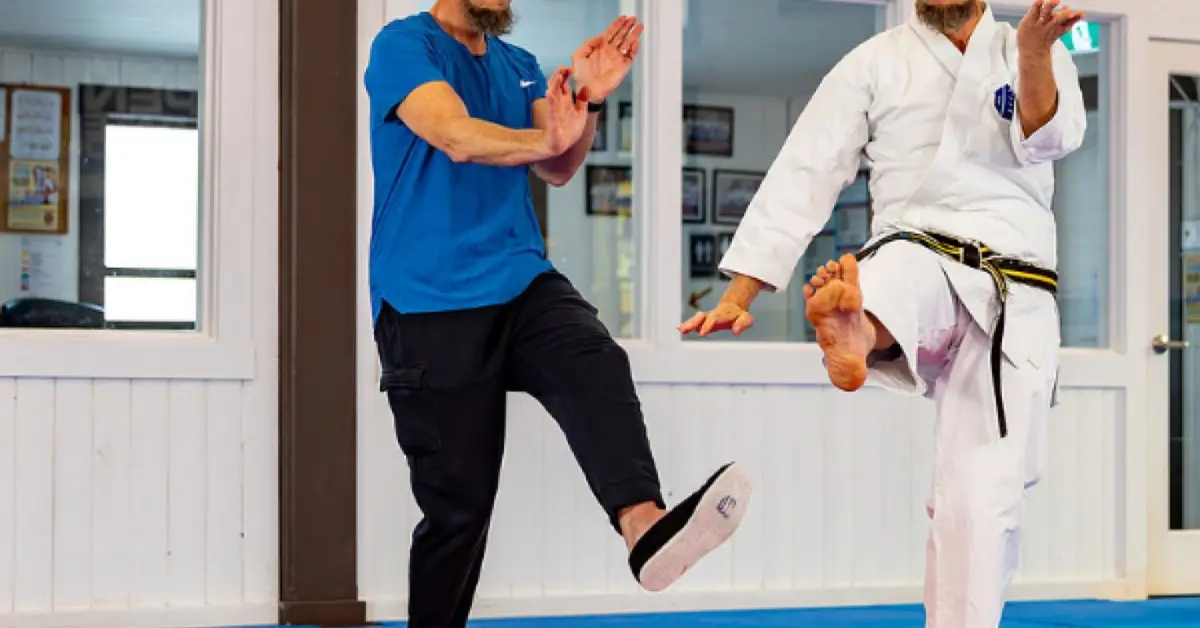
Mr. Miyagi’s instruction appears to draw directly from deep-seated Okinawan and Japanese martial traditions encapsulated by the phrase karate ni sente nashi—meaning there is no first attack in karate. Yet, as modern practitioners and theorists examine the mechanics of physical conflict, the simple dichotomy between purely reactive defense and aggressive preemption begins to blur. Which philosophy holds up when a real-world threat materializes, and how should modern martial arts frame the concepts of safety, conflict, and engagement?
To answer these questions, experts are increasingly looking past cinematic tropes to analyze the physiological and psychological realities of interpersonal violence. The core objective of many traditional martial arts is self-protection across all possible scenarios. Achieving this requires constant situational awareness, an understanding of the unfolding environment, and the tactical ability to step off the direct line of an opponent’s attack. By moving forward and off-center, a defender can position themselves safely to manage the threat.
In foundational training stages, neutralizing a threat may require targeting vulnerable areas—such as a strike to the throat—because a practitioner’s overall skill level is still developing. As a student advances, training shifts toward incapacitating targets, such as kicking a knee to compromise ligaments, which provides a critical opening to escape. At the highest level of mastery, when a physical exchange becomes entirely unavoidable, the goal shifts to seamless evasion, total avoidance of strikes, and a clean escape from danger.
Making Sense of Defense and Proactive Protection
Many experts argue that the concept of "self-protection" is far more accurate and effective than "self-defense." Self-defense inherently implies a reactive posture—waiting to be attacked and then scrambling to respond. A purely defensive mindset encourages backing away while attempting to strike forward, effectively treating defense as a static shield.
In contrast, self-protection involves a proactive stance. When an individual is genuinely under threat, relying exclusively on defense limits options and leaves them vulnerable to repeated onslaughts. A self-protection framework that incorporates proactive timing acts less like a shield and more like a spear, shifting the dynamic of the encounter entirely.
Martial arts traditions traditionally recognize three distinct psychological and physiological states governing physical encounters: counterattacking, attacking while being attacked, and executing a preemptive attack. These categories naturally scale in order of technical difficulty, though it is worth noting that the element of an "attack" is present in all three scenarios. What truly differentiates them is the timing of the initiative.
Counterattacking involves responding to an opponent only after receiving, intercepting, or blocking their incoming strike. The temporal ratio in this scenario typically involves absorbing an attack before launching a counter-strike.
The second state, attacking while being attacked, occurs when a practitioner detects an unfolding threat and launches an immediate counter-action simultaneously with the opponent’s offensive movement.
The third and most advanced category is the preemptive attack. This involves taking decisive action the exact moment an opponent’s intent to strike is perceived, but before the physical blow is actually delivered. Practitioners pick up on subtle physiological cues, including shifts in body angles, visual gaze, changes in breathing patterns, and subtle weight distribution changes.
While the ultimate ideal in any conflict is to perceive an imminent threat and take preventative measures to avoid the physical confrontation altogether, such foresight is frequently impossible in chaotic real-world environments.
Not the First to Strike, but the First to Hit
When an individual initiates an attack for the purpose of self-protection, they may successfully neutralize an adversary, but the tactical reality remains clear: it is significantly harder for an opponent to launch a successful offense against someone who has already seized the initiative.
At the same time, physical altercations do not always involve malicious strangers on the street. There are numerous real-world scenarios where an individual must manage a volatile situation without wanting to inflict harm. Consider interactions with a friend, colleague, or family member whose cognitive capacity or behavioral control has been severely altered by alcohol, drugs, or medical conditions such as dementia. In these delicate situations, the goal is to neutralize the danger of violence without resorting to damaging strikes, provided the practitioner possesses the requisite skill level.
Crucially, effective martial arts training teaches that a person does not have to throw a strike, but they are equally not required to absorb one. Attack-oriented, tactical body positioning does not automatically mandate violence; rather, it keeps an individual safe and positions them advantageously so that they retain multiple non-violent options.
The Fist Comes From the Heart
To reconcile the aggressive mandates of modern pop culture with traditional ethics, some martial artists propose revising the Cobra Kai mantra to "strike first, strike fast, show mercy." This adjusted philosophy aligns closely with the foundational Wing Chun expression that "the fist comes from the heart."
This traditional saying carries a dual meaning. First, it dictates that a practitioner must occupy the centerline and engage an opponent directly. Second, it establishes that any physical response must be strictly purposed toward stopping aggression and restoring safety. In essence, practitioners manage dangerous situations with compassion, utilizing harm only as an absolute last resort.
However, executing such a response requires emotional detachment. Interventions must be carried out deliberately, calmly, and entirely free of personal anger. This principle echoes the teachings of Miyagi Chojun, the 19th-century founder of Goju-ryu karate, who famously noted that when anger rises, the fists must lower, and conversely, when the fists are raised, anger must be completely suppressed.
Ultimately, the wisdom of avoiding physical conflict wherever possible remains paramount. As Mr. Miyagi wisely observed, the single most effective way to avoid taking a punch is simply not to be there. Yet, when circumstances eliminate all other choices and an individual has no alternative but to stand their ground, taking the initiative becomes a necessity. When the only way out of a crisis is directly through it, a well-timed offense remains the most reliable form of defense.